What Size Sewing Machine Needle for Fleece?
Use a 75/11 or 90/14 sewing machine needle for fleece, depending on its thickness and your thread. Start with 75/11 for lighter fleece and move to 90/14 for thicker layers or heavier seams.
On this page (8 sections)
- What size sewing machine needle for fleece should you use?
- Is 75/11 or 90/14 better for fleece?
- Which needle point works on fleece?
- What needle should you use for embroidery on fleece?
- How do you stop skipped stitches when sewing fleece?
- How should you choose thread and needle size together?
- What should you test before sewing the final fleece project?
- What is the final needle choice for fleece?
The best size sewing machine needle for fleece is usually 75/11 for lighter fleece and 90/14 for thicker fleece or multiple layers. Use a fresh needle, choose a point suited to the fabric, and test the stitch on a scrap before sewing the finished item.
Fleece is soft, but it is not always thin or consistent in thickness. One section may compress easily under the presser foot, while a folded edge or crossing seam may feel much harder for the needle to pass through.
That is why needle size should be matched to the real fabric stack. A lighter section may sew well with 75/11, and the same project may need 90/14 where several layers meet.
Point shape also matters when fleece has a knit structure. A ball point or slightly rounded point can help the needle move between threads instead of catching them as it enters the fabric.
Thread choice should be checked at the same time as needle size. If the thread is too heavy for the needle eye or groove, stitches may be less even even when the needle size looks correct.
Fabric support makes a difference too. Fleece can shift, stretch, or bunch behind the presser foot, and that movement can lead to skipped stitches or uneven feeding.
Stitch length and machine threading need attention before you change sizes. A fresh needle, correct threading, and a calm test seam can show whether the problem is size, point, thread, or setup.
Start with 75/11 for lighter fleece and 90/14 for thicker sections. Test on scraps with the same layers as the project, then keep the smallest size that sews cleanly.
What size sewing machine needle for fleece should you use?
Use 75/11 when the fleece is light or you are sewing one or two manageable layers. Choose 90/14 when the fleece is thick, the seam has several layers, or the needle needs more strength to pass through the stack.
Think about the full seam, not just the fabric in your hand. A single layer of fleece may feel easy, but the finished seam can include folded hems, cuffs, collars, pockets, or crossing seams that add bulk.
The correct size should pass through the fabric without leaving large holes. A needle that is too small may struggle through thick layers, while one that is too large can make visible punctures in lighter fleece.
For light fleece, 75/11 is a sensible starting point. It suits many everyday seams and is less likely to mark the surface where the fabric is thin or delicate.
For thicker fleece, 90/14 gives the needle more body for passing through the stack. That extra strength can help at folded edges and where stitching has to cross another seam.
Testing both sizes on scraps is often the clearest approach. Sew the same seam construction, then look for skipped stitches, bent deflection, thread stress, or holes that stay visible after the fabric relaxes.
Choose the smaller size if it handles the thickest part of the seam cleanly. Move up to 90/14 when 75/11 skips, bends, or leaves uneven stitches at bulkier points.
| Fleece project | Starting needle size | Point to consider |
|---|---|---|
| Light fleece, single layers | 75/11 | Ball point or slightly rounded point |
| Medium fleece seams | 75/11 or 90/14 | Test both on scraps |
| Thick fleece or several layers | 90/14 | Fresh needle with suitable thread |
| Decorative embroidery on fleece | 75/11 embroidery needle | Enlarged eye for specialty thread |
For a broader comparison of sizes and types, use this sewing machine needle guide chart. It helps you compare fleece with other fabrics before changing needles.
Is 75/11 or 90/14 better for fleece?
Neither size is always better. A 75/11 needle is the better starting point for lighter fleece because it is less likely to make large holes, while a 90/14 needle is more suitable when the fabric stack is thick.
Start with the smallest size that handles the seam cleanly. If the machine skips stitches, the needle bends, or the thread struggles to pass through the layers, try a fresh 90/14 needle and test again.
A fleece seam may also become difficult where several layers meet, such as at cuffs, collars, pockets or folded hems. Test those thick points instead of judging the needle only on a flat section.
Those thicker points are often where a project succeeds or fails. The needle may sew a flat area perfectly and still struggle where the seam turns a corner or crosses another line of stitching.
When you test, copy the seam as closely as you can. Use the same number of layers, the same thread, and the same stabilizer if the project calls for it.
Check both sides of the test seam before you decide. Even stitches on top matter, and the underside can show loops, missed stitches, or tension problems that are easy to miss at first.
Consider how the fleece will be used after sewing. A decorative seam on a light item has different needs from a hardworking seam on a garment that will be stretched and washed often.
If 75/11 works through the thickest section, it is usually the better choice. If it only works on flat areas, 90/14 may be the more reliable size for the whole project.
Trade-offs appear on both sides. The smaller needle protects lighter fabric from larger punctures, while the larger needle offers more strength where layers are thick and the machine has more to push through.
Which needle point works on fleece?
A ball point or slightly rounded point is a useful starting choice for knit fleece. These points are designed to move through knit materials with less risk of snagging individual threads.
The Brother SAEMB7511 75/11 embroidery needles have a ball point and are described for knit materials. They suit lighter fleece when you need a 75/11 needle and want a 100-count set for repeated sewing or embroidery work.
A ball point helps the needle slip between the loops of knit fabric. That action can reduce the chance of cutting or catching threads compared with a sharper point in suitable knit materials.
A slightly rounded point serves a similar purpose for many everyday fabrics. It is a gentle option for fleece that behaves like a knit and for projects where surface damage would be noticeable.
Point shape does not replace correct sizing. Even a well shaped point may struggle if the needle is too small for thick layers or too large for light fleece.
Embroidery needles also have features aimed at thread movement. An enlarged eye and widened groove can reduce friction around specialty thread during decorative work.
For fleece, test the point on a scrap before committing to the project. Look for snagging, skipped stitches, or holes that remain after the fabric has relaxed.
A universal needle has a slightly rounded point and can handle many woven and knit fabrics. The SCHMETZ Universal Sewing Machine Needles are size 90/14, so they are a better match for thicker fleece than for delicate, lightweight fleece.
For more detail about needle points, see Types of Embroidery Needles: A Complete Guide. The point matters, but the needle size still needs to match the thickness of the fabric stack.
What needle should you use for embroidery on fleece?
Use a 75/11 embroidery needle for many fleece embroidery projects, especially when using rayon, polyester or other specialty threads. Embroidery needles have an enlarged eye and widened groove that can reduce friction around the thread.
The SCHMETZ Embroidery Sewing Machine Needles are size 75/11 and have a medium ball point. Their widened groove and enlarged eye are designed for rayon, polyester and specialty threads, making them useful when fleece is being embroidered rather than only joined with a plain seam.
Fleece embroidery also needs suitable stabilizer and hoop support. Keep the fabric flat without stretching it, and check the design on a scrap because dense stitching can change how the fabric behaves.
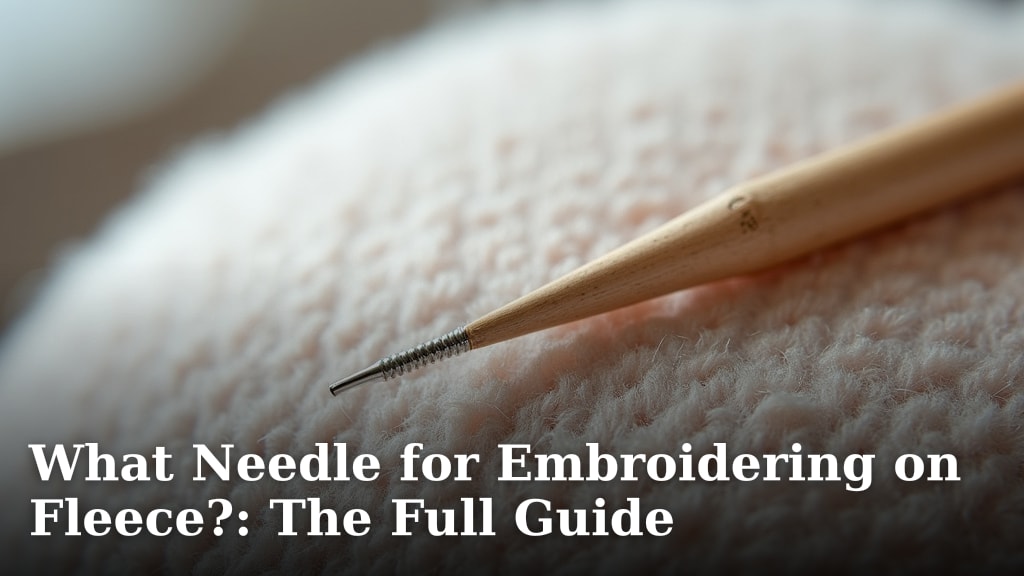
Read What Needle for Embroidering on Fleece?: The Full Guide for a closer look at embroidery needle choice, stabilizer and fleece projects. You can also compare the basics in Needles for Machine Embroidery: A Complete Guide.
How do you stop skipped stitches when sewing fleece?
To reduce skipped stitches, install a fresh needle, match its size to the fleece layers, rethread the machine and test the seam on scraps. Then adjust the stitch settings gradually instead of changing several things at once.
Use this order:
- Insert a new 75/11 or 90/14 needle, depending on the fabric thickness.
- Confirm the flat side of the shank faces the correct direction for your machine.
- Rethread the upper thread and check that the bobbin is seated correctly.
- Sew on a fleece scrap with the same number of layers as the project.
- Check the underside for loops, uneven tension or missed stitches.
- Try a slightly longer stitch if the fabric is being pushed or compressed.
- Slow down at bulky seams and support the fabric without pulling it.
A bent or dull needle can cause problems even when the size is correct. Replace it after hitting a pin, sewing through difficult bulk or noticing a change in stitch quality.
How should you choose thread and needle size together?
Match the needle eye and groove to the thread, then match the needle size to the fleece thickness. Standard construction thread usually needs less eye space than specialty embroidery thread.
A 75/11 embroidery needle can be useful when the fleece project uses rayon or polyester embroidery thread. A 90/14 universal needle may be more suitable for thicker construction seams where fabric bulk matters more than thread clearance.
Do not assume a larger needle solves every thread problem. If the thread shreds, check the threading path, tension and needle type before increasing the size.
Start by naming the job in plain terms. A plain seam needs thread that will hold and feed smoothly, while embroidery needs thread that can pass through the eye and groove without extra friction.
Rayon and polyester embroidery threads can be more sensitive during stitching. An embroidery needle with an enlarged eye and widened groove gives that thread more room to move through the fabric.
Construction thread on thick fleece has a different balance. The seam must manage bulk, strength, and feeding, so a 90/14 needle may suit the stack better even if the thread itself is not delicate.
If the thread shreds, work through the likely causes in order. Check that the needle is inserted correctly, rethread the machine, confirm the bobbin is seated well, and look for burrs or damage on a fresh needle.
Tension can also make thread problems worse. Tight upper tension, a poorly seated bobbin, or thread catching on a guide can stress the thread before needle size becomes the main issue.
Changing only one thing at a time keeps the test useful. If you change the needle, thread, and stitch length together, it is hard to know which change fixed the problem.
For Brother embroidery machines, compare options in Best Needles for Brother Embroidery Machines. For general embroidery sizing, see What Size Needle for Machine Embroidery?.
What should you test before sewing the final fleece project?
Test the exact fleece, thread, needle size and number of layers on a scrap. The best needle is the smallest suitable size that produces even stitches without skipped sections or visible damage.
Sew straight seams first, then test bulky areas such as folded hems and crossing seams. Look at both sides of the fabric and gently stretch the seam to check whether the stitches remain even.
If 75/11 stitches cleanly through the project, keep that size. If it skips or struggles at thick points, try 90/14 and repeat the test.
Keep the machine bed clear so fleece does not bunch behind the needle. If you need to press fleece seams, use care with heat and follow the fabric's care instructions.
A standard ironing board can affect how comfortably you support a larger project, so see what is a standard ironing board size before planning your workspace.
Use a scrap that matches the project as closely as possible. The same fleece weight, thread, needle, and layer count will tell you more than a quick test on any spare fabric.
Sew the test slowly at first and watch how the fabric feeds. Fleece can compress, stretch, or pile up behind the presser foot if support is uneven.
Mark the test seam so you can compare sizes side by side. That makes it easier to see which needle leaves smaller holes and more even stitches.
Check the seam after it has rested for a few minutes. Some puckering or holes can become more visible once the fleece relaxes and returns to its natural shape.
Test curves and corners if the project includes them. Needles can behave differently when the fabric is guided around a bend or through a thick folded edge.
If stitches skip, replace the needle before changing several settings. A dull or bent point can cause the same symptoms as the wrong size.
What is the final needle choice for fleece?
Choose 75/11 for light fleece and embroidery, or 90/14 for thick fleece and layered seams. Use a ball point or slightly rounded point when appropriate, test on scraps, and replace the needle when it bends, dulls or begins skipping stitches.
Pick the Brother 75/11 set for lighter fleece and a large supply of ball-point embroidery needles. Pick the SCHMETZ 90/14 universal needles for thicker fleece seams, or choose the SCHMETZ 75/11 embroidery needles when specialty thread and decorative stitching are the priority.
For plain construction on light fleece, 75/11 is the cleaner starting point. It can sew the seam without the larger punctures that a bigger needle may leave in thinner fabric.
For thick fleece, 90/14 is the more practical choice. The larger needle has more strength for folded hems, crossing seams, and sections where several layers meet.
For embroidery on fleece, think about thread as well as fabric. A 75/11 embroidery needle suits rayon, polyester, and other specialty threads because the eye and groove reduce friction.
Keep a fresh needle in the machine for each new project. Needles can become dull or bent through pins, bulk, or hard seams, and a fresh point often restores even stitching.
Test on scraps with the same layers before sewing the final piece. That short check helps you choose 75/11 or 90/14 with confidence.
Frequently asked questions
What size sewing machine needle is best for fleece?
A 75/11 needle suits lighter fleece and many everyday seams, while a 90/14 needle gives more clearance for thicker fleece or several layers. Choose a ball point or slightly rounded point when the fabric calls for it, and replace the needle if stitches skip or the point becomes dull.
Can I use a universal needle on fleece?
Yes, a universal needle can work on fleece, especially when the size matches the fabric thickness. A 90/14 universal needle is a practical choice for thicker fleece, while a 75/11 needle is better for lighter layers.
Test the stitch on a scrap before sewing the project.
Why does my sewing machine skip stitches on fleece?
Skipped stitches can come from the wrong needle size, a dull or bent needle, incorrect threading, poor fabric support or a stitch setting that does not suit the layers. Install a fresh needle, rethread the machine, test on scraps and adjust the presser-foot pressure if your machine allows it.
Is a ballpoint needle better for fleece?
A ballpoint or slightly rounded needle can help move through knit materials without pulling their threads. Fleece varies by construction, so match the needle size to the thickness and test the point on a scrap before beginning the final seams.