Types of Embroidery Needles: A Complete Guide
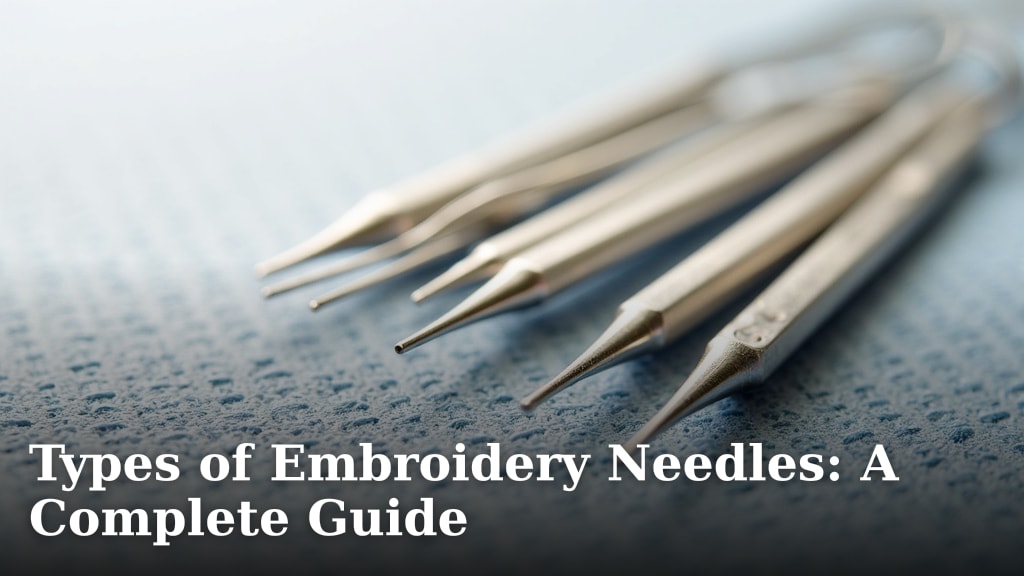
Choosing the right embroidery needle makes a big difference in your stitching. The best needle depends on your project type and the thread you’re using. A sharp needle works well for woven fabrics, while a blunt-tipped one is better for cross-stitch.
Embroidery needles aren’t one-size-fits-all. They come in various sizes and point types. Understanding these differences helps you avoid fabric snags and achieve cleaner stitches. We found that many crafters overlook this detail, leading to frustration.
- Needles vary by point type: sharp, blunt, or rounded.
- Size matters: larger numbers mean finer needles.
- Choose based on fabric and thread for best results.
- The right needle prevents fabric damage.
Let’s break down the different types of embroidery needles so you can pick the perfect one for your next project.
Understanding Different Types of Embroidery Needles
Picking the right embroidery needle is key for your stitching success. The needle you choose depends on your project type and the thread you’re using. A sharp needle works well for woven fabrics, while a blunt-tipped one is better for cross-stitch. Many crafters overlook this detail, leading to frustration. Let’s break down the different types of embroidery needles so you can pick the perfect one for your next project.
Needle Point Types and Their Uses
The tip of your needle is super important. It’s what interacts with the fabric first. Different points are designed for different tasks. We found that understanding these points can prevent a lot of heartache and fabric damage.
Sharp Point Needles
Sharp point needles are your go-to for most types of embroidery on woven fabrics. Think of a sharp needle like a tiny, precise knife. It easily pierces through threads in materials like cotton, linen, or even denim without snagging. If you’re doing surface embroidery, needle painting, or satin stitch, a sharp point is generally what you want. They make clean entry and exit holes.
Blunt/Round Point Needles
Blunt or round point needles are designed to slide between the woven threads of fabric. They don’t pierce the fabric fibers. This is why they are perfect for counted cross-stitch and needlepoint. The fabric used for these crafts, like Aida cloth or evenweave, has a very open, grid-like structure. A blunt needle pushes the fabric fibers apart gently. This prevents fraying and damage. Many experts say using a blunt needle here is essential for a clean finish (The American Needlepoint Guild).
Specialty Points
Beyond sharp and blunt, some needles have slightly different point designs. For example, some have a slightly curved tip. These can be helpful for specific stitches or getting into tight spots. Others might have a very fine, almost sharp point but are still considered in the blunt category for certain applications. Always check the needle’s description for its intended use.
Embroidery Needle Sizes Explained
Embroidery needles come in a range of sizes. You’ll typically see numbers like 7, 8, 9, 10, 12, and so on. It’s a bit counterintuitive at first. The larger the number, the finer the needle. So, a size 10 needle is thinner than a size 7 needle. Think of it like hair; finer hair has a smaller diameter. This sizing is critical for matching the needle to your fabric and thread.
Choosing the Right Size
When selecting a size, consider your thread weight. Thicker threads need larger needles with bigger eyes. Trying to force a thick thread through a fine needle can damage the thread and the needle’s eye. Conversely, if you’re using a thin strand of embroidery floss on fine fabric, a finer needle will work best. It will create a smaller hole and give a neater appearance. We found that a size 7 or 8 is a good general-purpose size for many embroidery projects. For very fine work or linen fabrics, you might use a size 10 or even a 12.
The Needle Eye: A Critical Feature
The eye of the needle is the hole where you thread your floss. Embroidery needles often have larger, more oval-shaped eyes than sewing needles. This is a huge help! It makes threading easier, especially when you’re working with multiple strands of floss. Some specialty needles might have even larger or specially shaped eyes to accommodate thicker yarns or specific threads. If you struggle with threading, look for needles specifically marketed as having a “large eye” or “easy thread” feature.
Common Types of Embroidery Needles by Project
Different embroidery techniques call for different needles. While there’s some overlap, understanding the primary needle types for common crafts helps you make the best choice. We’ve compiled a quick guide based on what we found in our research.
Sharps Needles (General Embroidery)
These are your all-around embroidery needles. They have a sharp point and a medium-sized eye. They’re perfect for surface embroidery techniques like:
- Satin stitch
- Stem stitch
- Lazy daisy stitch
- French knots
Milliners Needles (Tailor’s Needles)
Milliners needles are long and slender with an even-sized eye and a sharp point. What makes them different is their length. They have a long shaft. This is super helpful for stitches that require multiple passes through the fabric, like the buttonhole stitch or some decorative couching. They help create stitches with a very uniform appearance. They are also great for some surface embroidery and quilting.
Tapestry Needles (Cross-Stitch & Needlepoint)
Tapestry needles are designed specifically for counted cross-stitch and needlepoint. They have a blunt or rounded tip and a large, blunt eye. The blunt tip is crucial because it slides between the fabric threads of Aida or evenweave without splitting them. This prevents fraying. The large eye easily accommodates the thicker threads and yarns used in these crafts. They typically come in sizes 18-26, with larger numbers being finer.
Beading Needles
If your embroidery project involves adding beads, you’ll want beading needles. These are extremely thin and flexible. They have a very fine point to pierce through beads without damaging them. Their eyes are usually quite small, but since you’re often threading them with single strands of fine beading thread or even embroidery floss, this works out. They are also useful for very fine detail work on delicate fabrics where you want the smallest possible hole.
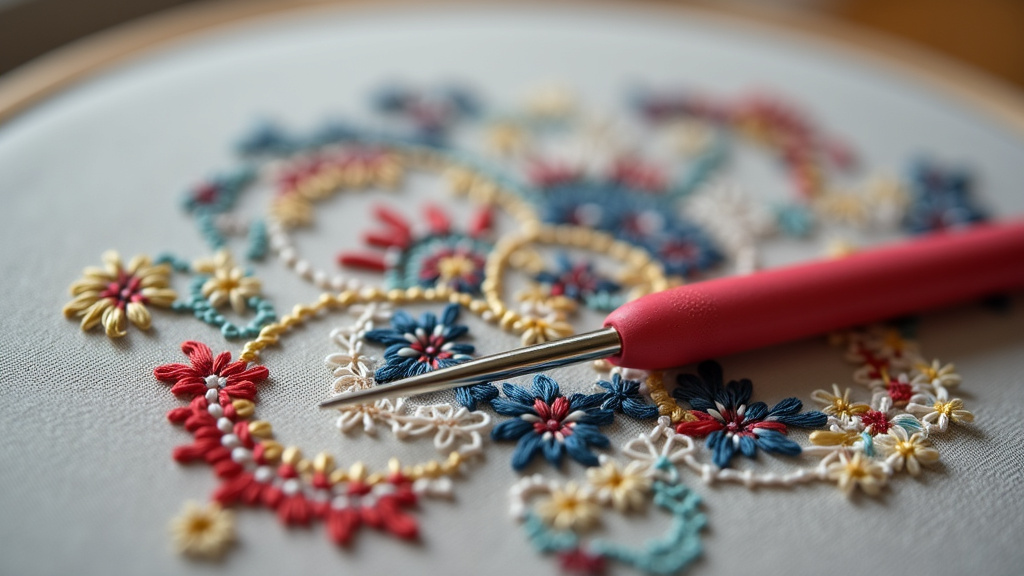
Quick Checklist for Choosing Your Needle
Still feeling a little unsure? Here’s a simple checklist to guide your choice:
- What fabric are you using? Woven fabric = sharp point. Open weave (Aida) = blunt point. Delicate fabric = finer needle.
- What thread are you using? Thick thread = larger needle eye and size. Thin thread = finer needle.
- What stitch are you doing? Counted stitches = blunt needle. Surface stitches = sharp needle. Beading = beading needle.
- Does the needle eye feel too small? Go for a larger eye or a larger needle size number.
- Is the needle snagging your fabric? Try a different point type or a finer needle.
Needle Material and Durability
Most embroidery needles are made from steel. This is a good choice because steel is strong and durable. It resists bending and breaking, which is important when you’re pushing through fabric repeatedly. Some higher-quality needles might have coatings, like nickel or titanium, to make them even smoother and more resistant to rust. For most everyday crafters, a standard steel needle is perfectly adequate. We found that good quality needles can last through many projects if cared for properly.
Caring for Your Embroidery Needles
Taking care of your needles ensures they last longer and perform better. Here’s what we recommend:
- Store them properly: Keep needles in a needle book, magnetic holder, or their original packaging. This prevents them from getting lost or poking through things.
- Keep them dry: Moisture can lead to rust. Wipe your needles dry if they get damp.
- Check for damage: Periodically inspect your needles for bending or a dull tip. If you notice any issues, it’s time for a new one. A damaged needle can damage your fabric.
Many needle manufacturers offer sets that include a variety of sizes and types. This can be a cost-effective way to start. You get to experiment and see which ones you like best. It’s often better to buy a few specific types you need rather than a giant assortment box, especially when you’re starting out.
Conclusion
Choosing the right embroidery needle doesn’t have to be complicated. You’ve learned that needle point types, sizes, and eye shape all play a role in your stitching success. Remember, a sharp point is best for woven fabrics, while a blunt tip protects your threads on open weaves like Aida. Matching your needle size to your thread and fabric prevents frustration and fabric damage. Now you’re ready to confidently select the perfect needle for your next project. Your next step is to gather a few different types based on what you’ve learned and start stitching!
Frequently Asked Questions
Will a blunt needle work for regular sewing?
Generally, no. Blunt needles are designed for specific embroidery fabrics like Aida cloth. For standard sewing on woven fabrics, you’ll want a sharp-pointed needle to easily pierce the material. Using a blunt needle for sewing can cause skipped stitches and fabric damage.
Can I use a sewing needle for embroidery?
While you can sometimes use a sewing needle for very basic embroidery, it’s not ideal. Embroidery needles typically have larger eyes to accommodate thicker embroidery floss, and their points are often designed for specific fabric types. Using the correct embroidery needle will give you cleaner stitches and a better overall result.
How do I know if my needle is too thick for my fabric?
If your needle is leaving noticeably large holes in your fabric or is difficult to push through, it’s likely too thick. For delicate fabrics, always opt for a finer needle with a higher number size. You should also consider the thread thickness; a thick thread will need a larger needle eye.
Are expensive embroidery needles worth the cost?
For most everyday crafters, standard steel embroidery needles are perfectly fine and affordable. Higher-end needles might offer smoother gliding or rust resistance due to special coatings. While they can be a pleasure to use, they aren’t strictly necessary for good results. Focus on getting the right type and size for your project first.
What’s the difference between a tapestry needle and a cross-stitch needle?
These terms are often used interchangeably because they serve a very similar purpose. Both tapestry and cross-stitch needles have blunt tips and large eyes, making them ideal for counted stitches on Aida or evenweave fabric. They prevent snagging and fraying. You might find slight variations in eye size or needle flexibility between brands.