What Is a Standard Ironing Board Size?
A standard ironing board is about 48 to 54 in long and 12 to 15 in wide. Most full-size boards adjust from about 24 to 38 in high, so you can match the height you use.
On this page (9 sections)
- What Is a Standard Ironing Board Size for Everyday Use?
- How Tall Is a Standard Ironing Board?
- What Size Cover Does a Standard Board Need?
- How Do You Choose a Board for Sewing and Pressing?
- Is a Sleeve Board the Same as a Standard Board?
- When Is a Mini Sleeve Board a Better Fit?
- How Do Wheels Change the Size You Need?
- What Mistakes Should You Avoid When Buying a Board?
- Which Size Should You Buy?
A standard ironing board is about 48 to 54 in long and 12 to 15 in wide, with height usually adjustable from about 24 to 38 in. That size gives you room for a shirt body, pants leg, or pillowcase without folding the fabric many times.
If a cover or storage space is involved, measure first. A 54 in board will not fit a cover made for a 48 in board, and a 15 in wide board needs more closet space than a 12 in one.
What Is a Standard Ironing Board Size for Everyday Use?
Most full-size boards in North America fall in the 48 to 54 in length and 12 to 15 in width range. A 54 in board suits tall users and large pieces, while a 48 in board handles most clothing and takes less floor space.
Width affects stability and storage. A 15 in board feels steadier with a wide garment but folds wider, while a 12 in board tucks behind a door or in a closet more easily.
If you sew or do machine embroidery, you also need a board that holds still and a nose that fits into sleeves. See our sewing iron and best iron and ironing board guides for more detail.
How Tall Is a Standard Ironing Board?
A standard board usually adjusts from about 24 to 38 in high. That range covers most adults, but tall users may still bend at the top setting and short users may struggle at the lowest.
Set the height so your forearm is roughly parallel to the floor. Your elbow should stay near a right angle and your wrist should not bend up or down.
Standing ironing and sitting at a table need different heights, so a wide range gives more options. If you need more height, see our best ironing board for tall people guide and check the maximum before you buy.
What Size Cover Does a Standard Board Need?
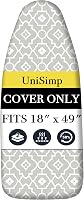
A standard cover should match both the length and width of your board, including the nose. Length is the most common mismatch.
A 54 in board needs a cover cut for 54 in, even if the width looks right. Measure from the tail end to the tip of the nose.
Width matters next. A cover made for a 15 in board will bunch on a 12 in board, and the extra fabric can shift while you press.
Check the nose shape too, since a rounded nose and a tapered nose need different elastic placement.
Padding thickness also changes the fit. A thicker pad adds height around the edge, so a cover that barely fits a thin pad may be too tight with a thicker one.
If your current cover slips, check the elastic and the nose first. For replacement options, see our picks for the best ironing board cover and measure your board before you order.
How Do You Choose a Board for Sewing and Pressing?
For sewing, pick a stable full-size board with a tapered nose and add a small sleeve board for detail work. The full-size board handles yardage, seams, and blocks.
The sleeve board handles sleeves, collars, and hems where a wide board gets in the way.
Stability matters more than extra length for most sewing tasks. A board that wobbles will shift fabric and make seams crooked.
Look for wide legs, a firm lock, and a top that does not flex under the iron. A padded cover with a smooth surface also helps seams lie flat.
If you press often, pair the board with a strong steam iron. The Rowenta AccessSteam Cordreel Steam Iron for Clothes has over 350 micro-holes for steam diffusion, a stainless steel soleplate, and a retractable cord for easier storage.
Those features suit a sewing room where the iron moves back and forth across seams.
For board picks grouped by sewing use, see the best ironing board for sewing.
Is a Sleeve Board the Same as a Standard Board?
No, a sleeve board is much smaller than a standard board. The Newhouse Specialty Padded Sleeve Ironing Board measures 24 in long.
It has a standard board shape on one side and a narrow shape on the other, so you can press a sleeve from either side.
That two-sided shape is the main reason to buy it. One side suits a wider sleeve, and the other side slips inside a narrower one.
The top is 24 in by 4-1/2 in at the butt, with a 3 in nose on one side and a 4 in nose on the other. It sits on a tabletop, so you use it next to a full-size board rather than instead of one.
The Newhouse board uses durable flannel and a heavy duty aluminum frame. Flannel gives the iron a smooth surface, and the aluminum frame keeps the board steady on a table.
It suits sewers who press sleeves often and want one small board with two widths.
When Is a Mini Sleeve Board a Better Fit?
A mini board suits you if you press small areas in a tight space. Pair it with one of the best mini irons for sewing and quilting for detail pressing.
The Household Essentials Basic Sleeve Mini Ironing Board measures 21.9 in long by 4.5 in wide by 4.5 in high.
It is shorter and narrower than the Newhouse board, so it fits on a counter or a small table with less overhang.
Its top is perforated plastic with a foam pad and a natural cotton cover. The foam pad helps reduce creases and imprints on collars and hems.
The cotton cover is 100% cotton, which suits people who prefer a natural fiber surface for pressing.
Household Essentials says this board works for sleeves, collars, hems, and small garments. It also works as a second board next to a full-size one for detail work.
Choose it if storage space is tight, since it stores on a shelf, in a drawer, or in a linen closet. The trade-off is less steady support for larger sleeves than a wider sleeve board gives.
How Do Wheels Change the Size You Need?
Wheels do not change the ironing surface size, but they change how you move and store the board. A board on wheels still needs the same 48 to 54 in by 12 to 15 in surface for standard use.
The wheels add length at the base and can add width where the legs fold.
That extra footprint matters in a small room. Measure the folded size, not just the open size, if you store the board in a closet or behind a door.
Wheels also help if you move the board between rooms, since you can roll it instead of carrying it.
Wheels can reduce stability if the locks are weak. Press down on the nose with the iron and watch for drift before you commit to a model.
For options with casters and locking feet, see the best ironing board on wheels and compare folded dimensions.
What Mistakes Should You Avoid When Buying a Board?
The most common mistake is buying by length alone. A 54 in board is not better for every room, and it may not fit a narrow storage space at all.
Measure the closet, the space behind the door, and the wall where you will stand.
Ignoring height causes the same problem. A board that only reaches 36 in may be too low for a tall user, while one that starts at 30 in may be too high for sitting work.
Check both settings and keep your elbows relaxed at the height you use most.
Skipping the nose is the third mistake. A wide, blunt nose cannot reach inside a sleeve, while a tapered nose reaches farther with less flat area at the tip.
If you sew, plan for a full-size board plus a sleeve board.
Care also matters. Keep the cover clean, check the elastic, and store the board dry, replacing the cover when it thins or scorches.
For embroidery, you need a clean, smooth, stable surface for seams and finished pieces.
Press from the wrong side when you can to protect embroidery thread. Use a pressing cloth for delicate fabrics and let the iron rest instead of scrubbing back and forth.
Check our What Size Needle for Machine Embroidery? guide and rowenta access steam iron reviews before you buy.
Which Size Should You Buy?
Buy a 48 to 54 in by 12 to 15 in board if you want one standard board for clothing and sewing. Choose 54 in if you have the storage space and want more pressing room.
Choose 48 in if space is tight, since it still handles most garments.
Add a sleeve board if you sew. The Newhouse board gives you two widths in one 24 in board.
The Household Essentials mini board gives you a smaller 21.9 in option with a foam pad and cotton cover for collars and hems.
Pair any board with an iron that fits your pressing style. The Rowenta AccessSteam suits users who want strong steam diffusion and a retractable cord.
Then set the height so your wrist stays flat, measure for a cover that matches your board, and store the board where it will stay dry and stable.
Frequently asked questions
What size cover fits a standard ironing board?
Most standard covers are made for boards in the 48 to 54 in by 12 to 15 in range. Measure the length, width, and nose shape before you order.
A cover a few inches too large may slip, while one that is too small will not close underneath.
Is a sleeve ironing board a standard size?
No, sleeve boards are much smaller than a full-size board. The two sleeve boards in this guide measure about 24 in and 21.9 in long.
They are add-on tools for sleeves, collars, and hems, not replacements for a full board.
What height should an ironing board be?
Set the board so your wrist stays fairly flat and your elbow stays near a right angle. For many adults that falls between 32 and 38 in.
Taller users often need the top of the range or more.