How Long Should Embroidery Thread Be?
For hand embroidery, start with about 18 inches of thread. Short lengths are easier to control and less likely to tangle or fray as they pass through fabric.
On this page (7 sections)
- How long should embroidery thread be for hand stitching?
- Why does a shorter strand help prevent tangles?
- Does thread type change the best length?
- How can you keep thread smooth while stitching?
- How should you store embroidery thread between sessions?
- Should you wash embroidery thread before using it?
- What length should you choose for your next project?
For hand embroidery, start with about 18 inches of thread. It is long enough for several stitches but short enough to manage without as much tangling, twisting, or rubbing against the fabric.
If your thread knots or looks fuzzy before you finish a strand, try cutting a shorter length. The right amount is the longest piece you can stitch with comfortably while keeping it smooth.
How long should embroidery thread be for hand stitching?
About 18 inches is a practical starting length for hand embroidery. Some stitchers prefer a little less or more, but the strand should stay easy to pull through the fabric without dragging across your lap or work surface.
Thread passes through the fabric with every stitch. A longer strand makes more passes before you replace it, which can increase friction and leave the thread more prone to fraying or tangling.
Try a 12 to 18 inch length if you are new to hand embroidery or working with delicate thread. If the thread stays smooth and you can guide it easily, adjust gradually rather than jumping to a much longer strand.
Why does a shorter strand help prevent tangles?
A shorter strand has less length to twist and loop around itself. It also gives you more control over the thread as you pull each stitch through.
Thread can twist as you stitch, especially when the needle turns repeatedly in the same direction. Let the needle hang from the fabric now and then so the thread can unwind before a knot forms.
A long strand can also brush against your clothing, the edge of the fabric, or your work surface. If you notice rough spots, fuzz, or knots, cut a fresh piece and use a shorter length.
How long should my embroidery thread be if it keeps knotting?
If your thread keeps knotting, try 12 inches and let the needle hang to release twists. Shortening the thread can make it easier to see and loosen a loop before it tightens into a knot.
Pull the thread through at a steady pace instead of snapping it tight. If a knot forms, stop and ease it out before continuing; pulling harder can tighten it and roughen the strand.
Does thread type change the best length?
Yes, thread thickness and surface affect how easily it passes through fabric. Use a shorter strand when thread feels bulky, delicate, or prone to fraying.
Cotton floss, rayon, metallic thread, and specialty fibers can behave differently. Your needle size and fabric matter too: a tight weave or small needle eye can create extra rubbing as thread passes through.
If you're unsure how thick a thread is, our guide to How to Identify Thread Weight: What You Need to Know explains the weight numbers and labels you may see. For hand embroidery, use that information alongside the thread maker's handling guidance.
Can sewing thread be used for hand embroidery?
Some sewing threads can work for embroidery, but the thread should suit the stitch and fabric. Sewing thread may be finer or have a different finish than embroidery floss, so the result can look different.
Our guide to Can You Use Sewing Thread for Embroidery? covers when it can be a reasonable choice. For other sewing projects, see what weight thread for piecing a quilt and what weight thread for sewing machine.
How can you keep thread smooth while stitching?
Cut cleanly, thread the needle without fraying the end, and pull steadily. If the thread twists, pause and let the needle dangle until the strand relaxes.
Keep the working thread away from rough table edges and avoid dragging it repeatedly over the fabric edge. If you are stitching with multiple strands of floss, separate and recombine them carefully to reduce clumping.
When you finish, keep the unused thread secured on its spool or skein. The ThreadNanny nets stretch around spools and cones to help keep loose ends from unwinding.
Choose a net when you want a cover around thread you already own. It won't change how long your working strand should be, but it can help keep stored thread tidy.
How should you store embroidery thread between sessions?
Keep thread ends secured and store spools where they won't unwind or collect tangles. A stable storage spot makes it easier to start with a clean, manageable length next time.
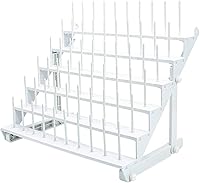
The Sew Tech rack holds up to 60 standard spools or about 30 large cones, and its pegs can be removed to change the layout. It can be mounted on a wall or used free-standing on a table.
Consider it if you have many spools and enough wall or table space for a rack. If you only keep a few colors nearby, a smaller container may suit your setup better.
For large cones that feed directly into a machine, the niffgaff holder has an adjustable thread guide and a nonslip base. It is designed to sit beside a sewing machine or compatible embroidery setup.
This kind of stand can help organize machine feeding, but it doesn't set the right hand-stitching length. Cut a separate manageable strand when switching to handwork.
Should you wash embroidery thread before using it?
Check the thread's care guidance before washing it. Washing is separate from choosing a stitching length, and the thread's color and fiber can affect how it behaves.
Test a small piece if you are unsure whether color will bleed. Our guide to Can Embroidery Thread Be Washed?: What You Need to Know explains how to think about washing and colorfastness.
What length should you choose for your next project?
For most hand embroidery, begin with about 18 inches, then shorten it if the thread twists, tangles, or frays. A comfortable strand matters more than following an exact measurement.
Choose a shorter piece for delicate thread, dense fabric, or stitches that pull the thread through the material often. If you can finish several stitches smoothly and the thread stays in good shape, keep using that length.
Once you find a length that feels manageable, cut similar pieces for the rest of the project. Check how long embroidery thread should be again if you change thread type or fabric.
Frequently asked questions
How long should embroidery thread be for hand stitching?
Start with about 18 inches of working thread for hand embroidery. This length is easier to guide than a long strand and reduces the repeated rubbing that can cause tangles or wear.
If it feels awkward, try a shorter length; thicker or delicate thread may need extra care.
Can embroidery thread be too short?
Yes. A very short strand means more frequent rethreading and can leave a knot close to the fabric.
Use enough thread to make several stitches comfortably, while keeping the length manageable in your hand and across the project.
Why does my embroidery thread keep tangling?
Long thread, twists in the strand, and pulling at an uneven angle can all contribute to tangles. Let the needle hang occasionally so the thread can unwind, and shorten the working length if knots keep forming.
Should I use the same thread length for every embroidery project?
No. About 18 inches is a useful starting point, but the best length depends on the thread, stitch, fabric, and how comfortably you can guide it.
Use less for delicate thread or dense fabric, and adjust if the strand twists or frays.