What Weight Thread Should You Use in a Sewing Machine?
Use 40-weight all-purpose thread for most machine sewing. Choose a finer 50- to 60-weight thread for lightweight fabric and a heavier 30-weight thread when you need visible topstitching or extra seam presence.
On this page (9 sections)
- What weight thread for a sewing machine works best?
- How does thread weight match the fabric?
- What needle should you use with each thread weight?
- How do thread weight and seam strength relate?
- Should the top thread and bobbin thread be the same weight?
- How should you store sewing thread before machine sewing?
- How do large cones feed into a sewing machine?
- How can you test thread weight before sewing?
- What weight thread should you use in a sewing machine?
Use 40-weight thread for most sewing machine projects. Choose 50- or 60-weight thread for lightweight fabric, 30-weight thread for bold topstitching, and a weight that works with your needle, fabric and stitch length.
Thread weight is only one part of the choice. Fiber, twist, needle size, machine tension and the way you use the seam all affect the result.
For beginners, 40-weight thread is a sensible start because it behaves predictably on many common woven fabrics. It is thick enough to show clearly in a seam, yet fine enough for a standard universal needle without constant fraying.
On lightweight fabric, that same thread can look too heavy and leave a raised line that changes the drape. A finer 50- or 60-weight thread sits flatter and blends more easily into thin cotton, linen blends and lining fabrics.
On heavier fabric, a finer thread may disappear into the weave and give less visible strength at the surface. A 30-weight thread creates a stronger line for topstitching, but it needs room in the needle eye and a stitch length that suits its thickness.
Check the needle first, because the right thread in the wrong needle will still sew badly. The thread should sit in the eye without rubbing, and the needle should match the fabric rather than leaving large holes.
Test your choice on a scrap with the same layers as the project. That small sample shows whether weight, needle and tension work together before you commit to the real seam.
What weight thread for a sewing machine works best?
The best weight thread for machine sewing is usually 40-weight all-purpose thread. It gives a practical middle ground for everyday seams, hems and general repairs.
Use a lighter thread when thick thread would show through delicate fabric or crowd the needle eye. Use a heavier thread when the thread itself is part of the design, such as topstitching on denim, canvas or home sewing projects.
The appeal of 40-weight thread is balance rather than special performance. It suits medium-weight woven cotton, linen blends and many garment fabrics without demanding a new needle for every project.
It also feeds well through standard machine paths, which helps when you are learning how tension and stitch length affect a seam. That steady behaviour makes it a sensible default while you build experience.
A lighter 50- or 60-weight thread is better when the fabric is thin or the seam needs to stay discreet. It reduces bulk at crossings and keeps fine details from looking overstitched.
A heavier 30-weight thread is better when the stitch line should stand out. Denim, canvas and home sewing fabrics can support that visual weight, especially for topstitching around pockets, cuffs and straps.
The trade-off is that heavier thread needs more attention. It may require a larger needle eye, a longer stitch length and a gradual tension adjustment.
If you switch weights often, note which needle and stitch length worked for each fabric. That record turns a simple starting point into a reliable routine.
| Thread weight | Typical use | What to watch |
|---|---|---|
| 30 weight | Bold topstitching and visible details | May need a larger needle and adjusted tension |
| 40 weight | General seams, hems and repairs | A strong starting point for many fabrics |
| 50 weight | Quilting, light garments and finer seams | Can look less visible on lightweight fabric |
| 60 weight | Delicate fabric and fine details | Needs a suitable small needle and careful tension |
These are starting points, not strict rules. Thread manufacturers can use different fiber blends and construction methods, so two threads with the same number may not behave exactly alike.
For a closer explanation of the numbering system, read How to Identify Thread Weight: What You Need to Know.
How does thread weight match the fabric?
Match the thread to the fabric's weight and surface, then confirm the choice with a test seam. Lightweight cotton, silk-like fabric and fine blends usually look cleaner with a finer thread, while denim and canvas can handle a heavier thread.
A 40-weight thread is often a useful choice for medium-weight woven cotton, linen blends and general garment sewing. It can also work for many repairs because it gives enough presence without making the seam look bulky.
A finer 50- or 60-weight thread can reduce visual bulk on thin fabric. It may also help the stitches blend into a light fabric instead of standing out as a heavy line.
A 30-weight thread creates a more noticeable stitch line. It suits decorative seams and topstitching when the machine, needle and fabric can handle the extra thickness.
For quilt seams, a finer thread is often preferred because it keeps pieced layers from gaining unnecessary bulk. See our guide to what weight thread for piecing a quilt before choosing thread for a piecing project.
What needle should you use with each thread weight?
Use a needle with an eye large enough for the thread, but not so large that it leaves oversized holes in the fabric. The thread should pass through the eye without fraying, snagging or needing force.
A universal needle is a reasonable starting point for 40-weight all-purpose thread on common woven fabrics. A smaller needle may suit fine thread and lightweight fabric, while a larger needle can help with heavier thread and dense material.
Change the needle when the thread starts shredding, the stitches skip or the fabric shows large holes. A worn or bent needle can create problems that look like incorrect thread tension.
The needle system also depends on the machine. Check your sewing machine manual before using specialty needles, heavy thread or unusual thread paths.
What weight thread for sewing machine needles?
For 40-weight thread, start with a standard universal needle size that suits your fabric. For 30-weight thread, check whether the needle eye is large enough, and for 50- or 60-weight thread, avoid pairing a fine thread with a needle that makes oversized holes.
Thread weight and needle size should move together. A thick thread in a small eye can fray, while a fine thread in a large eye may produce loose-looking stitches.
Test a straight seam on a fabric scrap using the same layers as the project. Check both sides of the sample before adjusting tension or changing the needle.
How do thread weight and seam strength relate?
A heavier thread does not automatically make every seam stronger. Seam strength depends on thread, stitch type, stitch length, fabric, seam allowance and how the finished item will be used.
A 40-weight thread is often enough for everyday seams when the stitch is balanced and the fabric is suitable. For high-stress areas, choose a thread made for the fabric and construction rather than simply selecting the lowest weight number.
A heavy thread can add bulk at seam crossings and may make a seam less flexible. A fine thread can look neat but may not suit a project that needs a visible, durable topstitch.
Use a shorter stitch length for some construction seams and a longer length for topstitching, following the fabric and machine guidance. Sew a test line before committing to a visible finish.
Should the top thread and bobbin thread be the same weight?
The top thread and bobbin thread do not always have to be identical, but they should work together. For regular sewing, matching thread weight and fiber in the needle and bobbin keeps tension easier to balance.
A lighter bobbin thread can reduce bulk in some embroidery and specialty setups. Follow the machine manual and use a bobbin thread that unwinds smoothly without causing loops or uneven tension.
For a practical guide to this choice, read What Bobbin Thread Weight Should I Use?: A Complete Guide.
Matching weight helps because tension is a shared balance between the two threads. When both threads have similar thickness and texture, small tension changes have a predictable effect.
When the weights differ, the machine may need a different setting to keep the seam flat. A fine bobbin thread under a heavier top thread can reduce bulk, but it can also show loops if the balance is off.
Fiber matters as well as weight. Two threads with the same number can unwind differently, so check that the bobbin thread moves smoothly in its case without snagging.
Before sewing the project, make a sample with the same top thread, bobbin thread, needle and fabric layers. Thread the machine exactly as you plan to sew, keeping needle, layers and stitch length the same.
Look at the top side first for even stitches and a straight line. Then turn the sample over and check the underside for loops, tight knots or a wavy line.
If loops appear on the underside, rethread the machine and check the bobbin path before changing thread. Small adjustments work better than swapping weight and tension at the same time.
For everyday seams, keeping both threads the same weight is the simplest setup. It suits beginners and avoids extra tuning when fabric and needle already suit the project.
For specialty work, a lighter bobbin thread may be worth testing. Sew a longer sample, because a short line can hide problems that appear as the seam continues.
Keep the sample and note the fabric, needle size and both thread weights. That record makes the next project faster, especially when you return to the same fabric after a gap.
Clean the bobbin area before testing a new pairing, because lint can mimic a tension problem. Change one variable at a time when you adjust the sample, so you can see what fixed any loop or puckering.
How should you store sewing thread before machine sewing?
Store thread so it stays clean, dry and protected from unwinding. Loose ends can tangle around nearby spools, change the way thread feeds and make it harder to identify the weight or color you need.
The ThreadNanny nets are made from a stretchable nylon and polyester blend. They are reusable, machine washable and designed to wrap around spools like a spool sock, with the thread end left accessible.
This type of spool net suits a sewing area with loose ends, metallic thread or large cones that tend to unwind. The 6 in length gives you a defined size to work with, while the stretch lets the net fit different spool diameters.
The trade-off is that a net organizes the spool but does not replace a stand or rack. You still need a stable feeding position when the machine is running.
If you need a larger storage system, a rack can keep colors and weights visible at the same time.
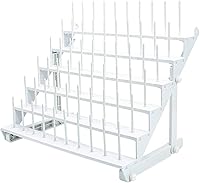
The Sew Tech rack is made from plastic and has a bright white finish. It can be wall mounted or free-standing on a table, and its detachable pegs can be rearranged for larger cones or unusual spool sizes.
Its 60 long pegs suit a collection with many colors, thread weights or machine types. You can place up to 2 spools on 1 peg or use every other peg for large cones, depending on the spool size and arrangement.
Assembly instructions and thread holder parts are included. The rack measures 12.75 in deep by 17.25 in wide by 15.1 in high, so measure the planned location before setting it up.
The trade-off is footprint. A rack gives quick visual access, but it needs a dedicated wall or table area.
How do large cones feed into a sewing machine?
Large cones should feed upward in a straight, controlled path instead of pulling sideways from a small built-in spool pin. An external stand can help when the cone is too large for the machine's spool area or when the thread path feels awkward.
The niffgaff holder measures 5.3 in deep by 5.3 in wide by 18.3 in high. Its adjustable guide height lets you change the feed point for different machine heights, spool sizes and cone shapes.
The all-metal stand gives the holder a rigid frame, while the nonslip base helps it stay planted during sewing. It can also suit compatible embroidery, quilting and serger setups that use large spools or cones.
The holder includes hardware and is designed for floor mounting. The trade-off is that it is a separate stand, so you need space beside the machine and a thread path that reaches the needle without rubbing.
Use a spool net when the cone unwinds loosely, and use the external holder when the main issue is feeding height or spool size. For thread length planning, read How Long Should Embroidery Thread Be?.
How can you test thread weight before sewing?
Test the thread on a scrap that matches the project's fabric and layer count. A balanced sample should have even stitches, no loops on the back and no fraying at the needle.
Start with the machine's normal tension and a needle suited to the fabric. Sew a few inches, then check the top and underside of the seam.
If the thread loops on the underside, check threading and tension before changing thread weight. If it frays, inspect the needle eye, thread path and machine speed.
If the stitches look tight or the fabric puckers, try a finer thread, a different needle or a longer stitch length. Make one change at a time so you can see what solved the problem.
Keep a small sample from successful projects with the fabric type, thread weight and needle size noted. That record can save time when you sew a similar material later.
What weight thread should you use in a sewing machine?
Choose 40-weight thread for a general starting point, then adjust to the fabric and the look you want. Pick 50- or 60-weight thread for fine fabric, 30-weight thread for visible topstitching, and a suitable needle for every change.
The right thread weight forms balanced stitches without damaging the fabric. Test before sewing the final piece, especially when changing thread fiber, needle size or seam layers.
Start by naming the seam you need to make. A hidden construction seam, a hem and a decorative topstitch each ask for a different visual weight.
For a hidden seam on medium fabric, 40-weight thread usually gives a clean balance. It holds the seam together without adding a line that shows through the fabric surface.
For a hem on lightweight fabric, try a finer 50- or 60-weight thread first. It keeps the hem flatter and reduces the chance of the thread line printing through thin material.
For topstitching on denim or canvas, a 30-weight thread can make the line read clearly. Use a needle with enough eye space and a stitch length that lets the thread lie flat.
Change the needle whenever you change weight in a serious way. A needle that suits fine thread may be too small for heavy thread, and a large needle can leave holes in light fabric.
Thread the machine carefully after each change and check the thread path for twists. A twisted path can pull the thread sideways and create uneven stitches.
Sew a test seam on matching fabric with the same layer count. Check the top and underside for loops, fraying, puckering or holes.
If the sample looks balanced, keep it with notes on thread weight, needle size and stitch length. That small record helps when you sew the same fabric again.
Store finished spools so loose ends do not unwind into the next project. Clean storage keeps the thread ready and makes the next choice easier to see.
If unwinding is the main problem, a spool net can keep the end in place without changing how the spool feeds. That suits metallic thread and large cones that tend to unravel.
If finding colors and weights is the main problem, a rack keeps many spools visible at once. That suits a growing collection, but it needs a clear wall or table area.
If a large cone will not sit well on the machine, an external holder can raise the feed point. That helps when the built-in spool area is too small for the cone shape.
Match the storage fix to the actual problem rather than buying for every issue at once. Nets control loose ends, racks organize choice, and stands improve feeding height.
Use the ThreadNanny nets when loose ends and unwinding are the main problem. Choose the Sew Tech rack when you want many spools or cones visible and organized, or the niffgaff holder when a large cone needs a separate, raised feed path.
Return to the test seam whenever fiber changes, even at the same weight number. Different fibers can unwind and sit in the needle in different ways.
Frequently asked questions
What is the best weight thread for machine sewing?
40-weight all-purpose thread is the best starting point for most machine sewing because it suits many common fabrics and standard needles. Move to 50- or 60-weight thread for lighter fabrics, or 30-weight thread when you want a stronger visual line for topstitching.
Always match the needle and test the stitch.
Is 40-weight thread thicker than 50-weight thread?
Yes. In standard thread-weight labeling, a lower number usually means a thicker thread, so 40-weight thread is thicker than 50-weight thread.
The exact feel also depends on the thread fiber and construction, so use the weight as a guide, then check how the thread passes through the needle and forms stitches on a fabric scrap.
Can you use embroidery thread in a sewing machine?
You can use some machine embroidery threads in a sewing machine when the thread, needle and stitch are suitable for the project. Embroidery thread may have a different finish and sheen from regular sewing thread, so test tension and stitch formation first.
Use the machine's recommended bobbin thread for balanced results.
What needle should I use with 40-weight thread?
A universal needle in a size suited to the fabric is a useful starting point for 40-weight thread. Lightweight woven fabric may need a smaller needle, while denim and other dense materials need a larger, stronger needle.
The thread should sit cleanly in the needle eye without excessive rubbing.