How to Do Punch Needle Embroidery
To needle punch embroidery, stretch a suitable fabric tightly in a hoop, thread the punch needle, and keep its tip close to the surface as you make even punches. Work in one direction, then turn the fabric over to check that the loops hold.
On this page (8 sections)
- What do you need to start needle punch embroidery?
- How do you set up the fabric and hoop?
- How do you thread a punch needle?
- How do you make consistent punch needle loops?
- How do you keep punch needle loops from coming loose?
- What should you do when stitches look uneven?
- How do you finish a punch needle design?
- How do you choose a punch needle setup?
To needle punch embroidery, stretch woven fabric firmly, thread a punch needle, and make steady punches while keeping the tip close to the surface. The needle forms loops on the back of the fabric, so check that side often to spot loose or uneven stitches early.
Punch needle work relies on a simple rhythm: push through, lift just enough to move, and push again. The right fabric, needle, and yarn must work together for the loops to stay in place.
What do you need to start needle punch embroidery?
You need a punch needle, compatible yarn or thread, woven fabric, and a hoop or frame. Scissors and a threader can make setup easier.
Punch needles vary in opening size and depth. Match the needle to the strand and cloth: a thick yarn needs a wider opening, while finer thread needs a narrower needle and a tighter weave.
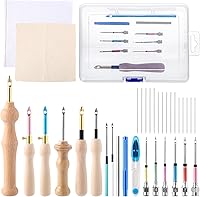
A starter kit can provide several needle sizes and fabric pieces for practice. The Needbrock 35 Pcs Punch Needle Kit includes adjustable wooden handle punch needles, monk's cloth, cross stitch cloth, large eye blunt needles, threaders, and yarn scissors.
The set lists monk's cloth at 11.8 x 11.8 inches and cross stitch cloth at 9.5 x 9.5 inches. It does not include a pattern, so draw a simple shape or use a design you already have.
For help choosing a tool, compare the best embroidery needle pens. A punch needle is made to form loops in cloth, while a felting tool is made to tangle fibers.
How do you set up the fabric and hoop?
Stretch the fabric until it feels firm and stays in place when you press it lightly. It should not sag, wrinkle, or slide around the hoop.
Center the working area in the hoop and tighten the screw or frame evenly. Pull the fabric in small amounts around the edge to keep the weave straight without distorting the design.
Check the back of the fabric before punching. If the weave opens widely when you pull it, tighten the hoop or choose a fabric with a weave better suited to the needle and thread.
Does the fabric need to be tight for punch needle embroidery?
Yes, firm fabric tension helps the weave close around the needle after each punch. Loose cloth can let loops slip out or make the needle drag the fabric along.
Retighten the hoop as you work. If the cloth loosens after repeated punches, stop and secure it before continuing.
How do you thread a punch needle?
Feed the strand through the needle's handle and out through the hollow needle tip, following the tool's threading path. A threader can help guide yarn or thread through a narrow opening.
Cut the strand cleanly and leave a free tail on the fabric side. Pull a short length through the needle so it can move without snagging as you punch.
The MSDADA 21PC Punch Needle Kit includes a plastic handle yarn punch needle, wooden handle embroidery needles, threaders, cloth, and a hoop. Its plastic handle needle has 4 length settings, which can be adjusted for different stitch depths.
The kit's cloth has no pattern, and embroidery thread is not included. Choose a strand that fits the needle opening and moves freely through it.
If you're deciding between hand embroidery tools, our guide to types of embroidery needles explains how needle shapes and uses differ. A standard sewing needle does not make punch needle loops.
How do you make consistent punch needle loops?
Hold the needle with its opening facing the direction you plan to move, then punch to the tool's depth stop. Lift the tip only enough to skim over the fabric before making the next punch.
Keep the needle tip close to the cloth as you advance. Pulling it high between stitches can draw loops back out of the fabric.
Start with a straight line or a small filled shape. Punch at a steady pace, letting the strand feed from the ball or skein without pulling it tight.
Turn the hoop or fabric instead of twisting your wrist sharply around a curve. Shorter stitches help you follow small bends and corners.
How far apart should punch needle stitches be?
Space the punches close enough to cover the design without crushing the fabric. The needle size and strand thickness determine the spacing, so make a small test area before filling a large shape.
If gaps show between loops on the back, add punches gradually. If the cloth bunches or the needle becomes hard to push, space the stitches farther apart.
How do you keep punch needle loops from coming loose?
Keep the working strand loose and the needle close to the fabric between punches. The yarn should feed freely rather than being pulled tight from the back.
Inspect the back after each short row. If loops disappear, check that the needle faces the direction of travel, the fabric is taut, and the tail is not being tugged.
Avoid dragging the needle sideways through the cloth. Lift it just enough to move to the next point, then push it straight through again.
What should you do when stitches look uneven?
Pause and identify whether the problem is tension, strand feed, needle depth, or stitch spacing. Change one thing at a time and test a few punches on the edge of the design.
- If loops vary in height, use the same depth and motion for each punch.
- If the strand catches, loosen the supply and clear any kink.
- If the fabric shifts, retighten the hoop.
- If the back looks sparse, add stitches without forcing the needle.
Needle felting tools serve a different purpose. Clover's 507079 Pen Style Needle Felting Tool can use 1, 2, or 3 needles for 3-dimensional designs and appliqué, but it does not replace a threaded punch needle.
If you are working with a regular embroidery needle, see whether you can use an universal needle for embroidery. Punch needle work needs a tool designed to carry a strand through fabric.
How do you finish a punch needle design?
Check the front and back before removing the fabric from the hoop. Fill any thin areas, secure the working strand, and trim loose ends carefully.
Handle the loops gently while trimming. Avoid cutting close to the fabric or across the looped surface.
Follow the pattern or fabric guidance for finishing the back. If you plan to wash or frame the piece, check that the material and yarn are suitable for that use.
How do you choose a punch needle setup?
For a first project, pick a needle and strand that pass smoothly through a firm, compatible fabric. Practice a small test patch before committing to a larger design.
The Needbrock kit suits learners who want several needle sizes and two cloth types to compare. The MSDADA kit adds an included hoop and an adjustable needle, while the Clover pen is for needle felting rather than punch needle embroidery.
For steady loops, keep the fabric taut, the strand free, and the needle tip near the surface. Those three checks solve many common punch needle problems as you work.
Frequently asked questions
What fabric is best for punch needle embroidery?
Choose fabric with a weave that holds the needle openings closed after each punch. Monk's cloth is a common choice for yarn punch needle work, while finer needles need a fabric suited to their smaller thread.
Keep the fabric stretched firmly in a hoop or frame so it doesn't shift as you punch.
Why do my punch needle loops keep coming out?
Loops usually pull out when the fabric is loose, the yarn or thread can't move freely, or the needle lifts too far from the surface between punches. Tighten the fabric, check that the strand feeds without snags, and keep the needle tip close to the cloth as you move.
Do you push a punch needle all the way through fabric?
The needle tip passes through the fabric, but the handle and most of the needle stay above it. Push until the needle's depth stop or handle reaches the cloth, then lift only enough for the tip to skim the surface before the next punch.
Is punch needle embroidery the same as needle felting?
No. Punch needle embroidery forms loops in woven fabric by pushing a threaded needle through it.
Needle felting uses barbed needles to tangle fibers together, often on a foam surface.
A pen style felting tool is meant for felting and appliqué, so use a punch needle for looped embroidery.