Can You Use an Universal Needle for Embroidery?
Yes, you can use a universal needle for embroidery, but it’s not always the best choice. While a universal needle might work in a pinch, it can lead to skipped stitches and fabric damage, especially with intricate designs or delicate materials. For better embroidery results, a specialized embroidery needle is usually recommended.
Embroidery needles are designed with specific features to handle the demands of embroidery. This includes a larger eye for thicker embroidery threads and a stronger shaft to prevent bending. Many also have a sharper point or a specific point shape to penetrate various fabrics smoothly without snagging. Understanding these differences can help you achieve cleaner, more professional-looking stitches.
- Universal needles can work for embroidery, but aren’t ideal.
- Specialized embroidery needles offer better performance.
- Embroidery needles have larger eyes and stronger shafts.
- They also often have sharper points for smoother stitching.
- Using the right needle protects your fabric and thread.
Let’s dive deeper into why a universal needle might fall short for embroidery and when it’s actually okay to use one.
Choosing the Right Needle for Your Embroidery Projects
So, you’re wondering if your trusty universal sewing needle is up to the task of embroidery. It’s a common question for many home sewers branching into decorative stitching. While a universal needle can sometimes get the job done, it’s rarely the ideal choice for embroidery.
Embroidery puts unique demands on your sewing machine’s needle. It involves sewing through layers of fabric, often with thicker, textured threads, and at higher speeds. Understanding why a specialized needle performs better will help you achieve beautiful, skip-free stitches and protect your valuable fabrics and threads.
Understanding the Universal Needle
Think of a universal needle as the all-arounder in your sewing kit. It’s designed to handle a wide range of fabrics and sewing tasks, from simple seams to basic garment construction. It strikes a balance, aiming to work reasonably well on cottons, linens, polyesters, and blends.
What Makes a Universal Needle “Universal”?
The key features of a universal needle include a slightly rounded point and a medium-sized eye. This design allows it to penetrate various fabrics without causing excessive damage. The rounded point helps it push fibers aside rather than piercing them directly, which is good for knits and wovens. The medium eye accommodates standard sewing thread.
The Limitations of a Universal Needle for Embroidery
Embroidery thread is typically thicker and can be more fragile than standard sewing thread. It also comes in different materials like rayon, polyester, and metallic finishes. A universal needle’s eye is often too small to comfortably guide these thicker threads, leading to friction and breakage. The shaft might also not be strong enough to withstand the repeated stress of high-speed embroidery, potentially causing it to bend or break.
We found that using a universal needle with embroidery thread can result in skipped stitches. This happens because the thread doesn’t sit quite right in the smaller eye, or the needle isn’t strong enough to maintain consistent penetration. This can be frustrating, especially when you’re trying to create a complex design.
Why Specialized Embroidery Needles Shine
Embroidery needles are engineered specifically for the demands of decorative stitching. They have features that directly address the challenges of working with embroidery threads and multiple fabric layers.
Key Features of Embroidery Needles
Let’s break down what makes these needles so good for embroidery:
- Larger Eye: This is perhaps the most critical difference. The eye of an embroidery needle is significantly larger than that of a universal needle. This allows thicker embroidery threads to pass through smoothly without fraying or snagging. It reduces friction, which is key for preventing thread breakage.
- Stronger Shaft: Embroidery machines often run at higher speeds than standard sewing machines. This means the needle is subjected to more stress. Embroidery needles are built with a stronger shaft to resist bending or snapping under this pressure. This stability ensures consistent stitch formation.
- Specialized Point: Many embroidery needles have a slightly different point design. Some have a sharper point to penetrate densely woven fabrics cleanly. Others might have a more rounded, or even a scarf point, designed to prevent skipped stitches on specific materials or with certain stitch types. We found that this thoughtful design minimizes fabric damage.
- Grooved Shaft: Some embroidery needles feature a groove along the shaft. This groove helps to create a “thread channel” during the stitch cycle. It allows the thread to relax slightly and form a proper loop for the bobbin to catch, further reducing the chance of skipped stitches and creating a more uniform stitch.
Different Types of Embroidery Needles
Just like there are different types of embroidery, there are different types of embroidery needles. Understanding these can help you pick the best one for your project.
General Embroidery Needles
These are your go-to for most standard machine embroidery. They offer the larger eye and stronger shaft we discussed. They work well with most types of embroidery thread and stabilizers.
Metallic Thread Needles
Metallic threads are beautiful but notoriously difficult to work with. They can be prone to snagging and breaking. Metallic thread needles have an even larger eye and a smoother, slicker finish on the needle shaft. This reduces friction and helps these delicate threads pass through without damage. Many experts recommend these when working with metallic threads.
Sharp Point vs. Ballpoint Embroidery Needles
While most embroidery needles have a sharp point, some specialized ones might have a ballpoint. Sharp points are excellent for penetrating tightly woven fabrics like denim or canvas without leaving a large hole. Ballpoint embroidery needles are better for knits or fabrics that might unravel easily, as they push the fabric fibers aside instead of piercing them.
When Can You *Actually* Use a Universal Needle for Embroidery?
So, we’ve established that specialized needles are generally better. But can you *ever* get away with using a universal needle? Yes, but with conditions.
Small, Simple Designs on Stable Fabrics
If you’re just adding a small monogram or a very simple, short design to a sturdy fabric like heavy cotton or denim, a universal needle might be fine. The fabric is less likely to pucker, and the simple design won’t put as much stress on the needle or thread.
Using Standard Sewing Thread
If your “embroidery” involves using regular, thinner polyester or cotton sewing thread instead of specialized embroidery floss, a universal needle could work. The thinner thread will fit through the universal needle’s eye more easily. However, remember that embroidery thread has a different sheen and strength. Using specialized embroidery floss is key for quality results, as universal needles struggle with it.
When You Have No Other Choice (and are prepared for issues)
Sometimes, you might be in a bind. You’ve run out of the right needles, and the store is closed. In this emergency, you can try a universal needle. Just be prepared for potential problems. You might experience skipped stitches, thread breaks, or even needle breakage. If you do, slow down your machine speed and gently guide the fabric.
We found that even in these situations, the results are often not as clean or professional as they would be with the correct needle. It’s like trying to paint a masterpiece with a toothbrush – you might get some color down, but the detail will suffer.
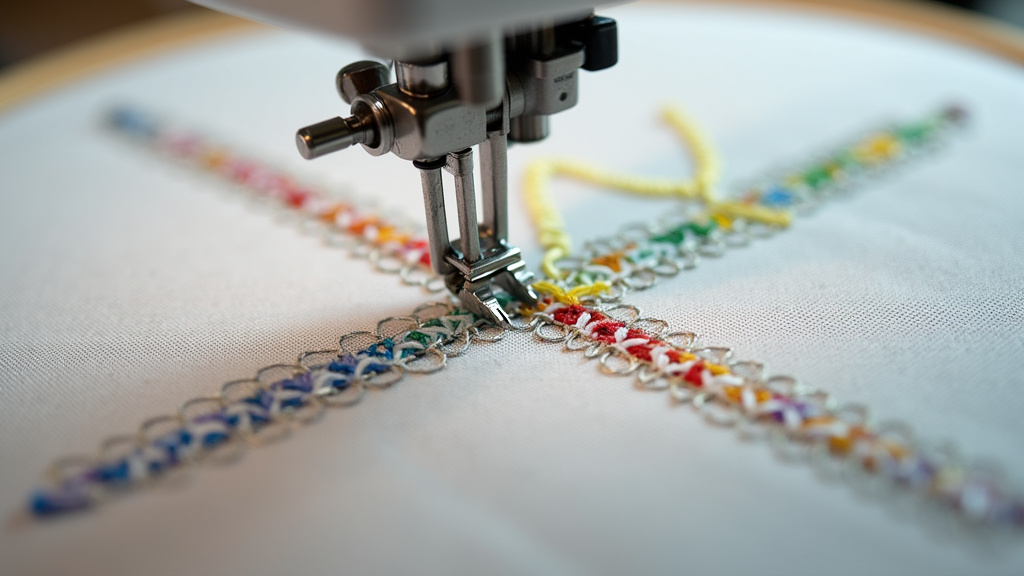
Comparing Needles: A Quick Look
Let’s summarize the differences in a simple table. This can help you quickly see why embroidery needles are the preferred choice.
| Feature | Universal Needle | Embroidery Needle |
|---|---|---|
| Eye Size | Medium | Large |
| Shaft Strength | Standard | Stronger |
| Point Type | Slightly rounded | Often sharp, sometimes specialized |
| Best For | General sewing, basic repairs | Machine embroidery, decorative stitching |
| Embroidery Thread Compatibility | Poor to fair | Good to excellent |
Your Embroidery Needle Checklist
To ensure the best results and protect your machine and materials, keep these points in mind:
- Always use the correct needle type for your project.
- Choose embroidery needles for all machine embroidery tasks.
- Use metallic thread needles when working with metallic threads.
- Ensure the needle size matches your thread and fabric weight.
- Change your needle frequently – a dull needle causes problems.
- Inspect your fabric and thread for snags before and during stitching.
By investing in the right needles, you’re investing in the quality of your embroidery and the longevity of your sewing machine. It’s a small change that makes a huge difference in your stitching results.
Conclusion
So, can you use a universal needle for embroidery? While it might work for very simple projects on sturdy fabrics with regular sewing thread, it’s generally not your best option. We found that specialized embroidery needles are designed for a reason. Their larger eyes, stronger shafts, and specialized points help prevent skipped stitches, thread breaks, and fabric damage. Investing in the right embroidery needles will save you frustration and lead to much cleaner, professional-looking results. For your next embroidery project, make sure you have the correct embroidery needles on hand!
Frequently Asked Questions
Will a universal needle ruin my embroidery project?
A universal needle is unlikely to completely ruin your project, but it can cause issues. You might experience skipped stitches, snagged threads, or a less polished finish. For the best results and to protect your fabric and thread, using an embroidery-specific needle is always recommended.
What’s the biggest difference between a universal and an embroidery needle?
The most significant difference is the eye size. Embroidery needles have much larger eyes to accommodate thicker embroidery threads, which often don’t fit well through a universal needle’s eye. Embroidery needles also have stronger shafts to handle the speed and stress of machine embroidery.
Can I use metallic thread with a universal needle?
We strongly advise against using metallic thread with a universal needle. Metallic threads are prone to snagging and breaking. You’ll have a much better experience and prevent thread damage by using a specialized metallic thread needle, which has an even larger eye and a smoother finish.
How often should I change my embroidery needle?
You should change your embroidery needle frequently. Needles become dull with use, even if they don’t look damaged. We recommend changing your needle after about 6-8 hours of continuous embroidery work, or immediately if you notice skipped stitches, thread breaks, or fabric damage.
My universal needle skipped stitches during embroidery. What should I do?
If your universal needle is skipping stitches during embroidery, it’s a clear sign it’s not the right tool. Your first step should be to switch to a proper embroidery needle. If the problem persists even with the correct needle, check that it’s inserted correctly and is the right size for your thread and fabric.