8 Best Multi Needle Embroidery Machines (November 2026)
The best multi needle embroidery machines include the Brother SE700 Sewing and Embroidery Machine for sewing and embroidery together, the Smartstitch S-1001 Upgraded Embroidery Machine for first commercial upgrades, and the Smartstitch S-1201 Plus Embroidery Machine for a larger mid-size work area.
On this page (5 sections)
The best multi needle embroidery machine for most growing businesses is the Smartstitch S-1001, with 10 needles, automatic color changes, a 9.5 x 14.2 in area and 1,200 SPM speed.
That mix suits a studio moving from occasional embroidery to regular orders. Ten needles keep common logo colors loaded, and the area covers many shirts, hats and flat items without forcing a move to a much larger frame.
Choose Brother for sewing and embroidery in one compact machine, or BAI and Smartstitch for larger production work. The right choice depends on whether you need everyday sewing stitches or dedicated multi-color production.
We compared needle count, embroidery area, automatic color changes, transfer options, cap support and setup demands. Each factor matters differently, so a large area only helps if your designs need it.
Our score weighs specs, features and buyer feedback against what you're shopping for. A machine with strong speed still needs suitable hooping equipment, stable placement and a file workflow you can manage.
Think about your normal order mix before you rank the picks. Repeat logos reward automatic color changes, while large layouts reward hoop area and steady stitching at production speed.
Also consider who will run the machine day to day. Touchscreen controls, clear file transfer and support after delivery can matter as much as the headline needle count.
If you are still deciding between a home machine and commercial equipment, compare these picks with our guide to the best embroidery machine for small business.
For larger production rooms, our guide to the best commercial embroidery machine covers the next step. That guide helps when a compact combo machine no longer fits your goals.
Use the shortlist to narrow the field, then check dimensions and included accessories for each model. A careful match now is easier than trying to fit oversized equipment into a small work space later.
Our picks at a glance
-
1
 Best for sewing and embroidery together
Brother SE700 Sewing and Embroidery Machine
9.7/10 our score
See it on Amazon -
2
 Best for first commercial upgrades
Smartstitch S-1001 Upgraded Embroidery Machine
9.6/10 our score
See it on Amazon -
3
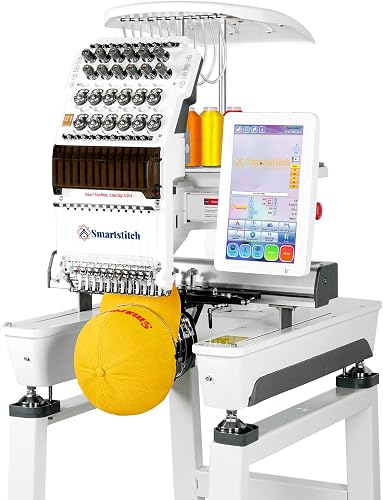 Best for a larger mid-size work area
Smartstitch S-1201 Plus Embroidery Machine
9.3/10 our score
See it on Amazon
- 4
 Check it
BAI The Mirror 15 Needle 20"x14" Large
Best for growing custom apparel shops - 5
 Check it
Smartstitch S-1502HC Beast Embroidery Machine with Two
Best for two-item production - 6
 Check it
Smartstitch S-1501 Commercial Embroidery Machine
Best for starting a 15-needle business - 7
 Check it
Poolin EOM 15 Needle Commercial Embroidery Machine
Best for hats and repeat logos - 8
 Check it
BAI The Vision 15-Needle Commercial Embroidery Machine
Best for large production layouts
The best multi needle embroidery machines for different workloads
The best choice depends on your order mix. Brother is the most compact option, Smartstitch covers several commercial sizes, and BAI offers large production areas with 15 needles.
Brother SE700 Sewing and Embroidery Machine: Best for sewing and embroidery together
- 135 built-in embroidery designs
- 103 sewing stitches
- 4 x 4 in embroidery field
- Wireless LAN and USB transfer
The Brother SE700 is the most approachable choice for sewing and embroidery in one machine. Its 4 x 4 in field is better for small personal projects than large business orders.
Pros
- Sewing and embroidery in one machine
- 135 built-in designs
- Wireless pattern transfer
Cons
- Smaller 4 x 4 in embroidery field
- Not a multi-needle commercial machine
The Brother SE700 is the best fit when you want sewing and embroidery in one machine. It includes 135 built-in embroidery designs, 10 embroidery lettering fonts and 103 sewing stitches, so it can handle more than embroidery-only work.
Its 4 x 4 in embroidery field is compact. That makes it suitable for small monograms, personal projects, children’s clothing and modest home décor pieces, but it limits large logos and production layouts.
Wireless LAN lets you transfer embroidery files through Design Database Transfer, and the Artspira mobile app can be used to draw or download patterns for wireless transfer. A USB port is also available.
The 3.7 in color touchscreen previews designs, while the automatic needle threader and drop-in bobbin simplify routine setup. The machine measures 16.5 x 7.76 x 12.09 in and weighs 15.6 lb.
Choose the SE700 if you need a compact sewing and embroidery combo. If your main goal is repeated color embroidery, move up to a commercial multi-needle machine.
Smartstitch S-1001 Upgraded Embroidery Machine: Best for first commercial upgrades
- 10 needles
- 9.5 x 14.2 in embroidery area
- 1,200 SPM maximum speed
- 7 in touchscreen
The S-1001 gives a growing studio automatic color changes, thread trimming and thread-break detection in a compact commercial machine. It suits flat items, hats, shirts and repeat orders.
Pros
- 10 needles reduce manual color changes
- Automatic trimming and color changing
- Starter pack included
Cons
- Smaller area than several 15-needle picks
- 93 lb machine weight still needs planned placement
The Smartstitch S-1001 is the strongest commercial starting point because its 10 needles reduce repeated manual color changes without taking you straight to a much larger 15-needle machine.
It has a 9.5 x 14.2 in embroidery area, a 7 in touchscreen and a maximum speed of 1,200 SPM. Automatic thread trimming, automatic color changing and thread-break detection help reduce interruptions during repeat orders.
The S-1001 supports USB and Wi-Fi pattern transfer. It is designed for flat items, hats, T-shirts and other work using DST or DSB files, and the starter pack includes machine embroidery threads, stabilizers and bobbin threads.
The machine measures 25 x 34 x 33 in and weighs 93 lb. Plan a stable location before delivery, even though it is more compact than the larger production machines here.
Choose it for a first commercial setup with mixed apparel and hat work. A 12- or 15-needle model makes more sense when your designs regularly use many colors.
Smartstitch S-1201 Plus Embroidery Machine: Best for a larger mid-size work area
- 12 needles
- 12 x 16 in embroidery area
- 1,200 SPM maximum speed
- 10 in touchscreen
The S-1201 Plus adds 2 needles and a larger 12 x 16 in work area than the S-1001. It fits studios that need more color capacity without moving to a 15-needle machine.
Pros
- Large area for a 12-needle machine
- Automatic color changing
- 10 in touchscreen
Cons
- Machine-only package detail is limited
- Still needs dedicated commercial workspace
The Smartstitch S-1201 Plus is the best middle ground when 12 needles and a 12 x 16 in work area are more useful than the smaller S-1001 format.
Its 1,200 SPM maximum speed, automatic color changing, automatic trimming and thread-break detection support repeat work. A 10 in touchscreen gives you more room for machine controls and design handling.
The S-1201 Plus supports USB and Wi-Fi transfer and is intended for flat items, hats, T-shirts and other embroidery work using DST or DSB files. Smartstitch also describes a self-lubrication system and laser embroidery positioning.
Compared with the S-1001, this model gives you 2 more needles and a larger area. It is still a single-head machine, so it does not match the output potential of the two-head S-1502HC.
Choose it when you want more color capacity and layout room without moving to a large 15-needle production setup. Measure the 22 x 17 x 29 in footprint before planning installation.
BAI The Mirror 15 Needle 20"x14" Large: Best for growing custom apparel shops
- 15 needles
- 20 x 14 in embroidery area
- 1,200 SPM flat speed
- 850 SPM cap speed
BAI The Mirror is built around repeat production for hats, shirts, jackets, patches, uniforms and logos. Its 15 needles reduce thread changes, while the large area supports bigger apparel layouts.
Pros
- Large 20 x 14 in work area
- Cap speed up to 850 SPM
- Local technical support and training
Cons
- 391 lb machine weight
- Needs far more room than compact machines
BAI The Mirror suits a growing custom apparel shop that needs 15 needles, a 20 x 14 in area and dedicated cap production. It supports hats, shirts, jackets, patches, uniforms, logos and custom orders.
The machine reaches up to 1,200 SPM on flat embroidery and 850 SPM on structured caps. Its 15-needle setup keeps more colors ready for multi-color logos, while the Institch OS5 touchscreen system guides setup, editing, hoop selection and output control.
BAI includes local technical support and training for setup, tension and troubleshooting. The Mirror also includes preset accessories for cap, towel and apparel production, including thread, bobbins, stabilizers and puffy foam supplies.
This is a serious floor machine. It measures 27.6 x 29.5 x 33.2 in and weighs 391 lb, so delivery access and permanent placement need attention.
Choose The Mirror for a business that has moved beyond occasional embroidery. Its larger area and cap speed are useful, but the footprint is excessive for a small hobby room.
Smartstitch S-1502HC Beast Embroidery Machine with Two: Best for two-item production
- Two heads with 15 needles each
- 20 x 16 in embroidery area
- 1,200 SPM maximum speed
- 12 in touchscreen
The S-1502HC is for a shop that can keep both heads busy. Two items can be embroidered at once, but the 772 lb machine needs serious delivery, lifting and floor planning.
Pros
- Two heads can work on 2 items at once
- 15 needles per head
- Large 20 x 16 in area
Cons
- 772 lb machine weight
- Requires at least 6 people for setup
The Smartstitch S-1502HC is the pick for two-item production, because its 2 heads can embroider 2 items at once. Each head has 15 needles, and the machine has a 20 x 16 in embroidery area.
Its maximum speed is 1,200 SPM. Automatic color change, laser positioning, thread-break detection and self-lubrication are aimed at repeat commercial work on caps, T-shirts, flat items, bags, shoes, tennis balls and appliqué.
The 12 in touchscreen and USB or Wi-Fi transfer support a larger workflow. Smartstitch also includes a starter pack with machine embroidery threads, stabilizers and bobbin threads.
The main trade-off is installation. The machine measures 43 x 55 x 43 in and weighs 772 lb, and setup requires at least 6 people.
A front-end loader or car engine lift may be needed to place it on the base.
Choose it only when order volume can keep both heads useful. For a smaller shop, a single-head 15-needle machine is easier to place and may fit the workflow better.
Smartstitch S-1501 Commercial Embroidery Machine: Best for starting a 15-needle business
- 15 needles
- 14 x 20 in embroidery area
- 1,200 SPM maximum speed
- 12 in touchscreen
The S-1501 balances a 15-needle setup with a single-head format and a 14 x 20 in work area. It suits a new commercial embroidery business that needs hats, shirts, flat items and 3D caps.
Pros
- 15 needles for multi-color designs
- 270-degree wide-angle cap system
- Starter kit included
Cons
- 209 lb machine weight
- Commercial footprint needs dedicated space
The Smartstitch S-1501 is a practical choice for a new commercial shop that wants 15 needles without moving to a two-head machine. Its 14 x 20 in embroidery area handles larger layouts than the S-1001 and S-1201 Plus.
It reaches up to 1,200 SPM and includes automatic color changing, laser positioning, a 12 in touchscreen and a 270-degree wide-angle cap system. These features fit mixed orders involving flat garments, shirts, caps and 3D cap work.
The S-1501 supports USB and Wi-Fi transfer for DST and DSB files. Its starter kit includes machine embroidery threads, stabilizers and bobbin threads, while the package also includes T-shirt, cap and flat embroidery equipment, a bobbin winder, toolbox, stand and user manual.
The machine weighs 209 lb and measures 28 x 30 x 32 in. That is manageable compared with the two-head model, but it still needs a dedicated commercial location.
Choose it when 15 needles and cap flexibility matter more than a smaller footprint. It is a stronger production choice than a compact machine for businesses planning larger logos and repeat orders.
Poolin EOM 15 Needle Commercial Embroidery Machine: Best for hats and repeat logos
- 15 needles
- 14.2 x 9.5 in embroidery area
- 1,200 SPM flat speed
- 850 SPM cap speed
Poolin EOM combines automatic color changes, trimming, laser positioning and a 270-degree cap system. It is a practical step up for small shops focused on hats, uniforms, polos and repeat logos.
Pros
- Cap embroidery from front, side and back
- Complete accessory set
- 9 in touchscreen
Cons
- Smaller area than the largest commercial picks
- 165 lb machine weight
Poolin EOM is best for a small shop focused on hats, repeat logos and everyday apparel. Its 15 needles, automatic color change, automatic trimming and thread-break detection reduce interruptions during multi-color orders.
The 14.2 x 9.5 in embroidery area suits polos, uniforms, T-shirts, hoodies, jackets, tote bags, towels, patches and personalized gifts. Flat embroidery reaches 1,200 SPM, while cap embroidery reaches up to 850 SPM.
Its 270-degree cap system supports front, side and back embroidery, including 3D puff designs with foam. A built-in laser helps with repeat placement, and the 9 in touchscreen uses the InStitch OS4 workflow.
Poolin includes a machine stand, handrail, 5 standard hoops, a cap station, 2 cap hoops, bobbins, thread, stabilizer and basic tools. The machine measures 21.3 x 28.4 x 59 in and weighs 165 lb.
Choose EOM for a balanced hat and apparel setup. Its embroidery area is smaller than the largest BAI and Smartstitch options, so compare your largest planned design first.
BAI The Vision 15-Needle Commercial Embroidery Machine: Best for large production layouts
- 15 needles
- 20 x 16 in embroidery area
- True 1,200 SPM production speed
- 10 in touchscreen
BAI The Vision is aimed at businesses that need a large work area, stable production and connected design tools. Its 727 lb weight makes installation a major part of the buying decision.
Pros
- Large 20 x 16 in area
- Up to 100 million stitches or 1,000 designs
- Cost tools in the Institch system
Cons
- 727 lb machine weight
- Requires substantial production space
BAI The Vision is designed for businesses that need a 20 x 16 in work area, 15 needles and long production runs. Its large frame supports apparel layouts that would require more planning on smaller machines.
The Vision reaches 1,200 SPM and up to 950 SPM on structured caps. Its 10 in touchscreen uses Institch OS5, and the system supports Wi-Fi design transfer, cloud file management and cost tools for labor, rent and materials.
Memory supports up to 100 million stitches or 1,000 designs. BAI also describes a welded frame, German belts, Swedish bearings and oil-point maintenance as part of the machine’s production design.
The main issue is physical scale. The Vision measures 34 x 44 x 67 in and weighs 727 lb, so measure the doorway, delivery path and floor area before considering it.
Choose it for a production room with space for a large machine and a clear need for large layouts. If you are still building your first embroidery business, the S-1001 or S-1501 is easier to match to a smaller workspace.
How many needles do you need for embroidery orders?
The right needle count depends on how many thread colors stay loaded between jobs. 10 needles can cover many business logos, while 12 or 15 needles give you more room for complex designs without stopping to replace colors.
A typical small logo often uses only a few colors. Keeping those threads ready lets you move from one repeat order to the next with less threading work and fewer pauses.
More needles do not automatically improve stitch quality. They mainly reduce manual color changes, which helps when designs use many shades or when you run several jobs in a row.
Automatic color changes matter because they reduce manual intervention. They don't remove the need to thread the machine correctly or prepare the design file, but they can make repeat work more consistent.
You still need to check thread paths, tension and bobbin supply before a run. A stopped machine costs time, so basic setup checks remain part of daily care.
For a first commercial setup, the S-1001 offers 10 needles and a manageable area. It is a sensible starting point when your orders use a limited color palette.
The S-1201 Plus adds 2 needles and a larger work area. That extra capacity suits studios whose designs regularly approach the limit of a 10-needle setup.
The S-1501, Poolin EOM, BAI The Mirror and BAI The Vision all use 15 needles. Those models fit shops that want more colors ready, especially for apparel, uniforms and detailed logos.
Needle count also affects threading time at the start of a job. Loading 15 needles takes longer than loading 10, so choose based on real designs rather than the largest number available.
Match needle count to your most common designs, not your most ambitious one. If most orders use four or five colors, extra needles may sit unused while adding setup work.
Needles are only part of the thread path. Read our guide to Needles for Machine Embroidery: A Complete Guide before choosing needle types for your fabric and thread.
Checking needle type, size and thread together gives better results than focusing on count alone. That wider view also helps you plan replacements and keep stitch quality steady.
What embroidery area works for shirts, hats and patches?
A 9.5 x 14.2 in area is enough for many everyday logos, while 14 x 20 in and 20 x 16 in areas give you more room for large apparel layouts.
Start with the largest design you expect to stitch. A small chest logo fits easily in many hoops, but a full front layout or wide patch needs the bigger field.
Match the area to the biggest design you expect to stitch, not just your usual small logo. Planning for your largest realistic job avoids disappointment when a new order arrives.
Embroidery area also affects how you hoop fabric. Larger hoops can be harder to center and stabilize, especially on soft garments that shift during stitching.
Cap embroidery uses a different setup from flat embroidery. Poolin EOM and BAI The Mirror make cap production a clear focus, while Smartstitch commercial machines also support hats and caps.
Caps need special frames and drivers, plus careful centering over the crown. Front, side and back placements each change how you prepare the cap and check alignment.
Flat items use standard hoops and stabilizer, with placement checked before stitching starts. Shirts, towels and patches can vary in thickness, so stabilizer choice matters for clean results.
Small personal projects are different. The Brother SE700 has a 4 x 4 in embroidery field, which suits monograms and small designs but does not compare with commercial work areas.
That compact field can still handle children's clothing, home décor and gift projects. It is simply not built for large commercial layouts or repeated multi-color production.
Consider the items you plan to sell, not only the designs you like to make. A shop focused on hats should weigh cap speed and frames, while a shirt shop should weigh flat hoop range.
If you plan to decorate backpacks, read our guide on how to embroider a backpack for hooping, placement and project planning considerations.
Backpacks and similar items test hoop access in a different way from flat fabric. Checking thickness and space before choosing a machine helps you avoid awkward setups later.
What should you prepare before setting up a multi needle machine?
Prepare a stable floor area, clear delivery access, suitable power and enough room to work around the machine. Heavy machines such as BAI The Vision and the Smartstitch S-1502HC need installation planning before delivery.
Measure doorways, turns and the final floor space before the machine arrives. A model that fits the room may still fail to pass through a narrow corridor or doorway.
Plan where you will stand, hoop items and store supplies. Commercial machines need working room on the sides, not only space for the machine body itself.
Keep packaging materials until you are sure the machine is correctly installed. Smartstitch and Poolin specifically advise keeping pallets, boxes, brackets, bolts and related packing materials for a period after unpacking.
That advice also helps if parts are missing or the machine needs to be moved. Keep bolts and brackets together so reassembly does not turn into a search.
Plan the file workflow as well. Smartstitch machines support DST and DSB files, and the commercial models here use USB or Wi-Fi transfer.
Confirm your design software can export a format the machine accepts. Test the transfer path with a simple design before you promise a customer a deadline.
Threading and needle care also affect stitch quality. Use the correct needle for the fabric, check the thread path, keep the work area clean and follow the machine's maintenance instructions.
Clean lint from around the needle area and check bobbins regularly during long runs. Small maintenance habits reduce breaks and help keep tension steady across repeat items.
Our guide to What Size Needle for Machine Embroidery? explains how to match needle size to the project. Pair that choice with suitable thread and stabilizer for each fabric.
Set up a simple routine for threading, hooping and file checks. A consistent routine makes production smoother, especially when several orders share the same machine.
Which multi needle embroidery machine should you choose?
Choose the Brother SE700 if you need sewing and embroidery in one compact machine with built-in designs and a 4 x 4 in field. Choose the Smartstitch S-1001 if you are moving into commercial work and want 10 needles, automatic color changes and a 9.5 x 14.2 in area.
Pick the Smartstitch S-1201 Plus for a larger 12 x 16 in work area, or the Smartstitch S-1501 for a single-head 15-needle setup with cap support. Choose Poolin EOM if hats and repeat logos are central to your orders.
For a larger production room, BAI The Mirror combines 15 needles, a 20 x 14 in area and cap-focused performance. Choose BAI The Vision for a 20 x 16 in production area and large memory, or the Smartstitch S-1502HC when two-head output justifies its 772 lb installation demands.
Before choosing a brand, compare your machine footprint with your available space and review the best Janome embroidery machine options if you prefer to stay with a sewing and embroidery brand family.
Our top 3 picks at a glance
-
1
Best for sewing and embroidery together
Brother SE700 Sewing and Embroidery Machine
9.7/10 our score
See it on Amazon -
2
Best for first commercial upgrades
Smartstitch S-1001 Upgraded Embroidery Machine
9.6/10 our score
See it on Amazon -
3
Best for a larger mid-size work area
Smartstitch S-1201 Plus Embroidery Machine
9.3/10 our score
See it on Amazon
Frequently asked questions
What is the best multi needle embroidery machine for a small business?
The Smartstitch S-1001 is the strongest starting point here for a small business moving into commercial embroidery. It has 10 needles, automatic color changing, a 9.5 x 14.2 in area, USB and Wi-Fi transfer, and a 1,200 SPM maximum speed.
Choose a 15-needle model if your orders use many thread colors or larger layouts.
How many needles should a multi needle embroidery machine have?
Choose the needle count by the number of thread colors you use in repeated designs. A 10-needle machine can handle many business logos, while 12 or 15 needles leave more colors loaded and reduce manual changes on complex designs.
Needle count is only one factor.
Area, cap access, speed and workspace also matter.
Can multi needle embroidery machines embroider hats?
Yes, several machines in this guide support hats or caps. The Smartstitch S-1501, Poolin EOM and BAI models include cap-focused features, while the Smartstitch commercial machines support cap embroidery.
Check the included cap equipment and the stated cap speed before choosing a machine for frequent hat orders.
Is a multi needle embroidery machine hard to use?
The learning curve depends on threading, hooping, digitizing and machine controls. The Smartstitch and BAI products here include training or technical support, and touchscreen controls can make setup easier.
You still need to learn stabilizer choice, thread tension, file preparation and routine cleaning.
What should you check before buying a commercial embroidery machine?
Check the needle count, embroidery area, cap support, transfer method, machine weight and available floor space. Also confirm the included hoops, stand, starter supplies, power requirements and support process.
Measure doorways and the installation path before ordering a heavy commercial machine.


