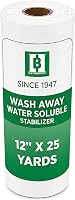
9 Best Embroidery Backing for T-Shirts (November 2026)
The best embroidery backing for t-shirts include the Simthread Tear Away Embroidery Stabilizer Backing for light designs you remove, the Poolin Cut Away Machine Embroidery Stabilizer Backing for stretchy knit shirts, and the Seneme Cut Away Embroidery Stabilizer Backing for knits and fleece.
On this page (8 sections)
- The best embroidery backing for t-shirts, ranked by score
- How to choose embroidery backing for t-shirts
- Cut away, tear away or wash away for t-shirts?
- What weight and size should you buy?
- How do you hoop and trim backing on a t-shirt?
- How we compared these backings
- Tips for shirt embroidery that holds its shape
- Verdict: which backing should you buy for t-shirts?
The best embroidery backing for t-shirts is a medium-weight cut away stabilizer such as the Poolin roll, because t-shirts stretch and a removable backing can leave the design less supported after washing. Our score weighs specs, features and buyer feedback against what you're shopping for.
T-shirts move differently from woven fabric. The knit stretches with wear, so the backing needs to support the fabric during stitching and after the shirt is washed.
That is why the type matters more than the brand name. The same design can pucker on a stretchy jersey, sit flat on poplin, and sink into fleece pile without the right support underneath.
We compared specs, weights, sizes and formats across these nine options. We looked for medium weights that suit light to medium stitch density, rolls that cut to hoop size, and precut sheets that save time on small hoops.
Start with your design density and shirt stretch. Light logos on stable jersey can use tear away, while dense chest designs on stretchy knits usually need cut away that stays in place.
Check your needle choice too. Our guide to needles for machine embroidery and types of embroidery needles helps you match the needle to knit fabric before you hoop.
A ballpoint style needle for knits reduces runs and snags compared with a sharp needle that can pierce yarns.
Our picks at a glance
-
1
 Best for light designs you remove
Simthread Tear Away Embroidery Stabilizer Backing
9.7/10 our score
See it on Amazon -
2
 Best for stretchy knit shirts
Poolin Cut Away Machine Embroidery Stabilizer Backing
9.2/10 our score
See it on Amazon -
3
 Best for knits and fleece
Seneme Cut Away Embroidery Stabilizer Backing
8.9/10 our score
See it on Amazon
- 4
 Check it
Seneme Water Soluble Stabilizer for Embroidery Backing
Best for fluffy fabric topping - 5
 Check it
Seneme Black Cut Away Embroidery Stabilizer 8"x8"
Best precut for small hoops - 6
 Check it
Simthread Fusible Iron-on Embroidery Backing Interfacing
Best iron-on finishing layer - 7
 Best precut for 5x7 hoopsCheck it
- 8
 Check it
Craftido Cut Away Embroidery Stabilizer Backing 12"
Best wide roll for large designs - 9
 Check it
Meboltpan 12 Inch x 50 Yards Tear
Best large tear away roll
The best embroidery backing for t-shirts, ranked by score
The top pick here scores highest for removable support, while the cut away rolls below it score highest for permanent support on stretchy shirts. Read the trade-off in each write-up before you choose a type.
Simthread Tear Away Embroidery Stabilizer Backing: Best for light designs you remove
- Medium weight 1.8 oz
- 10 in x 25 yd roll
- Cotton with pulp material
A roll you cut to size for hooping with fabric, then tear away after stitching.
Pros
- Removes cleanly after stitching
- Roll lets you cut exact sheets
- Suitable for woven fabric, jackets and denim
Cons
- Gives less permanent support than cut away
- Denser designs may need two layers
This tear away roll suits light to medium designs on shirts that do not stretch much. Its 1.8 oz medium weight gives enough stability during stitching, then tears away cleanly after.
The 10 in by 25 yd roll lets you cut sheets to your hoop size. That flexibility helps on woven material, jackets and denim, where permanent backing may feel stiff.
Simthread describes the material as cotton with pulp, acid and lead free. Hoop it with the fabric, stitch, then tear away and clean around the stitches.
Use two or more layers for denser designs. A single layer can work for a small logo, while a filled design may need the extra rigidity to resist puckering around the edges.
The trade-off is clear: you get a clean removal, but no permanent support through repeated wear and washing. On a stable shirt that removal is a benefit, and on a very stretchy shirt it is the main weakness.
Buy it for lighter work where you want nothing left behind. For very stretchy t-shirts, a cut away backing will usually hold shape better.
Poolin Cut Away Machine Embroidery Stabilizer Backing: Best for stretchy knit shirts
- Medium weight 2.5 oz
- 12 in x 50 yd roll
- Nonwoven fiber
A long roll cut to each hoop, designed to support T-shirts and other stretchy fabrics.
Pros
- Permanent support after stitching
- Soft medium weight for dense stitches
- Roll format for variable sizes
Cons
- Stays in the garment and must be trimmed
- Larger roll needs more storage
Poolin suits stretchy t-shirts, hoodies and fleece where puckering is the main risk. Its 2.5 oz medium-weight nonwoven fiber balances strength and softness for dense stitches.
The 12 in by 50 yd roll lets you cut the exact length for each project. That matters for larger designs and variable hoop sizes across a batch of shirts.
Poolin says the backing prevents stretching and stitch distortion during embroidery. It stays in place after stitching, which helps designs keep their shape after repeated washing.
It is made from eco-friendly polyester fiber and is OEKO-TEX Standard 100 certified for skin safety. The soft touch helps on garments worn against the skin, including babywear and polo shirts listed for this backing.
The roll format also suits experienced embroiderers and small studios that run continuous work. Sheets save cutting time, while a roll lets one pack cover many hoop sizes without buying separate precut packs.
The trade-off is trimming time. You must cut away excess and trim close to stitches, and the roll takes more storage than precut sheets.
Seneme Cut Away Embroidery Stabilizer Backing: Best for knits and fleece
- Medium weight 2.5 oz
- 10 in x 50 yd roll
- Polyester fabric
Permanent backing for unstable fabrics, hooped with the fabric and trimmed close after stitching.
Pros
- Permanent support for knits
- Long roll for repeated cutting
- Works for applique and decorative stitching
Cons
- Must be cut away by hand
- Denser designs may need more than one layer
Seneme suits knits, fleece and other unstable fabric that moves when tugged. Its 2.5 oz medium weight is rated for light to medium stitch density.
The 10 in by 50 yd roll cuts into variable sizes for your hoop. Hoop the stabilizer with the fabric, stitch, then roughly cut excess and trim close with sharp scissors.
Seneme describes it as a permanent stabilizer that remains affixed to the embroidery. That permanent support helps prevent designs from stretching through frequent wash and wear.
The polyester fabric is described as safe on skin with no itching concerns. That matters on t-shirts because the backing stays against the body for the life of the garment.
Use more than one layer for much denser designs. The listing also notes wide use for hoop embroidery, applique, thread stretching, home quilts and computerized lace, which shows how the same weight is reused across projects.
Compared with precut sheets, a roll costs less time per shirt only after you cut it. Compared with tear away, you gain permanence but lose easy removal.
Seneme Water Soluble Stabilizer for Embroidery Backing: Best for fluffy fabric topping
- Light weight 1.5 oz
- 8 in x 25 yd roll
- Nonwoven polymesh fabric
A light stabilizer that dissolves in cold water, used as topping on high pile fabrics.
Pros
- Dissolves completely in water
- Works as topping and backing
- Light weight for light to medium stitch density
Cons
- Less support than cut away or tear away
- Less suited as sole backing for stretchy shirts
Seneme water soluble backing suits topping on fluffy fabrics more than main support for t-shirts. It is 1.5 oz light weight for light to medium stitch density.
The 8 in by 25 yd roll can serve as backing or topping. It dissolves completely in cold water and leaves nothing behind, which suits towels, velvet and fleece.
The nonwoven polymesh fabric is described as non-toxic and safe on skin. Hoop it with the fabric, stitch, then place the design in water to remove it.
Its support is lighter than cut away or tear away. That makes it a poor sole choice for a stretchy t-shirt that needs shape retention after washing.
Use it as a topping over high pile fabric, or for free standing work. On towels, corduroy, terry cloth and fleece, a topping stops stitches sinking into pile while a stronger backing below handles fabric movement.
For t-shirt backing, pair it with a stronger cut away layer underneath. That combination gives you wash away cleanup on the surface and permanent support where the knit needs it.
Seneme Black Cut Away Embroidery Stabilizer 8"x8": Best precut for small hoops
- Medium weight 2.5 oz
- 8 in x 8 in precut sheets
- 100 sheets
Precut black sheets sized for 4x4 and 6x6 hoops, for knits, fleece and denim.
Pros
- No cutting before hooping
- Black color for dark garments
- Medium weight for light to medium designs
Cons
- Fixed 8 in square limits larger designs
- Stays in after trimming
This black cut away pack suits small logos on dark t-shirts with 4x4 and 6x6 hoops. Its 8 in by 8 in precut sheets remove the cutting step before hooping.
The 2.5 oz medium weight suits knits, fleece and denim that distort under stitching. Black color reduces show-through on dark garments.
Seneme describes it as permanent support that remains affixed to the design. Trim excess after stitching and cut close to the stitches.
Precut sheets help when you embroider many small designs in one session. You hoop, stitch and trim without measuring and cutting each sheet, which speeds up repeat work for left chest logos.
The trade-off is a fixed size: larger designs need a roll you can cut larger. The 8 in square also wastes little on a 4x4 hoop, while a 6x6 design leaves less margin to clamp.
For a wider color match, our guide to the best black cut away embroidery stabilizer helps you compare black options for dark shirts.
Simthread Fusible Iron-on Embroidery Backing Interfacing: Best iron-on finishing layer
- Fusible iron-on backing
- 7 in x 10 yd roll
- 100% polyester yarn
An iron-on layer applied to the wrong side to cover a finished design.
Pros
- Smooths the back of a design
- Iron-on application to wrong side
- Durable after frequent washing
Cons
- Used as a finishing layer, not hooped support
- Narrow 7 in width
Simthread fusible backing suits finishing the back of a design rather than supporting it during stitching. It irons to the wrong side to cover the finished embroidery.
The 7 in by 10 yd roll is white and made from 100% polyester yarn. Simthread describes a cross stretch process that makes the touch soft and smooth.
Iron it to the wrong fabric side so it completely covers the design. Simthread says it stays durable even after frequent washing.
Use it after cut away or tear away support, not instead of hooped stabilizer on stretchy knit. That distinction saves a ruined shirt, because fusible interfacing applied after stitching cannot stop puckering that happens in the hoop.
The listing also describes use for reinforcing collars and trimmings of fine fabrics as fusible interlining. On embroidered shirts, that same smooth layer gives the back a cleaner surface and covers trimmed cut away edges.
The narrow width limits large chest designs. For soft hand feel on the finished back, also check our guide to the best soft backing for embroidery.
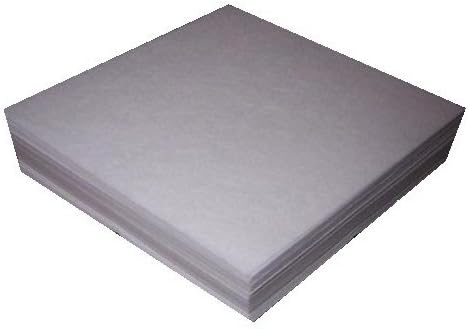
World Weidner™ Cut Away: Best precut for 5x7 hoops
- Medium weight 2.5 oz
- 12 in x 10 in precut sheets
- 100 sheets
Precut sheets that fit 5x7 hoops, soft and stable for machine embroidery.
Pros
- Precut for 5x7 hoops
- 100 sheets per pack
- Medium weight stability
Cons
- Fixed sheet size
- Stays in the garment
World Weidner cut away suits 5x7 hoops where precut speed matters. Its 12 in by 10 in sheets fit that hoop size without cutting.
The pack holds 100 precut sheets at 2.5 oz medium weight. That weight suits soft and stable support for light to medium designs.
Cut away stays with the garment after stitching. Trim the excess and keep the backing as permanent support through washing.
The trade-off is format rigidity. If your hoop is larger or your design runs wide, a roll gives more flexibility.
Precut sizing helps on repeat runs where every sheet is the same. You spend your time on hooping and trimming instead of cutting, and each sheet is already large enough to clamp securely in a 5x7 hoop.
For sweatshirt weight fabric, our guide to the best stabilizer for sweatshirt embroidery shows how heavier knits change the choice.
Craftido Cut Away Embroidery Stabilizer Backing 12": Best wide roll for large designs
- Medium weight 2.5 oz
- 12 in x 50 yd roll
- Polyester
A wide permanent backing for knits, fleece and denim, trimmed after stitching.
Pros
- Wide roll fits most hoops
- Permanent support through washing
- For light to medium stitch density
Cons
- Requires trimming close to stitches
- Denser designs may need added layer
Craftido suits unstable fabric such as knits, fleece and denim. Its 2.5 oz medium weight is the most-used weight for light to medium stitch density.
The 12 in by 50 yd roll cuts to fit most hoops for home and commercial machines. Place it under the fabric, hoop together, then stitch.
After stitching, roughly cut excess and trim close to stitches with sharp scissors. The backing stays with the fabric for permanent support.
Craftido describes the polyester material as acid and lead free. That skin-safe claim matters more with cut away, because the backing remains in skin-touch clothes after washing.
Use more than one layer for much denser designs. The wide 12 in width also covers larger hoops that a 10 in roll would leave short, and it suits hoop embroidery, applique and decorative stitch sewing.
Compared with Poolin, the specs are similar, so choose by roll width, availability and your preferred cutting routine.
Meboltpan 12 Inch x 50 Yards Tear: Best large tear away roll
- Tear away stabilizer
- 12 in x 50 yd roll
- Medium weight
A large tear away roll that adds rigidity during stitching and tears away after.
Pros
- Large roll for frequent use
- Tears away with no rinsing
- Cut to custom hoop sizes
Cons
- No permanent support after removal
- Less suited for very stretchy shirts alone
Meboltpan tear away suits frequent projects where a large roll saves reordering. Its 12 in by 50 yd roll cuts to any custom hoop size.
It adds rigidity during stitching to reduce puckering and shifting. After embroidery, it tears away with no residue and no rinsing.
The medium weight suits stretchy, delicate or unstable fabrics such as knits and jerseys. That claim is strongest for lighter designs, where removal after stitching is acceptable.
The trade-off is permanence. Once torn away, the design has no backing to hold shape through repeated washing.
Choose it for stable shirts and light designs. The large roll also helps when you switch between hoop sizes, because one width can be cut down for small logos or left wide for larger chest designs.
For stretchy t-shirts with dense stitching, cut away is the safer long-term choice.
How to choose embroidery backing for t-shirts
Choose cut away for stretchy t-shirts and dense designs, tear away for light designs you want to remove, and wash away mainly as a topping. The fabric stretch and stitch density decide the type first.
T-shirts stretch in every direction. A backing that removes after stitching gives no help once the shirt is worn and washed.
That is why permanent cut away backing is the default for knit shirts.
Stretch, density and skin contact
Stretch tells you how much support must stay in the garment. A stable woven shirt can often use tear away, while a jersey shirt that pulls sideways needs cut away.
Density tells you how much force the stitches apply. Light to medium designs can use one layer of 1.8 oz or 2.5 oz backing.
Much denser designs may need two layers or a heavier support strategy. Fill stitching pulls fabric inward as it builds, so extra backing helps the edges stay flat.
Consider skin contact. The backing stays in the shirt with cut away, so softness and skin-safe materials matter.
Several options here use polyester or cotton pulp described as acid and lead free.
Think about removal time. Tear away saves trimming but gives less support.
Cut away needs careful trimming close to stitches so edges do not show or scratch.
Cut away, tear away or wash away for t-shirts?
Cut away stays in use for stretchy t-shirts, tear away removes after light work, and wash away dissolves for topping. Each type solves a different problem.
Cut away provides permanent support during stitching and after washing. It is the usual choice for knits, fleece and designs that must keep their shape.
Our best cut away stabilizer for embroidery guide explains when this type is worth the trimming.
Tear away supports stitching only while in the hoop. It suits woven shirts, stable jersey and light logos.
Remove it by tearing around the design, then clean loose fibers from the back.
Wash away dissolves in water and leaves nothing. It works well as topping on fluffy fabric, but its support is lighter than cut away or tear away.
Use it with a cut away backing on t-shirts when you need both. The wash away layer sits on top to stop stitches sinking, while the cut away layer below stops the knit from moving.
Fusible backing is separate from those three. It is ironed on after stitching to cover the back.
It does not replace hooped support during stitching on stretchy knit.
What weight and size should you buy?
Buy 2.5 oz medium weight for most t-shirt designs, and 1.8 oz tear away for lighter work. Cut rolls to your hoop, or buy precut sheets for small hoops.
Weight controls rigidity. A 1.8 oz tear away feels lighter and suits light to medium stitch density.
A 2.5 oz cut away gives stronger support for knits and denser designs. The step from 1.8 oz to 2.5 oz is small on paper, but it changes how firmly the hoop sandwich resists pulling and puckering.
Size controls waste and speed. Rolls in 10 in and 12 in widths let you cut exact sheets for different hoops.
Precut 8 in by 8 in and 12 in by 10 in sheets save cutting time for repeat sizes.
Measure your hoop before you order. A sheet a little larger than the hoop lets you clamp fabric and backing together without slipping.
Trim with sharp scissors after stitching for cut away types.
Store rolls flat and dry where you can unroll them cleanly. Bent or creased backing can mark the fabric in the hoop and make hooping harder.
A crease across a sheet can also create a line where the fabric moves differently during stitching.
Ordering the wrong width is a common waste. A 7 in fusible roll, an 8 in wash away roll and a 12 in cut away roll each serve different jobs, so match width to hoop and design before you buy.
How do you hoop and trim backing on a t-shirt?
Hoop the backing with the fabric, stitch the design, then trim cut away close to the stitches. Keep the fabric taut but not stretched out of shape.
Place cut away under the t-shirt fabric and hoop them together. Avoid pulling the knit tight in the hoop, because that can distort the design when it relaxes.
For tear away, hoop it with the fabric the same way. Stitch, then tear away excess and clean around the stitches.
Denser designs may need two layers for support.
For wash away topping, hoop it on top of fluffy fabric. Stitch, then dissolve it in cold water.
Keep a cut away backing underneath if the shirt itself stretches.
Trim cut away in two steps. First cut roughly around the design, then trim close with sharp scissors.
Sharp scissors help you follow stitch edges without cutting threads.
After trimming, check the back by hand. Rough edges can scratch skin, so a second close trim pass often improves comfort on shirts worn for whole days.
How we compared these backings
We compared type, weight, size and format across all nine products. We checked whether each option suits stretchy t-shirts, woven fabric or fluffy topping use.
We gave higher scores to medium-weight cut away rolls that support knits through washing. We also scored tear away rolls for clean removal and wash away for topping use, not as main t-shirt support.
Scores spread because each type solves a different job. A tear away roll can score high for light work while still being the wrong choice for a dense design on stretchy jersey.
We did not test these products ourselves. We relied on specs and maker descriptions for weight, size, material and use.
That method has limits. Maker descriptions can use the same weight label for different materials, so we treated roll width, precut size and stated fabric types as the practical differences between similar 2.5 oz options.
Tips for shirt embroidery that holds its shape
Use cut away for stretchy shirts, match the needle to knit, and trim neatly. Small habit changes prevent most puckering on t-shirts.
Add a topping on fabrics with pile or texture. That keeps stitches from sinking into fluffy surfaces while the backing supports the shirt below.
Press the finished shirt with care around the design. Our guide to the best sleeve ironing board helps you press seams and sleeves without flattening stitches.
Keep designs proportioned to the shirt. Very dense, large designs on light jersey need extra support and can still distort if the shirt is too thin.
For knit-specific choices, our best embroidery stabilizer for knits guide covers fabric stretch in more depth.
Wash test a sample shirt before a full run. A small logo on the same jersey tells you more about puckering and hand feel than any weight label alone.
Verdict: which backing should you buy for t-shirts?
Pick cut away for most t-shirts, tear away for light removable work, and fusible backing as a finishing cover. That rule covers most shirts without guesswork.
For a first purchase, the Poolin 12 in by 50 yd roll gives permanent medium-weight support for stretchy shirts. Choose the Seneme black precut sheets if your hoops are 4x4 or 6x6 and your shirts are dark.
Choose the Simthread tear away roll if you embroider light designs on stable shirts and want nothing left in the garment. Add the Simthread fusible roll only to cover the back after stitching.
Next, confirm your hoop size and check your needle guide before you start stitching.
Our top 3 picks at a glance
-
1
Best for light designs you remove
Simthread Tear Away Embroidery Stabilizer Backing
9.7/10 our score
See it on Amazon -
2
Best for stretchy knit shirts
Poolin Cut Away Machine Embroidery Stabilizer Backing
9.2/10 our score
See it on Amazon -
3
Best for knits and fleece
Seneme Cut Away Embroidery Stabilizer Backing
8.9/10 our score
See it on Amazon
Frequently asked questions
What backing is best for embroidery on t-shirts?
A medium-weight cut away stabilizer is the usual first choice for t-shirts. It stays in place during stitching and after washing, which helps stretchy knit keep its shape.
Tear away can work for lighter designs that need no permanent support.
Can tear away stabilizer be used on t-shirts?
Yes, for light to medium designs on stable shirts. Hoop it with the fabric, stitch, then tear away the excess.
For very stretchy shirts or dense designs, cut away usually gives stronger long-term support.
How do you apply cut away stabilizer to a t-shirt?
Place the stabilizer under the fabric and hoop them together. Stitch the design, then cut away the excess and trim close to the stitches with sharp scissors.
Leave the backing in place so it supports the design through wear and washing.
What is fusible backing used for on embroidered shirts?
Fusible backing is ironed to the wrong side after stitching to cover and protect the back of a design. It is a finishing layer rather than the main hooped support during stitching.
Use cut away or tear away first for stability, then add fusible cover if you want a smooth back.
Which stabilizer works best on stretchy knit fabric?
Cut away stabilizer works best on stretchy knits because it remains with the fabric. It prevents puckering and distortion during stitching and helps the design hold its shape after repeated washing.
Pair it with the right needle for knit fabric.