9 Best Computerized Sewing Machines (November 2026)
The best computerized sewing machines include the Brother Sewing Machine for simple everyday sewing, the Janome JW8100 Fully-Featured Computerized Sewing Machine for quilting beginners, and the SINGER 6800C Heavy Duty Computerized Sewing Machine for heavy fabric.
On this page (9 sections)
- Best computerized sewing machines, compared by stitch count and controls
- How do the best computerized sewing machines compare on controls?
- How do we compare computerized sewing machines?
- How many stitches do you actually need in a computerized sewing machine?
- Which computerized sewing machine is best for beginners?
- Which computerized sewing machine handles heavy fabric best?
- Which brands should you shortlist for computerized sewing machines?
- What should you check before you buy a computerized sewing machine?
- Verdict: pick the best computerized sewing machines by your main project
The best computerized sewing machines for most buyers are the Brother XM2701 for simple everyday sewing and the Janome JW8100 for quilting with more stitches. Our score weighs specs, features and buyer feedback against what you are shopping for.
We compared stitch counts, controls, included feet and tables, weight and warranty terms.
A computerized sewing machine selects and adjusts stitches through electronic controls. That helps with repeat stitching, buttonholes and speed control.
You still need to choose a needle, thread and foot for the job.
If you are new, read what is a computerized sewing machine before you compare counts. For a buying checklist, use how to choose a sewing machine.
For setup help after you buy, see how to use a computerized sewing machine.
Our picks at a glance
-
1

-
2
 Best for quilting beginners
Janome JW8100 Fully-Featured Computerized Sewing Machine
9.2/10 our score
See it on Amazon -
3
 Best for heavy fabric
SINGER 6800C Heavy Duty Computerized Sewing Machine
9.0/10 our score
See it on Amazon
- 4
 Check it
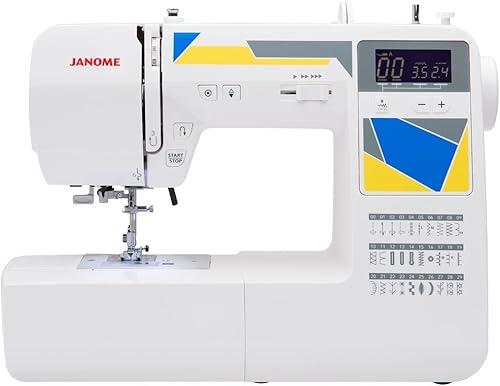
Janome MOD-30 Computerized Sewing Machine
Best for a focused starter set - 5
 Check it
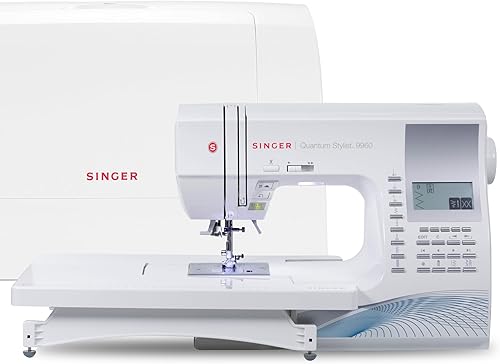
SINGER Quantum Stylist 9960 Computerized Sewing
Best for stitch variety - 6
 Check it
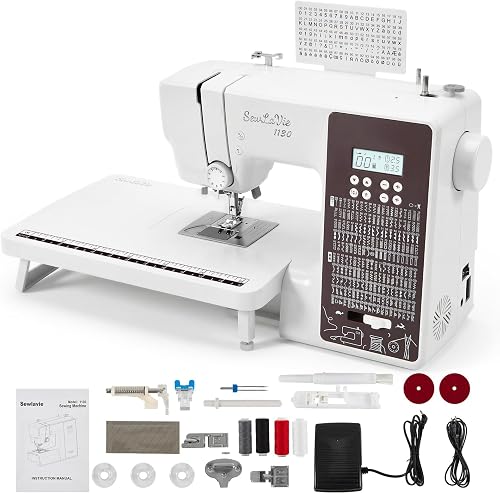
SewLaVie 1130 Computerized Sewing and Quilting Machine
Best for lettering and twin needle work - 7
 Check it
Juki HZL-F600 Computerized Sewing and Quilting Machine
Best for button-selected stitches - 8
 Check it
PooLin EOC02 Computerized Sewing Machine
Best for guided beginner controls - 9
 Check it
Brother XR9550 Computerized Sewing and Quilting Machine
Best for Brother quilting features
Best computerized sewing machines, compared by stitch count and controls
The Brother XM2701 leads for everyday use because its 27 stitches and threading aids cover basic work without extra complexity. The Janome JW8100 adds 100 stitches and quilting tools.
SINGER models add the largest stitch libraries and heavy fabric power.
Brother Sewing Machine: Best for simple everyday sewing
- 27 built-in stitches
- Automatic needle threader
- 6 sewing feet
- Free arm
- Drop-in top bobbin
A lightweight Brother with 27 stitches, auto threading and a free arm for cuffs and sleeves.
Pros
- Lightweight at 12.6 lb
- Auto needle threader
- 6 feet included
Cons
- Fewest stitches in this group
- No wide table listed
The Brother XM2701 suits beginners and home sewers who want everyday alterations without a long learning curve. Its 27 built-in stitches include decorative, blind hem, zigzag and stretch stitches, plus an auto-size buttonhole that sizes to the button you use.
An automatic needle threader pushes thread through the needle, and a drop-in top bobbin is described as jam resistant. That combination cuts setup time on a machine meant for frequent short jobs.
Six sewing feet are included, covering buttonhole, zipper, zigzag, narrow hemmer, blind stitch and button sewing. A 3-piece needle set, twin needle, 4 bobbins, darning plate and instructional DVD round out the carton contents.
The free arm helps with cuffs, sleeves and pant legs, so small circular work does not need to be flattened. At 12.6 lb and 15.3 by 5.86 by 12.01 inches, it is light enough to move between a table and storage.
The trade-off is scope. With 27 stitches and no wide table listed, it does less than the 100 to 600 stitch picks for quilting, lettering and large panels.
Pick it for simple, frequent everyday sewing.
Janome JW8100 Fully-Featured Computerized Sewing Machine: Best for quilting beginners
- 100 built-in stitches
- 7 one-step buttonholes
- Extra-wide extension table
- Even feed foot
- Hard cover
A 100-stitch Janome with an extension table, even feed foot and quarter inch foot for quilting.
Pros
- 100 stitches and 7 buttonholes
- Extension table included
- Even feed foot for layers
Cons
- Stitch library smaller than SINGER picks
- No lettering fonts listed
The Janome JW8100 suits a beginner who wants room to grow into quilting and garment sewing. It has 100 built-in stitches and 7 one-step buttonholes on a backlit LCD with start/stop and speed control.
A 7-piece feed dog system helps feed fabric evenly on cotton, knits and layered materials. That matters when a seam moves from single-layer cotton to a folded hem.
Removing the front drawer reveals a free arm for sleeves and tight spaces. Convenience buttons near the needle include reverse, locking stitch and needle up/down for pivoting.
An extra-wide extension table, even feed foot and quarter inch foot make it quilting-ready out of the box. The even feed foot supports heavy layers and pattern matching, while the quarter inch foot suits quilt piecing.
A hard cover helps with dust protection, and the standard accessory list adds zipper, satin stitch and automatic buttonhole feet. At 12 lb, it stays portable for a tabletop setup.
The trade-off is stitch variety. At 100 stitches, it has fewer decorative and lettering options than the SINGER 9960 or SewLaVie 1130.
Pick it for balanced sewing and quilting use.
SINGER 6800C Heavy Duty Computerized Sewing Machine: Best for heavy fabric
- 586 stitch applications
- 2 lettering fonts
- 10 presser feet
- Up to 1,100 stitches per minute
- Metal frame
A heavier SINGER with a strong motor, 586 applications and feet for denim, canvas and leather.
Pros
- Built for thick fabric
- 10 presser feet
- Built-in thread cutter
Cons
- Heaviest pick at 16.6 lb
- Soft cover only
The SINGER 6800C suits sewers who work with denim, canvas and leather. SINGER says its motor is 60% stronger than standard motors, with speeds up to 1,100 stitches per minute.
It offers 586 stitch applications, basic, stretch and decorative stitches, and 2 built-in lettering fonts. Nine one-step buttonhole styles give consistent results for garments.
Ten presser feet are included, from all-purpose and zipper to even feed, open toe and cording. That range covers raised seams, decorative topstitching and layered work without buying feet separately.
A built-in needle threader, top drop-in bobbin with transparent cover, thread cutter and drop feed add convenience. Stitch length adjusts to 6 mm and width to 5 mm for bolder seams.
The LCD screen shows stitch images, settings and presser foot recommendations. Speed control lets you slow down for corners on thick fabric.
At 16.6 lb, it is the heaviest pick here and comes with a soft cover. Its grey metal and plastic build and 17.5 by 7.5 by 10.9 inch footprint suit a fixed work area.
Pick it when fabric weight matters more than portability.
Janome MOD-30 Computerized Sewing Machine: Best for a focused starter set
- 30 built-in stitches
- 3 one-step buttonholes
- One-hand needle threader
- Drop feed
- Backlit LCD display
A 30-stitch Janome with drop feed and core convenience buttons for garments and home decor.
Pros
- Simple 30-stitch set
- Drop feed for free motion
- Backlit LCD
Cons
- Fewer accessories listed
- No extension table listed
The Janome MOD-30 suits a focused starter who wants core computerized controls without a large stitch library. It has 30 built-in stitches and 3 one-step buttonholes.
A one-hand needle threader, top loading bobbin with clear cover and 7-piece feed dog system help with daily setup and fabric feeding. The clear cover lets you watch thread levels before a seam runs short.
Convenience buttons include start/stop, reverse, locking stitch and needle up/down. Start/stop frees you from the foot pedal for short controlled bursts.
A backlit LCD display, free arm and drop feed support garments, home decor and quilts. Drop feed lowers the feed dogs for free motion work that a basic model cannot do.
It weighs 12.7 lb, close to the Janome JW8100, and uses a 7 by 16 by 12 inch footprint. That size fits a standard table while still leaving room for fabric.
The trade-off is accessories and range. Only a zigzag foot is named in the included components, and 30 stitches leave less room for decorative work.
Pick it for simple modern sewing on a budget footprint.
SINGER Quantum Stylist 9960 Computerized Sewing: Best for stitch variety
- 600 built-in stitches
- 1,172 stitch applications
- 5 fonts
- 13 presser feet
- Large extension table
The largest stitch library here, with 600 stitches, lettering and 13 feet for custom work.
Pros
- 600 stitches
- 13 one-step buttonholes
- Hard dust cover
Cons
- Large library can take time to learn
- Many feet to store
The SINGER Quantum Stylist 9960 suits a creative sewer who wants many stitch and lettering options. It offers 600 built-in stitches and 1,172 stitch applications, with mirror imaging and stitch elongation.
Five fonts support monograms and custom text for garments and projects. An application is a specific technique you can do with a selected stitch, so the count reflects combinations rather than only stitch drawings.
Thirteen one-step buttonhole styles, including keyhole designs, give consistent buttonholes for different garments. That range exceeds the 3 to 9 styles on smaller picks here.
Thirteen presser feet, a large extension table and hard dust cover are included. The feet span general purpose, zipper, buttonhole, satin, blind hem, open toe, cording, darning, even feed, overcasting, button sewing, narrow hem and quarter inch.
Speed control and a start/stop button help with large quilting projects and detailed stitching. Needle up/down supports pivoting for pockets, topstitching and applique.
The trade-off is learning time. A large library takes longer to explore than a 27 or 30 stitch machine.
Pick it for fashion sewing, quilting and personalization.
SewLaVie 1130 Computerized Sewing and Quilting Machine: Best for lettering and twin needle work
- 300 built-in stitches
- 57 twin-needle setups
- 100 alphanumeric fonts
- Detachable wide extension
- Drop feed
A 300-stitch machine with twin needle setups and fonts for personalized garments and crafts.
Pros
- 300 stitches with fonts
- Wide extension included
- LED light
Cons
- Newer, smaller buyer base
- 2-year warranty in data
The SewLaVie 1130 suits a maker who wants lettering and twin needle work in one machine. It has 300 built-in stitches, including 143 utility patterns, 57 twin-needle setups and 100 alphanumeric fonts.
Utility patterns cover everyday seams, while twin needle setups create parallel lines for hems and pintucks. Fonts let you add names or short words to garments and crafts.
A 7-point feed dog system and strong motor help feed thick fabrics. The maker says it feeds up to 9 layers of denim, and the solid interior frame supports that claim in daily feeding.
An LCD screen, reverse sewing, start/stop button, speed control slider and needle up/down control support everyday use. Reverse sewing reinforces seam ends without extra steps.
A detachable wide extension and drop feed help with patchwork and free-motion quilting. The extension gives a flat surface for larger blocks, and drop feed frees fabric movement.
At 12.1 lb, it sits in the middle of this group for weight. A built-in LED light and auto-stop protection add practical detail.
Pick it for fonts, twin needle stitches and quilting versatility.
Juki HZL-F600 Computerized Sewing and Quilting Machine: Best for button-selected stitches
- 255 built-in stitches
- LCD screen
- Automatic needle threader
- Accessory tray storage
- Soft dust cover
A 255-stitch Juki with LCD selection and threader for basic, stretch and decorative work.
Pros
- 255 stitches
- Accessory tray
- Auto needle threader
Cons
- 30 lb, hardest to move
- Few specs listed
The Juki HZL-F600 suits a sewer who likes button selection with an LCD display. It has 255 built-in stitches for basic, stretch, decorative, letter and buttonhole work.
The stitch selector and LCD display let you choose with a push of a button and view the selection. That layout suits buyers who prefer direct button presses over scrolling menus.
An automatic needle threader helps with threading the needle eye. It reduces eye strain on a machine aimed at everyday sewing for beginners to advanced users.
Accessories are stored in the accessory tray, and a soft-sided dust cover is included. Tray storage keeps feet and tools together instead of scattered in a separate box.
The stated material is metal, which adds to its solid feel on a table. The limited spec list means fewer details on feet, tables and dimensions than rival picks.
At 30 lb, it is by far the heaviest machine here. That weight can help stability during fast sewing, but it makes moving, lifting and storing harder.
Pick it if you want Juki stitch selection and keep it in one place.
PooLin EOC02 Computerized Sewing Machine: Best for guided beginner controls
- 200 built-in stitches
- 7 presser feet
- LCD screen
- Wide table
- Free arm
A 200-stitch machine with LCD prompts, wide table and free arm for cuffs and quilts.
Pros
- 200 stitches
- Wide table included
- Error prompts
Cons
- Smaller buyer base
- 7 feet, fewer than SINGER
The PooLin EOC02 suits a beginner who wants guided controls and a wide work area. It has 200 built-in stitches with utility, decorative and alphanumeric patterns on an LCD screen.
Seven presser feet cover basic to advanced applications. That count sits between the 6 feet on the Brother XM2701 and the 10 or 13 feet on SINGER models.
An automatic needle threader, speed control slider and start/stop button give precise control. Adjustable speed helps with delicate fabrics like satin and silk, as well as stretch knits.
An extra-wide table supports quilts and bulky materials. Removing the accessory compartment gives a free arm for cuffs, sleeves and pant legs.
Error prompts help with problem-solving, and a needle position button lifts bobbin thread with one click. Different prompts make troubleshooting easier for a first-time owner.
The maker lists fabric range from organza and jersey to denim, canvas and quilted layers up to 6 mm thick. At 7.5 kg, it is midweight for transport.
Pick it for beginner-friendly controls with a 200-stitch library.
Brother XR9550 Computerized Sewing and Quilting Machine: Best for Brother quilting features
- 165 built-in stitches
- 8 auto-size buttonholes
- Wide table
- 8 presser feet
- Hard cover
A 165-stitch Brother with wide table, hard cover and drop feed for quilting and garments.
Pros
- Light at 10.1 lb
- Hard cover included
- 8 feet included
Cons
- 165 stitches, mid-range count
- Hard case foam must stay in place
The Brother XR9550 suits a Brother fan who wants quilting features in a lighter machine. It has 165 built-in stitches, including 110 utility, decorative and heirloom stitches, 8 auto-size buttonholes and 55 alphanumeric stitches.
An LCD display, automatic needle threader and drop-in top bobbin help with setup. The LCD shows stitch and settings so you can confirm choices before sewing.
Eight presser feet include zigzag, buttonhole, zipper, button sewing, overcasting, blind stitch, monogramming and quilting feet. That set covers hems, zippers, buttonholes and quilting rows.
A wide table supports larger quilt projects, and a hard cover protects the machine. The hard case is coated in Styrofoam inside to protect from scratching.
Drop feed supports free motion quilting and sewing. Free arm capability helps with cuffs and sleeves on garments.
At 10.1 lb, it is the lightest pick here. The hard cover foam coating should not be removed, so check the case before storing.
A 25-year limited warranty backs the machine. Pick it for Brother support and quilting tools at low weight.
How do the best computerized sewing machines compare on controls?
Controls differ more than stitch counts. Some use an LCD with buttons, some use touch buttons, and some add a speed slider or start/stop button.
Those controls affect how fast you learn each machine.
| Product | Best for | Stitches | Weight | Power | Our score |
|---|---|---|---|---|---|
| Brother Sewing Machine | simple everyday sewing | 27 | 12.6 lb | Corded electric, 120 volts | 9.7 |
| Janome JW8100 Fully-Featured Computerized Sewing Machine | quilting beginners | 100 | 12 lb | Corded electric | 9.2 |
| SINGER 6800C Heavy Duty Computerized Sewing Machine | heavy fabric | 16.6 lb | AC corded | 9.0 | |
| Janome MOD-30 Computerized Sewing Machine | a focused starter set | 30 | 12.7 lb | AC corded | 8.7 |
| SINGER Quantum Stylist 9960 Computerized Sewing | stitch variety | 600 | 7 kg | Corded electric | 8.6 |
| SewLaVie 1130 Computerized Sewing and Quilting Machine | lettering and twin needle work | 300 | 12.1 lb | Electric, 120 volts | 8.5 |
| Juki HZL-F600 Computerized Sewing and Quilting Machine | button-selected stitches | 255 | 30 lb | AC corded | 8.2 |
| PooLin EOC02 Computerized Sewing Machine | guided beginner controls | 200 | 7.5 kg | Electric | 7.9 |
| Brother XR9550 Computerized Sewing and Quilting Machine | Brother quilting features | 165 | 10.1 lb | Corded electric, 120 volts | 7.5 |
For everyday sewing, an auto needle threader and drop-in bobbin save setup time. The Brother XM2701, Janome JW8100 and Brother XR9550 all include those aids.
A clear bobbin cover helps you see thread levels.
Speed control helps beginners slow down for corners and detailed work. The Janome JW8100, SINGER 6800C, SINGER 9960, SewLaVie 1130 and PooLin EOC02 list speed or start/stop controls.
Needle up/down and reverse buttons help with pivoting and reinforcing seams. Janome, SINGER and SewLaVie models list those controls in different forms.
Pick the layout you can learn fastest.
LCD, buttons and speed sliders explained
An LCD screen shows the stitch, length and width you selected. That display helps you match a stitch to a project before you sew.
Push buttons let you select stitches directly. On the Juki HZL-F600, a stitch selector switch and push buttons work with the LCD display.
A speed slider caps how fast the machine can run. That cap helps on curves, corners and thick layers where full speed can cause a slip.
Start/stop buttons let you sew without a foot pedal. That helps when you need both hands to guide fabric on a large quilt.
Thread cutters and trimmer buttons end a seam with one press. The SINGER 6800C and SINGER 9960 list that aid for finishing seams faster.
How do we compare computerized sewing machines?
We compared specs, features and buyer feedback against what buyers search for. Stitch count, buttonhole styles, included feet and tables, weight and warranty terms shaped each score.
We checked the stated stitch libraries, from 27 on the Brother XM2701 to 600 on the SINGER 9960. We also checked buttonhole counts, from 3 on the Janome MOD-30 to 13 on the SINGER 9960.
We looked at included tools because feet and tables change what you can sew on day one. The SINGER 6800C includes 10 feet, while the Janome JW8100 includes an extension table and quilting feet.
Weight matters for storage and moving. The Brother XR9550 weighs 10.1 lb, while the Juki HZL-F600 weighs 30 lb.
Choose by where the machine will live and how often you will move it.
Warranty terms also differ across brands. Some list 25 years on parts, while others list 1 or 2 years.
Check the full term for parts, electrical components and labor before you buy.
Power needs matter for home use. Some data states 120 volts for US sale, while others list corded electric or AC.
Confirm that your outlet and room setup match the listing.
How many stitches do you actually need in a computerized sewing machine?
You need about 27 to 100 stitches for everyday sewing, and 165 to 600 if you quilt, decorate or add lettering. More stitches do not improve a straight seam by themselves.
A 27-stitch machine covers utility, decorative, blind hem and stretch stitches for alterations. That suits hems, repairs and simple garments.
A 100-stitch machine adds more decorative options for quilting and home decor. The Janome JW8100 pairs that count with quilting feet and an extension table.
For everyday repairs and hems
Choose 27 to 30 stitches. The Brother XM2701 and Janome MOD-30 cover basic seams, zigzag and buttonholes.
That keeps stitch selection simple.
For quilting and decorative work
Choose 165 to 300 stitches. The Brother XR9550, PooLin EOC02, Juki HZL-F600 and SewLaVie 1130 add heirloom, alphanumeric and twin needle options.
For maximum personalization
Choose 586 applications or more. The SINGER 6800C and SINGER 9960 add lettering fonts and mirror imaging for custom designs.
Which computerized sewing machine is best for beginners?
The best computerized sewing machine for beginners is one with an auto needle threader, drop-in bobbin, speed control and a free arm. Those features cut setup time and help with sleeves and cuffs.
The Brother XM2701 is the simplest starter here. It has 27 stitches, 6 feet and a free arm for everyday projects.
The Janome JW8100 is a step up for beginners who plan to quilt. It adds 100 stitches, an extension table and an even feed foot.
The PooLin EOC02 offers 200 stitches with LCD prompts and error prompts. That help may suit buyers who want guidance on screen.
If you want brand-specific help, read our best computerized sewing machine for beginner guide. For Brother models, see best brother computerized sewing machine.
What to learn first
Learn threading, bobbin winding and straight stitching first. Practice on cotton scraps before you try decorative stitches.
Learn how to thread a brother cs7000x if you compare Brother models. Threading steps vary by model, so use your manual.
When to step up
Step up when you need an extension table, drop feed or more feet. The Janome JW8100 and Brother XR9550 include those tools for quilting.
Which computerized sewing machine handles heavy fabric best?
A heavy fabric pick needs a strong motor, metal frame, even feed options and adjustable stitch length and width. The SINGER 6800C is built for denim, canvas and leather.
SINGER says the 6800C motor is 60% stronger than standard motors. It also lists stitch length up to 6 mm and width up to 5 mm.
Ten presser feet include even feed and cording feet for layers and raised seams. That set helps with bags, jeans and jackets.
The SewLaVie 1130 also targets thick fabric with a 7-point feed dog system. It suits canvas, leather and denim in its stated design.
For brand options, see best computerized sewing machine singer and best janome computerized sewing machine. For Brother quilting models, see brother xr9550 sewing machine review.
Test before a big project
Sew test seams on the same fabric layers you plan to use. Check needle type, thread and presser foot before you start.
Thread choice matters for heavy seams. Read Can You Use Sewing Thread for Embroidery? if you plan decorative thread work on thicker fabric.
Which brands should you shortlist for computerized sewing machines?
Shortlist Brother for simple everyday sewing, Janome for quilting controls, and SINGER for stitch variety and heavy fabric. Each brand solves a different need here.
Brother picks include the XM2701 with 27 stitches and the XR9550 with 165 stitches. Both list auto needle threaders and drop-in top bobbins.
Janome picks include the JW8100 with 100 stitches and the MOD-30 with 30 stitches. Both use LCD displays and convenience buttons.
SINGER picks include the 6800C with 586 applications and the 9960 with 600 stitches. Both add lettering and many included feet.
For detailed Brother comparisons, read Brother CS7000X Sewing Machine Review, brother hc1850 sewing machine reviews and cs5055 brother sewing machine review.
Compare two Brother models
Use brother cs7000x vs xr9550 to compare features before you choose a Brother quilting machine. Use brother xr9550 vs sq9285 for a wider model check.
Learn a specific model
Use how to use brother xr9550 sewing machine for setup steps on the XR9550. That guide helps you judge whether its controls fit your skill level.
What should you check before you buy a computerized sewing machine?
Check stitch count, included feet, table or free arm, weight, power needs and warranty terms before you buy. Those details decide what you can sew and where you can store it.
Brother XM2701 and XR9550 data state 120 volts for US sale. Other models list corded electric or AC power.
Confirm power needs for your outlet and room.
Warranty terms vary widely. Brother XM2701 data lists a 25-year limited warranty, while the SINGER 6800C lists 1 year.
Janome JW8100 lists 25 years on mechanical parts, 2 years on electrical parts and 1 year on labor.
Included accessories vary too. The SINGER 9960 includes 13 feet and a large extension table.
The Janome MOD-30 names only a zigzag foot in its included components.
Check dimensions against your table and storage space. The Brother XR9550 lists 13.5 by 20 by 17.9 inches, while the Janome JW8100 lists 7 by 16 by 12 inches.
A larger footprint may need a dedicated sewing table.
Check weight if you move the machine often. The Juki at 30 lb and SINGER 6800C at 16.6 lb are harder to carry than the Brother XR9550 at 10.1 lb.
A fixed setup may suit a heavier model better.
Verdict: pick the best computerized sewing machines by your main project
Pick the Brother XM2701 for simple everyday sewing, the Janome JW8100 for quilting beginners, and the SINGER 6800C for heavy fabric. Pick the SINGER 9960 for the largest stitch library and the Brother XR9550 for light Brother quilting features.
If you sew mostly hems and repairs, fewer stitches will feel easier. If you quilt or decorate, prioritize included feet, an extension table and drop feed.
Start with how to choose a sewing machine if you are still unsure. Then use how to use a computerized sewing machine to set up your pick with confidence.
Our top 3 picks at a glance
-
1
-
2
Best for quilting beginners
Janome JW8100 Fully-Featured Computerized Sewing Machine
9.2/10 our score
See it on Amazon -
3
Best for heavy fabric
SINGER 6800C Heavy Duty Computerized Sewing Machine
9.0/10 our score
See it on Amazon
Frequently asked questions
What is a computerized sewing machine?
A computerized sewing machine uses electronic controls to select stitches, adjust length and width, and repeat patterns. You choose on a screen or buttons, and the machine carries out the settings.
It differs from a basic mechanical model that relies mainly on dials.
Are computerized sewing machines good for beginners?
Yes, many are made for beginners because stitch selection, threading help and speed control reduce guesswork. Start with a model with fewer stitches if you want a shorter learning curve.
You can add features later as your skills grow.
How many stitches do you need?
For everyday sewing, 27 to 100 stitches covers most seams, hems and buttonholes. Quilters and garment sewers often use the extra decorative and lettering stitches in 200 to 600 stitch models.
More stitches help only if you will use them.
Can a computerized sewing machine handle denim and canvas?
Some can, but check motor strength, frame and feed system for the fabric weight you plan to sew. Models described for heavy duty work, with metal frames and strong motors, suit denim and canvas better.
Test seams on scraps before a large project.
Do I need an extension table?
An extension table helps with quilts, large panels and bulky projects by giving fabric flat support. If you mainly sew small items, a free arm may matter more for sleeves and cuffs.
Many picks here include one or the other.


