9 Best Sewing Machines for Quilting Beginners (November 2026)
The best sewing machines for quilting beginners include the Brother Sewing Machine for first-time quilters, the Brother XR3774 Sewing and Quilting Machine for a wider work area, and the SINGER® M1500 Lightweight & Portable Sewing Machine for sewing classes.
On this page (7 sections)
- The best beginner sewing machines for quilting
- How should beginners choose a quilting sewing machine?
- Do you need a special machine for machine quilting?
- What feet and needles should a new quilter use?
- What can beginners sew before making a quilt?
- Sewing machine or quilting machine for a beginner?
- Verdict: which is the best beginner sewing machine for quilting?
The Brother XM2701 is the best beginner sewing machine for quilting for most new sewists. It combines 27 stitches, 6 sewing feet, a free arm, an automatic needle threader and a drop-in top bobbin without adding computerized controls.
The best choice changes if your priority is quilt handling, portability or room to grow. The Brother XR3774 adds a wide table, the Janome JW8100 includes quilting feet and an extension table, and the SINGER M1500 keeps basic controls portable.
We compared the listed features, included accessories and design trade-offs for sewing machine for quilting beginners. Our score weighs specs, features and buyer feedback against what you're shopping for.
Our picks at a glance
-
1

-
2
 Best for a wider work area
Brother XR3774 Sewing and Quilting Machine
9.6/10 our score
See it on Amazon -
3
 Best for sewing classes
SINGER® M1500 Lightweight & Portable Sewing Machine
9.5/10 our score
See it on Amazon
- 4
 Check it
Janome Arctic Crystal Easy-to-Use Sewing Machine
Best for light patchwork - 5
 Check it
Janome JW8100 Fully-Featured Computerized Sewing Machine
Best for growing quilt skills - 6
 Check it
Chunara Sewing Machine for Beginners
Best for a compact starter kit - 7
 Check it
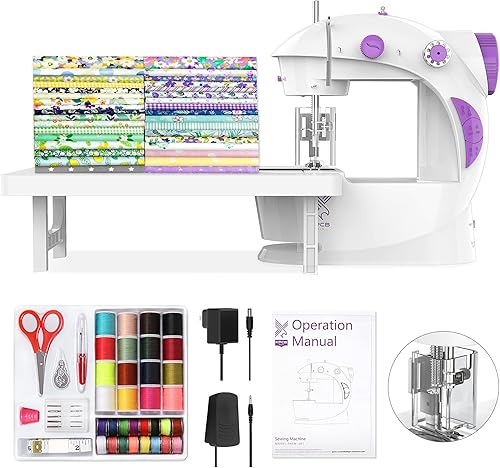
KPCB Tech Sewing Machine for Beginners with Fabrics&Finger
Best for supervised practice - 8
 Check it
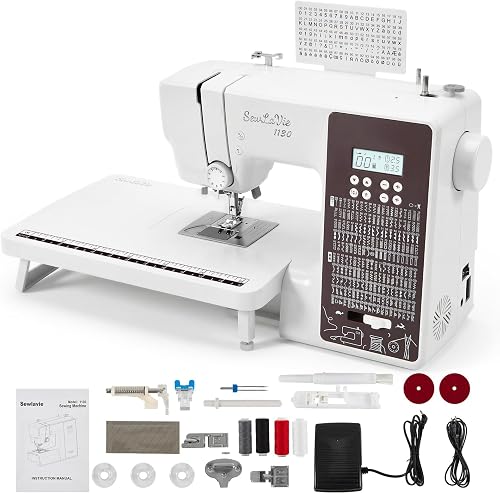
SewLaVie 1130 Computerized Sewing and Quilting Machine
Best for creative stitch variety - 9
 Check it
SINGER® Heavy Duty 4523™ Next Evolution Sewing
Best for thicker quilt layers
The best beginner sewing machines for quilting
The best beginner sewing machines for quilting give you a manageable setup plus at least one feature that supports fabric control. Start with the machine that matches your projects, then compare table space and included feet.
| Product | Best for | Stitches | Included feet | Size | Our score |
|---|---|---|---|---|---|
| Brother Sewing Machine | first-time quilters | 27 built-in stitches | 6 sewing feet | 15.3 x 5.86 x 12.01 in | 9.7 |
| Brother XR3774 Sewing and Quilting Machine | a wider work area | 37 built-in stitches | 8 sewing feet | 9.6 | |
| SINGER® M1500 Lightweight & Portable Sewing Machine | sewing classes | 6 stitches, 57 applications | All-purpose, zipper and buttonhole feet | 9.5 | |
| Janome Arctic Crystal Easy-to-Use Sewing Machine | light patchwork | 15 built-in stitches | 4 presser feet | 9.2 | |
| Janome JW8100 Fully-Featured Computerized Sewing Machine | growing quilt skills | 100 built-in stitches | 9.2 | ||
| Chunara Sewing Machine for Beginners | a compact starter kit | 12 built-in stitches | 12 x 11 x 6 in | 9.0 | |
| KPCB Tech Sewing Machine for Beginners with Fabrics&Finger | supervised practice | 8.5 | |||
| SewLaVie 1130 Computerized Sewing and Quilting Machine | creative stitch variety | 300 built-in stitches | 8.5 | ||
| SINGER® Heavy Duty 4523™ Next Evolution Sewing | thicker quilt layers | 23 built-in stitches | 8.4 |
Brother Sewing Machine: Best for first-time quilters
- 27 built-in stitches
- 6 sewing feet
- Automatic needle threader
- Drop-in top bobbin
- Free arm
The Brother XM2701 gives beginners useful stitch variety without computerized controls. Its 6 feet, free arm, automatic needle threader and drop-in top bobbin cover common early projects.
Pros
- 27 built-in stitches
- 6 sewing feet
- Free arm for small areas
Cons
- No wide table included
- US 120-volt use
The Brother XM2701 is the strongest starting point for most beginners because it balances useful controls with a practical set of accessories. Its 27 built-in stitches include decorative, blind hem, zigzag and stretch options, plus an auto-size buttonhole.
The 6 included feet cover buttonholes, zippers, zigzag sewing, narrow hems, blind stitches and button sewing. That range helps you move from quilt piecing to everyday repairs without buying several feet right away.
The automatic needle threader reduces one setup step, while the jam-resistant drop-in top bobbin makes the thread supply easier to check. The free arm helps with cuffs, sleeves and pant legs, although quilting itself usually needs the flat bed area.
At 15.3 x 5.86 x 12.01 in and 12.6 lb, it is easier to store than a larger machine with a table. It is intended for US 120-volt use.
Brother XR3774 Sewing and Quilting Machine: Best for a wider work area
- 37 built-in stitches
- Wide table
- 8 sewing feet
- Automatic needle threader
- Drop-in top bobbin
The XR3774 adds a wide table and 8 feet to a beginner-friendly mechanical setup. It suits quilters who want more support for quilt blocks and larger fabric sections.
Pros
- Wide table included
- 37 built-in stitches
- 8 sewing feet
Cons
- Heavier than the XM2701
- US 120-volt use
The Brother XR3774 is the better pick when a beginner wants more support under quilt sections. Its wide table gives fabric a broader surface, and the machine includes 8 sewing feet.
The 37 built-in stitches include blind hem, decorative and quilting stitches. An automatic needle threader and top-loading bobbin keep the core setup similar to the XM2701, so the learning curve remains approachable.
The 15-lb machine measures 5.8 x 15.3 x 12 in. Its included cover helps protect the machine between projects, while the instructional DVD and manual support the setup process.
Choose the XR3774 when handling quilt blocks matters more than keeping the machine as light as possible. It is intended for US 120-volt use.
SINGER® M1500 Lightweight & Portable Sewing Machine: Best for sewing classes
- 57 stitch applications
- Preset stitch length and width
- 4-step buttonhole
- Accessory kit
- Portable design
The SINGER M1500 keeps stitch selection simple with a dial and preset stitch length and width. Its portable design fits beginners who move between home sewing and classes.
Pros
- 57 stitch applications
- Simple dial controls
- Portable design
Cons
- 4-step buttonhole
- No wide table included
The SINGER M1500 suits beginners who want simple controls and a portable machine. Its 6 built-in stitches create 57 stitch applications, including straight, zigzag, blind hem, multi-step zigzag, scallop and a 4-step buttonhole.
The stitch selector dial clearly displays the options, and the stitch length and width are preset. That reduces decisions while you learn threading, seam control and fabric handling.
The accessory kit includes all-purpose, zipper and buttonhole feet, along with a darning plate, needles, bobbins, a screwdriver and a seam ripper with lint brush. The machine measures 11.34 x 14.57 x 7.12 in and weighs 5 kg.
Choose it for sewing classes, small workspaces and basic patchwork. A wide table is not included, so larger quilt sections need more support from your sewing surface.
Janome Arctic Crystal Easy-to-Use Sewing Machine: Best for light patchwork
- 15 built-in stitches
- Interior metal frame
- 3-piece feed dog
- Free arm
- Darning plate
The Arctic Crystal is a compact mechanical machine for patchwork, repairs and light quilting. Its darning plate, free arm and 3-piece feed dog give beginners a straightforward starting point.
Pros
- Interior metal frame
- Darning plate included
- Compact 12-lb design
Cons
- 15 stitches
- Designed for light quilting
The Janome Arctic Crystal is a compact mechanical choice for light quilting and patchwork. Its 15 built-in stitches, 4-step buttonhole, 3-piece feed dog and free arm keep the controls easy to understand.
The included darning plate supports quilting and free-motion sewing. Four presser feet cover general sewing, blind hems, buttonholes and zippers, while the extra-high foot lift helps when changing between projects.
Its interior metal frame adds stability, and the 12-lb machine measures 7 x 16 x 12 in. Janome also includes bobbins, needles, a seam ripper, a quick-start guide and an instruction manual.
Pick this model when you want a small machine for light quilting rather than a large work area for full quilt handling.
Janome JW8100 Fully-Featured Computerized Sewing Machine: Best for growing quilt skills
- 100 built-in stitches
- 7 one-step buttonholes
- Extension table
- Even feed foot
- Quarter inch foot
The JW8100 gives beginners room to grow into computerized sewing. Its extension table, even feed foot and quarter inch foot are especially useful for quilt blocks and larger projects.
Pros
- 100 built-in stitches
- Quilting feet included
- Speed control slider
Cons
- More controls to learn
- Higher feature level than basic starters
The Janome JW8100 is the best fit for beginners who expect their quilting skills to grow. Its 100 built-in stitches, 7 one-step buttonholes and LCD controls offer more choices than the mechanical starters.
Quilting accessories are the main reason to consider it. The extra-wide extension table supports larger projects, the even feed foot helps with heavier layers and pattern matching, and the quarter inch foot supports quilt piecing.
A start/stop button and speed control slider let you sew without relying only on the foot control. Needle up/down control helps when pivoting at corners, while the 7-piece feed dog moves fabric evenly.
The machine includes a hard cover, free arm, built-in threader and jam-proof drop-in bobbin. Choose it when you want computerized features and quilting accessories in the box.
Chunara Sewing Machine for Beginners: Best for a compact starter kit
- 12 built-in stitches
- Dual speed
- Free arm
- Foot pedal
- 42-piece sewing kit
The Chunara combines 12 stitches, dual speed and a 42-piece kit in a compact format. It suits beginners learning basic sewing before moving into larger quilting projects.
Pros
- 42-piece sewing kit
- Dual speed
- Free arm
Cons
- Mini machine format
- Less room for quilt handling
The Chunara is a compact starter for basic sewing and small patchwork practice. Its 12 built-in stitches, dual speed, free arm, foot pedal and 42-piece sewing kit cover the early steps of learning.
The free arm is useful for cylindrical items such as sleeves and pant legs. A thread cutter, tension dial, sewing light and automatic thread rewind add simple setup help.
The blue machine measures 12 x 11 x 6 in and uses battery power or corded electric power. Its small format is easier to store, but it leaves less room for supporting a growing quilt.
Choose it when a compact kit matters more than a full-size quilting work area.
KPCB Tech Sewing Machine for Beginners with Fabrics&Finger: Best for supervised practice
- 20 cotton fabric squares
- Finger guard
- Two stitching speeds
- Double-thread sewing
- Extension table
KPCB Tech includes fabric squares that let a beginner practice patchwork immediately. The finger guard, two speeds and 3-lb size make it suited to controlled starter projects.
Pros
- 20 cotton fabric squares
- Finger guard
- Extension table
Cons
- Mini size
- Limited room for assembled quilts
The KPCB Tech machine is best for supervised practice and small fabric exercises. It includes 20 8 x 8 in cotton fabric squares, so a beginner can start with simple patchwork projects.
A finger guard adds a safety feature for new users, while slow and standard stitching speeds make it easier to build control. The double-thread design can sew up to 5 fabric layers, according to the product information.
The 3-lb plastic machine measures 10 x 9 x 6.9 in. It includes an extension table and a tool kit with items such as bobbins, scissors, a measuring tape, a thimble, a needle threader and needles.
Choose it for practice squares and school projects. Its mini size is not the easiest format for managing an assembled quilt.
SewLaVie 1130 Computerized Sewing and Quilting Machine: Best for creative stitch variety
- 300 built-in stitches
- LCD screen
- Wide extension table
- Free arm
- Speed control slider
The SewLaVie 1130 offers a large stitch library, computerized controls and a wide extension table. It fits beginners who want lettering, decorative stitches and quilting options in one machine.
Pros
- 300 built-in stitches
- Wide extension table
- Needle up/down function
Cons
- More settings to learn
- Feature-rich for basic sewing
The SewLaVie 1130 is a feature-rich choice for beginners who want decorative sewing and quilting options together. Its 300 built-in stitches include utility patterns, twin-needle setups and alphanumeric fonts.
The LCD screen lets you select stitches and adjust width or length. A start/stop button, speed control slider and programmable needle up/down position give you more control as your projects become more detailed.
For quilting, the detachable wide extension table, free arm and drop feed are the key features. The machine also includes a presser foot set, needles, bobbins, a foot controller, a tool kit and a built-in storage box.
At 12.1 lb and 6.6 x 16.9 x 11.8 in, it remains fairly compact for its feature set. Choose it when you want many stitch choices and don't mind learning more controls.
SINGER® Heavy Duty 4523™ Next Evolution Sewing: Best for thicker quilt layers
- 23 built-in stitches
- Full metal interior frame
- DC motor
- Speed control
- Drop feed
The SINGER Heavy Duty 4523 gives beginners a sturdier mechanical option for thicker and layered fabrics. Its speed control, drop feed and quilting guide support more advanced techniques.
Pros
- Full metal interior frame
- Speed control
- Drop feed for free-motion work
Cons
- 17-lb machine
- Fewer stitches than computerized picks
The SINGER Heavy Duty 4523 suits beginners who expect to sew thicker or layered fabrics. Its full metal interior frame, DC motor and stainless steel bedplate support a stable mechanical setup.
The machine has 23 built-in stitches and 97 stitch applications for utility, stretch and decorative work. Speed control helps with curves and detailed sections, while sewing speed reaches up to 1,000 stitches per minute.
For quilting techniques, drop feed supports free-motion work, and the included edge and quilting guide helps with consistent spacing. The free arm supports cuffs, hems and smaller areas.
The 17-lb machine includes all-purpose, buttonhole, zipper and blind hem feet, plus needles, 4 Class 15 transparent bobbins and a seam ripper with lint brush. Pick it when fabric thickness matters more than a large stitch library.
How should beginners choose a quilting sewing machine?
Beginners should choose a machine by project size, control style and the feet included. A basic mechanical machine is enough for piecing, while an extension table and quilting feet become more useful for larger quilts.
Start with our guide on how to choose a sewing machine if you are still comparing machine types. A flat bed, steady feed and a straight stitch matter more for early quilt blocks than a long list of decorative stitches.
Computerized controls can help you select stitches and set speed, but they add more buttons to learn. Mechanical dials keep the process direct and may suit beginners who want to focus on threading and fabric handling.
Do you need a special machine for machine quilting?
You don't need a special machine for beginner machine quilting, but the right accessories reduce frustration. A wide table, even feed foot, quarter inch foot, free arm and drop feed each help with a different task.
Read how to start machine quilting for beginners before making a first quilt sandwich. Practice on smaller sections, support the fabric on the table and check the machine manual before changing feed settings.
The Janome JW8100 is the strongest match here for quilting-specific accessories. The Brother XR3774 is a simpler alternative when a wide table matters most.
What feet and needles should a new quilter use?
A new quilter usually needs a general-purpose foot for basic sewing and a quarter inch foot for accurate piecing. An even feed foot can help move multiple layers, while a darning plate or drop feed supports free-motion work.
Our guide to the best sewing machine needles for quilting explains how needle choice fits the fabric and thread. Change a needle when it becomes bent, damaged or unsuitable for the project.
Thread choice matters too. If you are considering embroidery thread for decorative details, read can you use sewing thread for embroidery before substituting materials.
What can beginners sew before making a quilt?
Beginners can start with fabric squares, napkins, pillow covers, simple bags and small patchwork panels. These projects build straight seams, corner turns, backstitching and thread management before a large quilt takes over the work area.
Our guide to beginner sewing machine projects offers more practice ideas. Start with small pieces that let you focus on consistent seam allowances rather than moving a heavy project through the machine.
Learn how the sewing machine bobbin works before troubleshooting uneven stitches. Correct bobbin placement and upper threading are basic skills that affect every quilt seam.
Sewing machine or quilting machine for a beginner?
A sewing machine is usually the better first purchase because it can handle quilting, clothing repairs and everyday projects. A quilting-focused machine becomes more useful when you need a wider work area, specialized feet or controls for repeated quilting tasks.
Compare the differences in our guide to sewing machine vs quilting machine. The distinction is often about included quilting features and workspace rather than a completely separate type of machine.
For a Brother option, see our guide to the best Brother sewing machine for quilting. The XM2701 is the simple starting point here, while the XR3774 adds a wide table.
Verdict: which is the best beginner sewing machine for quilting?
The Brother XM2701 is the best beginner sewing machine for quilting if you want the simplest balance of stitches, feet and everyday flexibility. Choose the Brother XR3774 when a wide table is more important, the Janome JW8100 when you want computerized quilting accessories, or the SINGER M1500 when portability comes first.
For light patchwork, the Janome Arctic Crystal keeps the setup compact. For thicker layers, choose the SINGER Heavy Duty 4523.
Mini machines such as the Chunara and KPCB Tech are better for practice projects than for managing a full quilt.
Our top 3 picks at a glance
-
1
-
2
Best for a wider work area
Brother XR3774 Sewing and Quilting Machine
9.6/10 our score
See it on Amazon -
3
Best for sewing classes
SINGER® M1500 Lightweight & Portable Sewing Machine
9.5/10 our score
See it on Amazon
Frequently asked questions
What is the best beginner sewing machine for quilting?
The Brother XM2701 is the best beginner sewing machine for quilting for most new sewists. It has 27 built-in stitches, 6 sewing feet, an automatic needle threader, a drop-in top bobbin and a free arm.
Choose the XR3774 if a wide table matters more.
Do beginners need a special quilting sewing machine?
No. A regular sewing machine can handle beginner quilting when it has a straight stitch, useful presser feet, a free arm or drop feed where needed, and enough room for your fabric.
A wide table or extension table becomes more helpful as quilt sections grow.
What sewing machine features help with quilting?
Useful quilting features include a quarter inch foot, even feed foot, wide table, adjustable speed, needle up/down control and drop feed. You don't need every feature at first, but these options can make piecing, layered seams and free-motion work easier.
Can a mini sewing machine quilt?
A mini sewing machine can help with small patchwork practice, repairs and simple fabric projects. Its smaller bed gives you less room to support an assembled quilt, so a full-size machine is usually easier once your projects include larger quilt sections.


