9 Best Threads for Piecing Quilts (November 2026)
The best thread for piecing quilts include the BlesSew Sewing Machine Thread for a large color set, the Gütermann Gutermann 731144-1 Thread Set Denim 100m for denim quilt accents, and the Gütermann Gutermann Thread Set for basic colors.
On this page (7 sections)
- Which thread is best for piecing quilt blocks?
- How we chose the best thread for piecing quilts
- Best threads for piecing quilts by project
- Should you use cotton thread for quilt piecing?
- What thread weight should you use for quilt piecing?
- How do you keep piecing seams flat?
- Best thread for piecing quilts: final choice
The best thread for piecing quilts is Simthread 12 Colors All Purposes Cotton Quilting Thread if you want 100% cotton, a medium 30WT size and 550 yards on each spool. For a larger color range, choose BlesSew polyester, while WonderFil is better for very fine, low-bulk stitches.
Quilt piecing needs thread that forms even stitches and keeps seam allowances flat. The right choice depends on your fabric, preferred fiber, thread weight, color range and whether you are sewing by hand or machine.
Use this guide to compare the best thread for quilt piecing, then choose the spool that fits your blocks and sewing method. Our score weighs specs, features and buyer feedback against what you're shopping for.
Our picks at a glance
-
1

-
2
 Best for denim quilt accents
Gütermann Gutermann 731144-1 Thread Set Denim 100m
9.6/10 our score
See it on Amazon -
3

- 4
 Check it
Eoehro 72pcs Sewing Thread Kit
Best for thread and bobbin variety - 5
 Check it
LIUHG 72Pcs Professional Sewing Thread Kit
Best for low-lint machine sewing - 6
 Check it
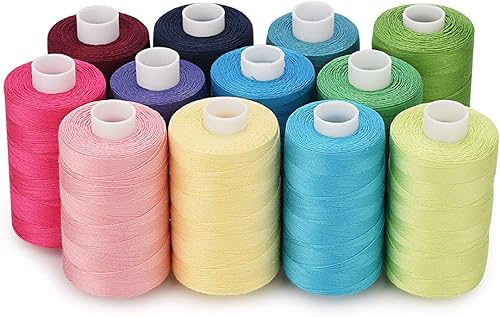
Simthread 12 Colors All Purposes Cotton Quilting
Best for cotton quilt piecing - 7
 Check it
LIUHG 96Pcs Professional Sewing Thread Kit
Best for the widest color range - 8
 Best for heavy quilt seamsCheck it
- 9
 Check it
WonderFil Sue Daley Designs Neutrals Specialty Threads
Best for fine low-bulk seams
Which thread is best for piecing quilt blocks?
Simthread is the best match for traditional cotton quilt piecing because it combines 100% cotton, a 30WT size and 550 yards per spool. That mix suits quilters who want a familiar fiber and a thread that does not add much bulk to a seam.
BlesSew and Gütermann are better when you want all-purpose polyester in many everyday colors. They suit a mixed sewing room where the same supply handles piecing, repairs and garment work.
The ideal piecing thread should pass through fabric smoothly without excess lint or bulk. It should also suit your needle size and provide enough yardage for the project.
For ordinary blocks, start with a medium thread rather than a heavy one. A heavy thread can suit denim or thick layers, but it is not the default for flat seams.
Think about your sewing method before you buy. Machine piecing needs thread that runs steadily, while hand piecing needs thread that is easy to control and knot.
Long spools reduce the chance of running out mid-block. Color matters too, as a close shade can blend in while a contrast can become a design detail.
Match the thread weight to the job, then test needle and tension on a scrap. That short check can save time when you join many blocks.
How we chose the best thread for piecing quilts
We compared material, weight, spool length, color range, needle guidance and stated uses for each product. We also checked support for machine piecing, hand sewing, appliqué and thicker fabrics.
The picks run from highest to lowest score. The score reflects fit for smooth quilt piecing, including cotton fiber, bobbin supplies and fine or heavy weights.
We weighted spool length on a large top, suitability for cotton or heavier fabric, and a clear needle starting point. We did not treat a larger set as automatically better, since a wide range adds storage and shades you may rarely use.
Fiber mattered in the comparison. Cotton may suit a cotton top and traditional setup, while polyester may suit broader everyday sewing and machine work.
Thread weight shaped the order. Fine thread reduces bulk for delicate seams, medium thread handles ordinary piecing, and heavy thread serves visible stitching on thick layers.
Spool size changed how often you stop to replace a spool. Long spools help on a large quilt, while shorter reels work for small blocks and repairs.
Bobbin supplies mattered for the kits. Prewound bobbins save preparation time, but you should check fit and stitch balance in your machine.
We also considered care and storage where information was provided. Clean thread kept away from dust and heat is easier to use throughout a long project.
The final order is a guide, not a rule for every quilt. Your fabric, sewing method and preferred fiber may make a lower ranked option the better fit.
For more background on thread fibers and weights, read our guide to Types of Embroidery Thread: What You Need to Know. Sewing thread and embroidery thread overlap in some projects, but they are not always interchangeable.
Check fiber, thread weight, spool length and needle recommendation together, not just the color chart. A small test seam shows stitch balance, seam bulk and handling at an intersection.
Use the score as a starting point and your own test seam as the final check. That helps you choose a thread that fits the quilt you are actually making.
| Product | Best for | Material | Spools | Thread length | Our score |
|---|---|---|---|---|---|
| BlesSew Sewing Machine Thread | a large color set | 100% polyester | 24 | 1,000 yards each | 9.7 |
| Gütermann Gutermann 731144-1 Thread Set Denim 100m | denim quilt accents | 100% polyester | 6 | 9.6 | |
| Gütermann Gutermann Thread Set | basic colors | 100% polyester | 9.5 | ||
| Eoehro 72pcs Sewing Thread Kit | thread and bobbin variety | Polyester | 9.4 | ||
| LIUHG 72Pcs Professional Sewing Thread Kit | low-lint machine sewing | 100% AAA-grade polyester | 9.3 | ||
| Simthread 12 Colors All Purposes Cotton Quilting | cotton quilt piecing | 100% cotton | 12 | 9.2 | |
| LIUHG 96Pcs Professional Sewing Thread Kit | the widest color range | 100% AAA-grade polyester | 8.8 | ||
| Coats Corrente 4-PACK | heavy quilt seams | 100% polyester | 4 | 8.7 | |
| WonderFil Sue Daley Designs Neutrals Specialty Threads | fine low-bulk seams | Cottonized polyester | 6 | 8.0 |
Best threads for piecing quilts by project
The best choice changes with the quilt fabric and the look you want from the seam. These product notes focus on the stated thread size, material, spool count and intended use.
BlesSew Sewing Machine Thread: Best for a large color set
- 24 spools
- 1,000 yards per spool
- 100% polyester
- 22 colors plus black and white
A large all-purpose polyester set gives quilters many colors for piecing, repairs and other sewing tasks. The 40/2 thread works with standard universal needle sizes 65/9 to 90/14.
Pros
- Large 24-spool set
- 22 colors plus black and white
- Works with most home sewing machines
Cons
- Polyester rather than cotton
- Color matching still requires checking the fabric
BlesSew is the most practical pick when you want one large color set for several sewing jobs. It includes 24 spools with 1,000 yards each, including 22 colors plus black and white.
The 40/2 spun polyester is an all-purpose size for cotton, linen, light denim and synthetic fabrics. A universal needle from 65/9 to 90/14 gives a useful range for adjusting to fabric and thread.
For quilt piecing, the main advantage is supply. You can match many block colors without buying separate spools, and the boutique-style storage box keeps the set together.
That long yardage suits a quilter who sews often and does not want to replace spools during a large top. It also suits beginners who want one set for learning, repairs and everyday projects.
Keep spool ends protected in the box between projects to prevent dust, tangles and loose ends. Color matching still needs a check against your fabric in good light.
Choose BlesSew when color coverage and yardage matter most. Choose Simthread instead if your quilt calls for 100% cotton.
Gütermann Gutermann 731144-1 Thread Set Denim 100m: Best for denim quilt accents
- 6 spools
- 100 meters per spool
- 100% polyester
- 12wt professional jeans thread
This heavier 12wt polyester set suits denim-focused quilt projects, sturdy seams and visible decorative stitching. It is less suited to fine, low-bulk piecing.
Pros
- 12wt thread for visible stitching
- Six multicolored spools
- Designed for denim fabrics
Cons
- Only 100 meters per spool
- Heavier than standard piecing thread
Gütermann Denim is best for projects that use denim or need a visible seam detail. Each of the 6 spools contains 100 meters of 12wt polyester thread, so it is much heavier than ordinary block-piecing thread.
The heavier size suits sturdy stitching and decorative seams. Use it when the thread should contribute to the design, such as on a denim quilt, bag quilt or quilted accessory.
It is not the most natural choice for small piecing seams because heavier thread can add bulk at intersections. Keep the seam allowance flat and test the thread before sewing a full block.
At a block intersection, extra thickness can make the next seam harder to align. A test piece helps you see whether the thread sits flat or creates a raised ridge.
The 100 meter spools are shorter than the long quilting spools in other sets. That can still work for accents and smaller denim projects, but it requires more spool changes on a large quilt.
Match the needle to the heavier thread and fabric before you begin. A needle that is too fine for the thread can cause skipped stitches or fraying.
Choose this set for denim focused work and bold stitching. For regular cotton blocks, choose Simthread or a standard all-purpose set.
Gütermann Gutermann Thread Set: Best for basic colors
- 20 reels
- 100 meters each
- 100% polyester
- Popular basic colors
A 20-reel set covers common colors for everyday quilt piecing. The soft, supple thread has a silk-like gloss and suits quilters who want one basic sewing set.
Pros
- 20 basic colors
- Universal needle recommendation
- No-twist and lint-free design claim
Cons
- 100-meter reels are smaller than long quilting spools
- Polyester may not match a cotton-only project
Gütermann Sew-All suits quilters who want 20 basic colors in one compact set. Each reel holds 100 meters of 100% polyester thread, and the recommended universal needle size is 70 to 90.
The thread is described as soft, supple, no-twist and lint-free, with a silk-like gloss. Those traits make it useful for everyday piecing when you prefer basic colors over a large specialty palette.
The shorter reels may be enough for small quilts, repairs and sample blocks. If you sew large quilts often, compare the 100-meter reels with BlesSew's 1,000-yard spools or Simthread's 550-yard spools.
A basic palette can be easier to store and sort than a much larger assortment. It can also suit a quilter who mainly uses neutral and primary shades in block construction.
The recommended needle range gives a clear starting point for machine sewing. You may still need to adjust for a very light or heavy fabric, so a test seam remains useful.
Keep spare reels labeled or grouped by shade to avoid color mistakes during a long session. That small step can make a compact set easier to manage.
Choose Gütermann Sew-All for a tidy basic set. Choose WonderFil when the seam needs to nearly disappear.
Eoehro 72pcs Sewing Thread Kit: Best for thread and bobbin variety
- 36 colors
- 400-yard spools
- Prewound bobbins
- Clear bobbin case
This kit combines 36 colors with prewound bobbins, making it useful when you want matching thread supplies for machine piecing and other projects.
Pros
- 36 colors
- Prewound bobbins included
- Clear bobbin case
Cons
- 400 yards per spool
- A mixed kit may include colors you use less often
Eoehro combines 36 colors, 400-yard spools, prewound bobbins and a clear bobbin case. That mix helps machine quilters who want matching thread supplies without preparing every bobbin from a separate spool.
The polyester thread is intended for hand and machine sewing, quilting and embroidery. The broad color selection can help when piecing blocks with several shades, although a large assortment may include colors you use less often.
Use the clear bobbin case to keep the included bobbins together and easy to sort. Before sewing a full block, check that the top thread and bobbin tension form an even stitch on a scrap.
The 400 yard spools are shorter than some long quilting spools. They can still work well for piecing, especially when the kit format saves time on bobbin preparation.
Sort the colors before you start a quilt and keep each chosen shade with its bobbin. That helps you avoid mixing a top thread with a slightly different bobbin color.
Check that the prewound bobbins fit your machine before you rely on them for a full top. A quick test seam will also show whether the stitch is balanced.
Choose Eoehro when bobbin convenience matters as much as the thread itself.
LIUHG 72Pcs Professional Sewing Thread Kit: Best for low-lint machine sewing
- 36 colors
- 400 yards per spool
- Prewound bobbins
- 100% AAA-grade polyester
The 72-piece kit gives machine quilters a broad color range, matching bobbins and polyester thread described as low lint. It works for piecing, repairs and other fabric types.
Pros
- 36 colors
- Prewound bobbins
- Hand and machine sewing use
Cons
- 400 yards per spool
- Polyester is not a cotton thread
LIUHG's 72-piece kit gives you 36 colors, 400 yards per spool and prewound bobbins. The thread is 100% AAA-grade polyester, intended for hand and machine sewing, quilting and repairs.
This suits a machine quilter who wants a wide color range and matching bobbins. Its strongest distinction is the kit format, with four-ply tight-twist construction and a low-lint description.
Match the upper thread to the quilt top, then check the bobbin thread on a scrap. A matched bobbin color is not required for every quilt, especially when the backing hides those stitches.
The 400 yard spools suit frequent color changes, repairs and smaller projects. Keep the top thread and bobbin paired in labeled slots so you can return to a color easily.
Test the bobbins in your machine before starting a large quilt. Fit and stitch balance can vary, so a scrap seam gives a quick check.
Choose this kit for color variety and bobbin supplies. Choose Simthread when cotton fiber is the priority.
Simthread 12 Colors All Purposes Cotton Quilting: Best for cotton quilt piecing
- 12 colors
- 550 yards per spool
- 100% long staple mercerized cotton
- 50s/3, 30WT
This is the clearest match for traditional cotton quilt piecing. The 30WT mercerized cotton gives you 550 yards per spool, a smoother finish and a recommended 80/12 needle.
Pros
- 100% cotton
- Long 550-yard spools
- Made for piecing and quilting
Cons
- Only 12 colors
- Cotton is not as strong as polyester
Simthread is the clearest pick for traditional cotton quilt piecing. It includes 12 colors of 100% long staple mercerized cotton, with 550 yards per spool and a 50s/3, 30WT thread size.
Mercerization gives the thread a smoother finish with less lint, according to the product information. The recommended 80/12 needle is a practical starting point for machine piecing, though your fabric and machine may call for adjustment.
The 30WT size balances visibility and seam bulk for many quilt blocks. Cotton is not as strong as polyester, so handle the thread normally and avoid pulling hard against a sharp fabric edge.
The 550 yard spools give useful yardage for piecing without the storage bulk of a much larger set. That can suit a quilter who makes one quilt at a time and wants a focused color range.
Twelve colors may be enough for many block designs, especially with neutrals and basic shades included. For a quilt with many prints, check each shade against the fabric before committing to a full seam.
Store spools so ends stay clean and free from snags. A clean thread end is easier to thread and less likely to cause machine problems.
Choose Simthread for cotton tops, cotton thread preferences and long spools. For very fine hand-pieced stitches, compare it with the 80WT WonderFil set.
LIUHG 96Pcs Professional Sewing Thread Kit: Best for the widest color range
- 48 colors
- 400 yards per spool
- Prewound bobbins
- 100% AAA-grade polyester
Forty-eight shades give you the broadest color choice in this group, with prewound bobbins for machine sewing. It suits a busy craft room more than a small project kit.
Pros
- 48 colors
- Prewound bobbins
- 400 yards per spool
Cons
- Polyester rather than cotton
- The full kit takes more storage space
LIUHG's larger kit suits quilters who want the widest color choice in this group. It includes 48 colors, 400 yards per spool and prewound bobbins, with 100% AAA-grade polyester thread.
The 96-piece format gives a spool and bobbin supply for machine sewing. It can suit a craft room with many quilt colors, repairs and other projects.
The kit takes more storage space than a 12-color or 20-reel set. Sort the shades before you start so you can keep the chosen top thread and bobbin together.
That range helps when a top has many prints and small color differences. It can also reduce the need to buy extra spools for matching repairs.
The trade off is organization. More shades take longer to sort, and a large kit needs labels or clear storage to stay tidy.
The 400 yard spools are shorter than long quilting spools. They may suit frequent color changes better than one long project in a single shade.
Test the prewound bobbins in your machine before sewing a full block. That check confirms fit and shows whether the stitch stays balanced.
Choose this version when 48 colors solve a real matching problem. If you want fewer shades and longer spools, BlesSew may be easier to manage.
Coats Corrente 4-PACK: Best for heavy quilt seams
- 4 spools
- 125 yards each
- 100% polyester
- Heavy weight thread
Heavy weight polyester is useful for bold topstitching and thick quilted fabrics. It is not the first choice for ordinary flat piecing, where a finer thread makes seam allowances easier to manage.
Pros
- Heavy weight for thick fabrics
- Four practical colors
- Dual-trap spool storage
Cons
- Only 125 yards per spool
- Needs larger machine needles
Coats Corrente is the heavy-thread option for quilted fabrics, bold topstitching and thick seams. It includes 4 spools of 125 yards, in black, white, slate and natural, and uses 100% polyester.
The recommended machine needles are sizes 14/90, 16/100 or 18/110. That larger needle range signals a different job from ordinary block assembly, so use it for visible stitching or thicker materials rather than standard fine piecing.
The dual-trap spool system helps keep the thread from unwinding during storage. Its stated uses include quilted fabrics, canvas, upholstery and other heavier materials.
The short 125 yard spools are a practical limit for large projects. They may be better suited to seams, repairs and decorative details than to piecing an entire quilt top.
The four colors are useful basics for heavy work. Black, white, slate and natural can cover many repairs, but they will not match every quilt print.
Heavy thread can create a raised ridge at intersections if it is used for ordinary block seams. Reserve it for places where that visible effect is wanted or where the fabric needs stronger stitching.
Choose Coats for heavy quilt seams and bold detail. For flat seams in regular cotton blocks, use a finer thread.
WonderFil Sue Daley Designs Neutrals Specialty Threads: Best for fine low-bulk seams
- 6 spools
- 273 yards each
- 80wt, 2-ply cottonized polyester
- Neutral colors
This very fine thread creates low-bulk stitches that can nearly disappear. It is a strong choice for English paper piecing, appliqué and delicate seams where thread visibility matters.
Pros
- Very fine 80wt thread
- Six neutral colors
- Useful for hand and machine sewing
Cons
- Less general-purpose than 30WT or all-purpose thread
- Only neutral colors
WonderFil is the best choice when you want the thread to nearly disappear. This set includes 6 neutral spools of 273 yards, using 80wt, 2-ply cottonized polyester with a silk-like feel.
The fine thread creates very low-bulk stitches for English paper piecing, appliqué, stitch in the ditch and delicate machine work. Its neutral colors suit projects where a visible thread line would distract from the fabric.
Because 80WT is much finer than 30WT or all-purpose thread, handle it carefully and test tension first. It is a specialty choice, not a general replacement for every quilt seam.
The neutral palette is a strength for low visibility and a limit for matching. It suits many traditional quilts, but will not cover bright or dark prints needing another shade.
The 273 yard spools can last through careful hand work, but fine thread may need more changes on a large machine project. Plan for that when you estimate needs.
A fine needle and steady tension help the thread form neat stitches. A test on a scrap shows whether the seam stays smooth or puckers.
Choose WonderFil for fine hand or machine work. Read our guide to the best thread for hand quilting if your project uses hand-stitched construction.
Should you use cotton thread for quilt piecing?
Cotton thread is a strong choice for piecing cotton quilts when you want similar fibers and a traditional sewing setup. Simthread provides 100% cotton in a medium 30WT size, with 550 yards per spool and 12 colors.
Polyester is also useful for piecing, especially when you need more color choices, long all-purpose spools or prewound bobbins. BlesSew, Gütermann, Eoehro and LIUHG all offer polyester options with different set sizes and thread weights.
Compare the best cotton thread for quilting if fiber choice is your main concern. If you are deciding between sewing and embroidery thread, our guide answers Can You Use Sewing Thread for Embroidery? with the differences to check.
What thread weight should you use for quilt piecing?
A medium thread such as 30WT is a useful starting point for ordinary block piecing. It gives a workable thread without the extra bulk of a 12WT heavy thread.
For most cotton blocks, a medium thread forms a seam that presses flat. That matters when many seams meet at one point and the next row must align neatly.
Use 80WT WonderFil for very fine stitches in English paper piecing, appliqué or delicate work. The fine size reduces bulk, but needs careful handling and a suitable needle.
Use 12WT Gütermann Denim or heavy weight Coats when stitching is visible or fabric layers are thick. Heavy thread adds strength and emphasis, but can make a seam feel raised.
Thread weight is only one part of the setup. Match the needle, adjust tension in small steps and sew a test seam before assembling the quilt.
The test seam should use the same fabric layers you plan to join. That shows whether the thread creates a flat seam or a ridge at the intersection.
Consider stitch length as well as thread size. A shorter stitch can hold a seam more securely, while a longer stitch changes how thread sits in fabric.
For machine piecing, check both top thread and bobbin thread. For hand piecing, check that thread moves without excessive drag and forms a neat stitch without adding bulk.
If your quilt mixes light and heavy fabrics, test more than one weight. Keep a note of thread, needle and tension from the test so you can repeat the setup later.
When in doubt, start with a medium thread for ordinary blocks. Move to a finer or heavier thread only when seam or fabric gives a clear reason.
How do you keep piecing seams flat?
Keep piecing seams flat with a suitable thread size, a correctly sized needle and steady tension. Press each seam to your quilt plan, then check intersections before joining larger sections.
A flat seam starts before you press it. If thread is too heavy or tension is uneven, the seam can feel raised even after careful pressing.
Avoid heavy thread for ordinary block assembly unless you want a visible effect. At an intersection, extra thread can make the area raised and affect how the next seam meets.
Use a medium thread for most block seams and save heavy thread for topstitching or thick layers. That helps a quilt top lie flatter as you add rows.
Press seams in the direction called for by your pattern. Consistent pressing helps blocks sit at the correct size and makes later seams easier to align.
Check each block after pressing, before you join it to the next section. It is easier to fix a raised or crooked seam while the piece is still small.
Keep stitch length consistent from seam to seam. Large changes can affect how a seam lies and how well blocks match.
Avoid pulling fabric as it passes under the needle. Steady feeding helps the machine form even stitches without stretching the seam.
For hand piecing, keep stitches even and avoid pulling thread too tight. A tight stitch can gather fabric and create a bump at the seam.
Wash and dry a test piece if you want to see how the seam behaves after laundering. Store spools away from dust and direct heat, and keep bobbins paired with matching top thread when possible.
If a seam feels raised, check thread weight and needle size first. Flat seams make the quilt easier to assemble and quilt.
Best thread for piecing quilts: final choice
Choose Simthread for 100% cotton, 30WT thread and long 550-yard spools. It is the clearest fit for traditional cotton quilt piecing when those features match your project.
Choose BlesSew for 24 all-purpose polyester spools, WonderFil for fine low-bulk stitches, or Coats when thick quilted fabric needs heavy thread. Each option suits a different seam and fabric.
For a large machine-sewing color range, the LIUHG and Eoehro kits add prewound bobbins. Test bobbins in your machine before relying on them for a full top.
Start with the thread weight that suits the seam, then test needle and tension before sewing blocks. A short test seam can reveal bulk, puckering or uneven stitches early.
Match fiber to your quilt when that matters to you. Cotton can suit a cotton top, while polyester can suit a broader mix of sewing and repair work.
Think about spool length before you buy. Long spools reduce interruptions on a large quilt, while shorter spools may be fine for small blocks and accents.
Keep chosen top thread and bobbin together, press each seam as you go and check intersections before adding the next row. Use the guide to narrow the choice, then let a test seam make the final decision.
Our top 3 picks at a glance
-
1
-
2
Best for denim quilt accents
Gütermann Gutermann 731144-1 Thread Set Denim 100m
9.6/10 our score
See it on Amazon -
3
Frequently asked questions
What is the best thread for piecing quilts?
The best thread for piecing quilts is usually a smooth, medium-weight thread that forms flat seams without adding bulk. Simthread is a strong cotton choice with 30WT, 550-yard spools and an 80/12 needle recommendation.
Polyester sets can work well when color range and machine-sewing versatility matter more than fiber type.
Is cotton or polyester better for quilt piecing?
Cotton is often the natural choice for cotton quilt tops, especially when you want the thread and fabric to have similar fiber behavior. Polyester can offer more strength and broader color choices.
Check the thread weight, stitch formation and seam bulk before choosing by fiber alone.
What thread weight is best for piecing quilt blocks?
A medium thread such as Simthread's 30WT is a practical starting point for piecing quilt blocks. Very fine 80WT thread reduces bulk for English paper piecing and appliqué, while 12WT thread creates heavier visible stitching.
Match the needle and test the seam on a fabric scrap.
What needle should you use with quilting thread?
Use the needle size recommended for the thread and fabric, then confirm the stitch on a scrap. Simthread recommends an 80/12 needle, BlesSew gives a 65/9 to 90/14 range, and Coats recommends larger 90/14 to 110/18 needles for its heavy weight thread.


