7 Best Sewing Machines for Leather (November 2026)
The best sewing machines for leather include the SINGER® for home leather projects, the SINGER® Heavy Duty 4552™ Next Evolution Sewing for speed control on thick seams, and the VEVOR Industrial Lockstitch Sewing Machine for a dedicated workshop.
On this page (7 sections)
- How we chose sewing machines for leather
- Which sewing machine is best for leather projects?
- What features matter for sewing leather?
- Can a home sewing machine sew leather?
- Is an industrial machine better for leather?
- How should you prepare leather before sewing?
- Which sewing machine for leather should you choose?
The SINGER® Heavy Duty 4423 is the best sewing machine for leather for many home projects, with adjustable presser foot pressure, an extra-high lift and a heavy-duty frame. For regular workshop production, look at the VEVOR industrial lockstitch set; for shoe repairs and tight curves, consider the hand-powered cobbler machine.
Leather is less forgiving than woven fabric because each needle hole remains visible. The right machine depends on the leather thickness, number of layers, seam length and whether you need to steer around a curved object.
For the broader buying basics, start with how to choose a sewing machine. If your projects also use heavy canvas, compare our guide to the best sewing machine for canvas and leather.
Our picks at a glance
-
1

-
2
 Best for speed control on thick seams
SINGER® Heavy Duty 4552™ Next Evolution Sewing
9.3/10 our score
See it on Amazon -
3
 Best for a dedicated workshop
VEVOR Industrial Lockstitch Sewing Machine
8.9/10 our score
See it on Amazon
- 4
 Check it
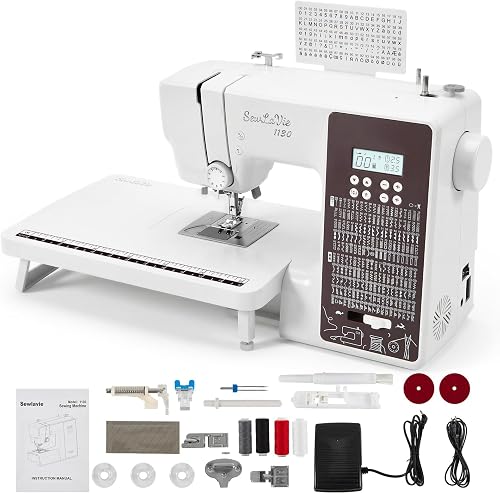
SewLaVie 1130 Computerized Sewing and Quilting Machine
Best for stitch variety and lighter leather - 5
 Check it
Fbshicung Hand Cobbler Shoe Repair Machine Dual
Best for shoe repair and curved access - 6
 Check it
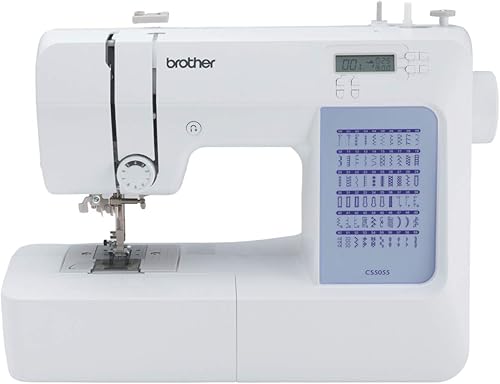
Brother CS5055 Computerized Sewing Machine with LCD
Best for lighter leather accents - 7
 Check it
Brother XR9550 Computerized Sewing and Quilting Machine
Best for mixed sewing and quilting
How we chose sewing machines for leather
The best sewing machine for leather needs controllable feeding and enough clearance for the material layers you plan to sew. We compared the listed machine features with common leather tasks, from light accents to shoe repair and larger workshop projects.
We gave more weight to presser-foot control, feed features, speed adjustment and project-specific design than to decorative stitches. A machine described for denim or thick fabric is not automatically suitable for every leather weight, so test the actual material on scraps before committing to a seam.
A leather bag adds bulky seams and corners to the challenge. Our guide to the best sewing machine for leather bags focuses on those handling needs, while best walking foot sewing machines for leather compares machines with that feeding style.
| Product | Best for | Stitch options | Fabric control | Frame | Our score |
|---|---|---|---|---|---|
| SINGER® | home leather projects | 97 applications | Adjustable presser foot pressure | Heavy-duty metal | 9.5 |
| SINGER® Heavy Duty 4552™ Next Evolution Sewing | speed control on thick seams | 110 applications | 9.3 | ||
| VEVOR Industrial Lockstitch Sewing Machine | a dedicated workshop | 8.9 | |||
| SewLaVie 1130 Computerized Sewing and Quilting Machine | stitch variety and lighter leather | 300 built-in stitches | 8.5 | ||
| Fbshicung Hand Cobbler Shoe Repair Machine Dual | shoe repair and curved access | 8.3 | |||
| Brother CS5055 Computerized Sewing Machine with LCD | lighter leather accents | 60 built-in stitches | 8.0 | ||
| Brother XR9550 Computerized Sewing and Quilting Machine | mixed sewing and quilting | 165 built-in stitches | 7.5 |
Which sewing machine is best for leather projects?
The best pick depends on your project scale: the SINGER 4423 offers useful pressure and clearance controls for home sewing, while the VEVOR is built as a larger industrial station. Choose the hand cobbler when curved shoe access matters more than speed or general sewing features.
SINGER®: Best for home leather projects
- Adjustable presser foot pressure
- Extra-high presser foot lift
- Heavy-duty metal frame
- 97 stitch applications
Adjustable foot pressure and an extra-high lift support changes in material thickness. The machine also has an extra-long stitch length option for thicker materials.
Pros
- Adjustable presser foot pressure
- Extra-high presser foot lift
- Manual tension control
Cons
- Home machine format may not suit constant heavy production
- Confirm needle and thread suitability for your leather
The SINGER® 4423 is the strongest all-around home option in this group because it combines adjustable presser foot pressure with an extra-high presser foot lift. Those controls can help when your project moves from a single layer to a thicker seam.
The machine has a heavy-duty metal frame, stainless-steel bedplate and 97 stitch applications. Its extra-long stitch length option is described for thicker materials, including leather, while the manual tension dial lets you adjust thread tension.
Use a leather needle that suits the material, and test stitch length and tension on an offcut. Since stitching leaves permanent holes, mark your seam path before sewing the final piece.
Choose it for home leather projects that fit within a domestic machine's working area. If you want to learn its setup and controls, see how to use Singer Heavy Duty 4452, a related model guide.
SINGER® Heavy Duty 4552™ Next Evolution Sewing: Best for speed control on thick seams
- Speed control slider
- Adjustable presser foot pressure
- Full metal interior frame
- Even feed foot included
The speed control slider helps manage curves and smaller details, while adjustable presser foot pressure and the included even feed foot add fabric control.
Pros
- Speed control for detail work
- Even feed/walking foot included
- Adjustable needle position
Cons
- Confirm the included needles fit your leather and thread
- Home machine format may not suit high-volume production
The SINGER® Heavy Duty 4552™ suits projects where speed control and feeding help with detailed seams. Its slider sets a maximum sewing speed, and adjustable presser foot pressure supports changes in fabric thickness.
This model includes an even feed/walking foot, along with a non-stick foot, heavy-duty needles and other accessories. The walking foot can help feed layers evenly, but the exact result depends on the leather, seam bulk and setup.
It offers 110 stitch applications, adjustable stitch length and width, and a full metal interior frame. Use a scrap to check how your chosen needle and thread behave before sewing a visible section.
Pick it for home sewing with curves and layered seams where a slower maximum speed can help with control. For a separate explanation of the attachment, read what a walking foot attachment is.
VEVOR Industrial Lockstitch Sewing Machine: Best for a dedicated workshop
- Industrial lockstitch machine with table
- Servo motor
- LCD speed and needle-position controls
- Knee lifter
This industrial set is designed for a fixed sewing station, with a wide table, servo motor, knee lifter and adjustable speed controls.
Pros
- Table and machine included
- Needle up/down and soft-start controls
- Knee lifter keeps both hands on the fabric
Cons
- Large, heavy setup needs dedicated floor space
- Industrial format may be more than occasional home work requires
The VEVOR industrial lockstitch set is the workshop choice for a dedicated sewing station. It includes a table and servo motor, with an LCD panel for speed, needle position and soft-start settings.
A knee lifter lets you raise the presser foot while keeping both hands on the material. The wide table gives larger pieces room to rest, while the manual foot lift and one-touch reverse add direct controls at the machine.
VEVOR describes the machine for leather, canvas, denim and other materials, and says it sews up to 10 layers of denim. That denim figure is not a leather thickness rating, so check the leather and seam construction you plan to use.
Choose this set for repeated work in a fixed shop space, especially larger pieces that benefit from the table. Its industrial format and 130.1 lb weight make it a substantial setup for a small sewing corner.
SewLaVie 1130 Computerized Sewing and Quilting Machine: Best for stitch variety and lighter leather
- 300 built-in stitches
- Strong motor
- 7-point feed dog
- Feeds up to 9 layers of denim
Its 7-point feed dog and strong motor are aimed at thick fabrics, and the machine offers many stitch choices for general sewing.
Pros
- 7-point feed dog
- Speed control and LCD screen
- Wide extension table included
Cons
- Denim capacity does not confirm performance on every leather type
- Needle and thread choice still matter
The SewLaVie 1130 is a home machine for buyers who want many stitch choices alongside thick-fabric features. It has a 7-point feed dog and a strong motor, and is described as feeding up to 9 layers of denim.
It also includes speed control, an LCD screen and an extension table. Those features can support general sewing projects, but the denim layer figure does not confirm a leather capacity.
Try it with the exact leather, needle and thread on scraps, especially at seam intersections. If your work is mostly heavy leather, a machine with leather-specific guidance or an industrial setup may be a better fit.
Pick it for mixed sewing projects with occasional lighter leather, rather than assuming it will handle every thick stack.
Fbshicung Hand Cobbler Shoe Repair Machine Dual: Best for shoe repair and curved access
- Hand-powered operation
- Rotatable walking foot
- Sews in multiple directions
- Cotton or nylon thread
The hand-cranked cobbler machine has a rotatable walking foot, which is useful for steering around shoe shapes and repairs.
Pros
- Can sew in different directions by turning the foot
- Compact structure
- Designed for shoes and leather goods
Cons
- Manual operation takes practice
- Specialized setup is less suited to ordinary garment sewing
The Fbshicung hand cobbler is specialized for shoe and leather repairs. Its walking foot rotates so you can sew in different directions, which helps when a shoe shape makes straight machine access difficult.
This machine runs by hand crank and can use cotton or nylon thread. It is designed for shoes, bags and other leather goods, with a compact structure that can be assembled at home.
Manual sewing takes practice, and the setup differs from a standard powered sewing machine. Work slowly on scrap material first and confirm that the needle path clears the shoe or item you are repairing.
Choose it for shoe repair and curved access, not as your only machine for ordinary garments or long production runs.
Brother CS5055 Computerized Sewing Machine with LCD: Best for lighter leather accents
- Metal frame
- Fixed needle bar
- 60 built-in stitches
- Feed system described for thick fabrics
The fixed needle bar supports even lines, and the feed system is described for denim, tweed and other thick fabrics. Consider it for lighter leather work after testing scraps.
Pros
- Fixed needle bar
- Metal frame
- Drop-in top bobbin
Cons
- No leather-specific capacity stated
- Use a scrap test before starting a finished piece
The Brother CS5055 may suit lighter leather accents when your other sewing needs include garments and decorative stitches. It has a metal frame, fixed needle bar and a feed system described for denim, tweed and other thick fabrics.
Its 60 built-in stitches and larger needle-to-arm workspace support general projects. However, no leather-specific thickness limit is stated, so treat leather use as a cautious option and test a scrap before sewing a finished piece.
Use the right needle and avoid forcing the material if the feed slows or stitches become uneven. Its fixed needle bar is intended to help keep lines even during sewing.
Choose it for general home sewing with occasional light leather details, not heavy bags or thick stacks.
Brother XR9550 Computerized Sewing and Quilting Machine: Best for mixed sewing and quilting
- 165 built-in stitches
- LCD stitch selection
- Wide table
- 8 sewing and quilting feet
The XR9550 is a versatile sewing and quilting machine with a wide table and many stitch options. Its stated features do not give a leather thickness limit, so treat leather work as a cautious, scrap-tested use.
Pros
- Wide table for larger projects
- LCD stitch selection
- Hard cover included
Cons
- No leather-specific capacity stated
- Quilting features may not matter for leather-only work
The Brother XR9550 is aimed at sewing and quilting, with a wide table, LCD stitch selection and 165 built-in stitches. Its included feet support several general sewing and quilting tasks.
Those features can be useful if leather is only one part of a broader craft routine. The machine has no stated leather capacity, so use it for leather only after a successful scrap test with the project materials.
The wide table can support a larger work surface, but it does not change the machine's feeding or piercing limits. Check seam bulk at intersections and keep leather layers within what the machine can feed smoothly.
Pick it for mixed sewing and quilting first, with lighter leather as an occasional, carefully tested project.
What features matter for sewing leather?
Presser-foot pressure, feed consistency, clearance and speed control matter more than a long stitch menu for most leather seams. Leather can shift or resist feeding, and needle holes stay visible after the stitch is removed.
Adjustable pressure can help you tune how firmly the foot holds the material. An even feed or walking foot can help move layers together, while slower speed control can make corners easier to manage.
Needle choice and stitch length also affect the result. Use a leather needle that matches the leather and machine, and avoid very short stitches that place holes close together.
Can a home sewing machine sew leather?
A home sewing machine can be a reasonable choice for lighter leather work if the machine feeds the material and the project fits its clearance. Start with a scrap from the same hide and test the needle, thread, tension and stitch length.
Thick leather, stacked seams and long production runs call for more capable equipment. A machine's performance on denim or canvas does not prove it will feed a particular leather smoothly.
If the leather catches, the motor strains or the stitch formation becomes uneven, stop and reassess the material and setup. Forcing the project can damage the work or the machine.
Is an industrial machine better for leather?
An industrial machine can suit frequent leather sewing because it is built around a dedicated work area and production controls. The VEVOR set here includes a table, servo motor, knee lifter and speed adjustment.
That setup takes floor space and is heavier than a home machine. For occasional repairs or small accessories, a domestic machine with suitable controls may be easier to store and use.
Match the industrial machine to your needle system, thread and material before buying. Confirm details for the exact leather and seam thickness you plan to sew.
How should you prepare leather before sewing?
Mark and fit the seam before sewing because needle holes in leather are permanent. Use clips instead of pins where a pinhole would show, and keep the seam allowance consistent.
Test the stitch on an offcut from the project material. Check that the leather feeds evenly, the thread tension looks balanced and the stitch length leaves enough space between holes.
For bags, plan how thick corners and handles will pass under the foot. Our best sewing machine for canvas guide also helps if your projects combine leather with heavy canvas.
Which sewing machine for leather should you choose?
Choose the SINGER® 4423 for a home machine with adjustable foot pressure and clearance, the SINGER® 4552™ if speed control and an included walking foot matter, or the VEVOR for a dedicated industrial station. For shoe repairs, the hand cobbler's rotating foot offers a specialized path around curved shapes.
Before sewing the final item, match the needle and thread to the leather and run a scrap test. That check matters most when the material is thick, layered or difficult to replace.
Our top 3 picks at a glance
-
1
-
2
Best for speed control on thick seams
SINGER® Heavy Duty 4552™ Next Evolution Sewing
9.3/10 our score
See it on Amazon -
3
Best for a dedicated workshop
VEVOR Industrial Lockstitch Sewing Machine
8.9/10 our score
See it on Amazon
Frequently asked questions
What type of sewing machine is best for leather?
A machine with strong feeding, adjustable presser foot pressure and control over stitch length is a sensible place to start. For frequent thick leather work, consider an industrial machine with a table and speed controls.
Match the machine to the leather weight and project, and test a scrap first.
Can a regular sewing machine sew leather?
Some home machines may handle lighter leather, but capacity varies by machine and material. Look for feeding features and presser-foot clearance, then try the exact leather, needle and thread on a scrap.
Avoid forcing thick layers through a machine that struggles.
Do I need a walking foot for leather?
A walking foot can help move multiple layers together, which may reduce shifting as you sew. Some machines include one, while others accept an attachment.
Check compatibility with your model and use a scrap to see how the leather feeds.
What needle should I use for sewing leather?
Choose a leather needle suited to your machine and the leather thickness, and follow the needle maker's guidance. A needle makes permanent holes in leather, so use scraps to check stitch length and placement before sewing the final piece.
For embroidery, see our guide to what needle for embroidering on leather.


