What Is the Best Fabric for an Ironing Board Cover?
The best fabric for ironing board cover use is usually 100% cotton canvas with a 6 mm felt pad underneath. Cotton handles heat and steam well, stays smooth under the iron, and resists scorch better than many synthetics. Measure your board first, then match the fabric, pad thickness and elastic fit to how you iron.
On this page (11 sections)
- Why does cotton work so well as ironing board cover fabric?
- How does padding thickness change steam performance and durability?
- Which ironing board cover material handles heat best?
- How do cotton, synthetics and coated fabrics compare for steam?
- What size and fit matter most for ironing board cover material choice?
- Which of these covers should you pick for cotton fabric and everyday pressing?
- Can you make your own cover from fabric by the yard?
- How does a cotton cover compare with other materials for durability?
- What care steps keep an ironing board cover fabric in good shape?
- How do you choose the best fabric for ironing board cover use in a sewing room?
- What is the final decision rule for ironing board cover fabric?
The best fabric for ironing board cover use is 100% cotton canvas with a 6 mm felt pad. Cotton takes heat and steam without melting, and the felt pad gives a smooth, firm surface.
A coated or synthetic top can work for light duty, but it is less forgiving with a hot sewing iron.
Start with size, not fabric alone. A great fabric in the wrong size will shift, bunch and leave marks.
Measure width at the widest point and length from nose to end. Then pick cotton for heat, a pad for smoothness, and elastic that holds without wrinkles.
Why does cotton work so well as ironing board cover fabric?
Cotton canvas is the default for a reason. It is heat tolerant, steam friendly and naturally smooth.
It does not melt under a hot iron, and it releases steam instead of trapping it. The flat cotton top also lets the iron glide instead of catching.
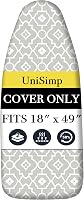
UniSimp makes both of its covers from 100% natural cotton with no coatings. There is no added finish to scorch, peel or smell when the iron sits for a moment too long.
A cotton top helps with steam pressing. Steam passes through the weave and into the pad, rather than beading on a coated surface.
That helps you press a seam flat and move on, instead of leaving a damp line. Choose uncoated cotton for the top layer when you use high heat often.
Cotton is not perfect. It can stain, it holds water if you soak it, and it needs washing to stay fresh.
A synthetic cover that melts or shines your shirt is a harder problem to fix. If you press delicate fabrics, check our What Needle for Embroidering on Knit Fabric? guide for a related fit question.
Pick uncoated cotton canvas when heat and steam matter most.
How does padding thickness change steam performance and durability?
Padding does more than add comfort. It smooths the metal mesh, spreads heat and protects fabric from board marks.
Without a pad, the mesh can print through thin shirts.
The three covers here use about 6 mm of felt or fiber pad. UniSimp extra wide pairs cotton canvas with high density 6 mm felt.
UniSimp standard uses 6 mm needle-punched felt. Whitmor pairs its cover with a sewn-in 6 mm fiber pad.
That 6 mm depth is a sweet spot. It hides the mesh and adds cushioning, but stays firm enough to keep a seam crisp.
Much thicker padding can make the surface soft, and soft surfaces press seams open instead of flat.
Padding also affects durability. Needle-punched felt resists shifting inside the cover.
A sewn-in pad, like Whitmor, stays in place without a separate insert to bunch up. Both work when layers are held flat.
Rule: choose about 6 mm of firm felt or fiber pad for a smooth, press-ready surface.
What does needle-punched felt do that loose padding cannot?
Needle-punched felt is pressed together with many tiny needles instead of glue. That keeps fibers locked without a coating that could smell or break down with heat.
The result is a flat, dense pad that holds its shape.
A loose pad can fold or slide. A needle-punched pad stays even across the board.
That evenness helps the cover sit flat, which helps the iron do even work from nose to tail.
If your pad feels lumpy after washing, the padding was probably not locked in place. Look for a pad described as needle-punched, sewn-in, or otherwise secured.
For sewing use with a sewing iron on cotton settings, that firm base matters most.
Which ironing board cover material handles heat best?
Heat tolerance comes down to fiber and finish. Cotton tolerates direct heat, while many synthetics soften or melt.
That gap shows up fast with a hot iron left for a few extra seconds.
UniSimp covers use 100% cotton with no coatings, so there is no finish to scorch. UniSimp says the thick padding also adds heat resistance.
Whitmor describes its cover as scorch-resistant and pairs it with a 6 mm fiber pad. Both point to the same idea.
A natural or fiber top plus a pad keeps heat from harming the board or fabric.
Coated covers are the main risk. A coating can look smooth and bright, but it can also trap steam and fail under high heat.
If a cover lists a coating, ask whether it is rated for your temperatures.
Color can matter too. A light cotton top shows scorch marks sooner, which is useful as a warning.
A dark pattern can hide light scorching. Keep the iron moving and lift it to check the surface.
Rule: for high heat, choose cotton or a scorch-resistant fiber, and avoid unknown coatings.
How do cotton, synthetics and coated fabrics compare for steam?
Steam needs a path. A cover that blocks steam will leave fabric damp and make pressing slower.
Open-weave cotton lets steam through, while coated fabrics tend to hold it back.
Cotton canvas has a natural weave with small gaps. Steam moves through those gaps into the pad and out the other side.
That flow helps a shirt dry as you press it, instead of steaming in place.
A synthetic top can vary. Some breathable synthetics pass steam well.
Others shine under heat or hold moisture. A coated synthetic usually passes the least steam, because the coating seals the weave.
UniSimp keeps the system simple. Cotton canvas on top, 6 mm felt below.
Whitmor uses a similar idea with its 88 gsm cover and 6 mm fiber pad. If you iron with a lot of steam, test with a cheap cotton square first.
It should feel warm and mostly dry, not damp.
Rule: pick an open cotton weave when you press with steam every time.
What size and fit matter most for ironing board cover material choice?
Fabric choice means little if the cover does not fit. Measure width and length, then buy for those numbers, not for a vague size name.
Standard and extra wide mean different things from brand to brand.
UniSimp extra wide fits boards 17 to 18 inches wide and 48 to 49 inches long. UniSimp standard fits boards 13 to 15 inches wide and 53 to 54 inches long.
Whitmor fits standard boards 13 to 15 inches wide and 52 to 54 inches long.
That difference matters for fabric use. A wide board needs a pad that stays flat across a broad surface.
A long standard board needs a nose pocket that reaches the tip without pulling tight.
Elastic and fasteners shape the fit. UniSimp extra wide uses elasticized edges and a nose pocket.
UniSimp standard adds two adjustable elastic fasteners. Whitmor uses a heavy-duty stretch cord and a tailored nose pocket.
All aim to stop shifting, because a shifting cover wrinkles and catches fabric.
None of these covers fits an over-the-door ironing board. If that is your setup, you need a cover made for that shape.
Rule: measure your board, then match width, length and nose shape before you judge fabric.
How do you measure an ironing board for a new cover?
Measure the board with the cover off. Note the widest width, the full length, and the shape of the nose.
A square nose and a pointed nose need different pockets.
Lay a tape along the center for length, then across the widest part for width. Use those numbers when you compare covers.
Also check the board type. A freestanding board, a wall-mounted board and an over-the-door board have different edges.
A cover for a freestanding board will not fit an over-the-door model, even if length looks close. If between sizes, size up slightly and use fasteners to take up slack.
Which of these covers should you pick for cotton fabric and everyday pressing?
Everyday pressing needs a smooth surface, secure fit and cotton that takes heat. All three covers meet that base need, but they fit different boards.
UniSimp extra wide suits large boards. Its cotton canvas and 6 mm felt add cushioning and heat resistance, while elasticized edges and a nose pocket help it stay put.
It is not for over-the-door boards, and the board is not included.
UniSimp standard uses a two layer build. A 6 oz cotton canvas top and 6 mm needle-punched felt help prevent mesh marks, and two adjustable fasteners keep it snug.
Whitmor suits standard boards with a sewn-in pad, so there is no separate insert to shift. Its 190T elastic edge, tailored nose pocket and 6 mm fiber pad give a secure, smooth surface in Concord Turquoise.
See our best ironing board cover guide for a broader roundup. Pick extra wide for wide boards, and for standard boards choose by pad style and pattern.
Rule: pick by board size first, then by pad style and the fit system you trust.
Can you make your own cover from fabric by the yard?
You can, and it is a good option if you want a custom pattern, an exact fit or a specific cotton weight. The trade-off is time, plus the need to add padding and elastic yourself.
Start with uncoated cotton canvas. Allow extra length for the nose, the sides and an elastic channel.
Add a 6 mm felt layer under the cotton, and secure the layers so they do not shift. A sewn-in pad, like the Whitmor approach, is one way to lock layers together.
Our guide to best ironing board cover fabric by the yard walks through fabric choices for this route. It helps if you want a cover that matches a room or if your board has an odd shape.
A ready-made cover still wins on simplicity. You get a tested size, elastic already installed, and a pad already secured.
If you like to sew, a DIY cover is a fun project. If you want to iron today, buy the ready-made one.
Rule: buy fabric by the yard for a custom fit, buy a ready-made cover for speed and a sure fit.
What fabric weight and weave should a DIY cover use?
A medium to heavy cotton canvas works best. A 6 oz cotton canvas, like the UniSimp standard model, is a useful reference point.
It is firm enough to hold shape without being stiff.
Look for a plain weave with no coating. That weave gives a smooth surface and lets steam pass.
Avoid a loose, slubby weave that can catch on the iron or show texture on thin fabric.
Add felt padding at about 6 mm. Cut the pad slightly inside the cotton layers, then secure the edges so the pad cannot bunch.
Test the finished cover with a cotton scrap before you press a good shirt.
How does a cotton cover compare with other materials for durability?
Durability is about wear at the nose, wash cycles and pad compression.
Cotton canvas wears well when it is not overloaded with heat. Felt padding stays firm when it is locked in place.
UniSimp standard uses a durable two-layer construction with 6 oz cotton canvas and 6 mm felt. That build is meant to last through regular use while keeping a smooth surface.
The extra wide model uses a similar cotton and felt pairing for a larger board. Whitmor uses an 88 gsm cover with a sewn-in 6 mm fiber pad.
Sewing the pad in place protects it from shifting, which is a common cause of early wear. The stretch cord edge also reduces pulling at the seams.
Cotton covers need washing. Over time, starch and fabric finish can build up and make the surface less smooth.
A regular wash keeps cotton open for steam and keeps the surface flat. Synthetics may resist stains longer, but can fail faster under heat.
If you want cotton specifically, see our best ironing board cover cotton picks. They focus on uncoated cotton tops and firm pads.
What care steps keep an ironing board cover fabric in good shape?
Care matters for steam and heat. Wash the cover when it looks dirty, feels stiff or stops passing steam well.
That buildup usually comes from fabric finish. Remove the cover, wash in warm water with mild detergent, and dry fully before replacing it.
Avoid very hot water and high dryer heat, since heat can shrink cotton and loosen a snug fit. Check the pad after each wash.
If the felt feels lumpy, the layers may have shifted. Smooth the pad flat before you reinstall the cover.
A sewn-in pad, like Whitmor, is less likely to shift, but still needs a check. Store the board with the cover on and the iron off the board.
Lift a hot iron to a rest while you turn a garment, since a resting iron can scorch cotton over time.
If you use a best mini heat press for small projects, keep it separate. Use its own base or mat, since a hot press can mark a cover.
How do you choose the best fabric for ironing board cover use in a sewing room?
A sewing room adds needs a laundry room may not have. You press seams, collars, cuffs and stabilizer on high heat with frequent steam bursts.
The cover must stay flat and firm. Cotton canvas with 6 mm felt is still the core pick.
It presses a seam open without sinking, which matters with quilting cotton, linen and shirt fabrics in one session.
Fit matters even more here. A shifting cover can catch on a seam allowance or push a collar out of place.
The nose pocket and elastic on all three covers help prevent shift. The two fasteners on UniSimp standard give extra control.
For extra-long boards, see our best extra long ironing board cover guide. A longer surface helps with dress lengths and runners if fabric and pad stay flat to the end.
For nearby pressing tools, our best wood for tailors clapper guide covers that choice. A clapper and firm cover work as a pair for crisp seams.
What is the final decision rule for ironing board cover fabric?
The best fabric for ironing board cover use comes down to cotton first, pad second, fit third. Cotton handles heat and steam.
A 6 mm felt pad smooths the mesh. A measured fit keeps the surface flat.
Pick UniSimp extra wide if your board is 17 to 18 inches wide and 48 to 49 inches long. Pick UniSimp standard if your board is 13 to 15 inches wide and 53 to 54 inches long and you want adjustable fasteners.
Pick Whitmor if your board is in the standard range and you want a sewn-in pad with a stretch cord fit.
For a custom project, buy uncoated cotton canvas by the yard and add 6 mm felt. For a quick fix, buy a ready-made cotton cover in your exact size.
Measure your board today, then choose the cover that matches those numbers. That one step will do more for your pressing than any pattern or color choice.
Frequently asked questions
What is the best fabric for an ironing board cover?
100% cotton canvas with no coating is the safest all-round choice. It tolerates heat and steam, gives a smooth surface, and does not add chemical odors.
A 6 mm felt pad under the cotton adds cushioning and helps block mesh marks.
Is cotton or a synthetic better for an ironing board cover?
Cotton is usually better for heat tolerance and steam. Many synthetics cost less and dry fast, but they can melt, shine fabric, or hold heat unevenly.
For a sewing iron on high heat, cotton with felt padding is the steadier pick.
How thick should the padding be on an ironing board cover?
About 6 mm is a common and practical thickness. It smooths the board mesh without making the surface spongy.
Thicker padding can press seams open, so keep it firm and flat for crisp pressing.
Can I buy ironing board cover fabric by the yard and make my own?
Yes, if you want a custom fit or a special pattern. Choose uncoated cotton canvas, add a felt pad layer, and allow extra length for elastic.
A ready-made cover is simpler if you want a guaranteed fit.