9 Best Bobbins for Embroidery Machines (November 2026)
The best best bobbins for embroidery machines include the Simthread 144pcs Size A SA156 Embroidery Prewound for most home embroidery machines, the DOUBLELIN Class 15 Prewound Embroidery Bobbins for white bulk buying, and the EBOOT 144 Pieces Prewound Bobbins Sewing Thread for assorted colors.
On this page (8 sections)
- How We Compared the Best Bobbins for Embroidery Machines
- The Bobbins We Recommend
- How to Choose the Best Bobbins for Embroidery Machines
- What Size Bobbin Fits My Embroidery Machine?
- Are Prewound Bobbins Worth It?
- How Do Needles and Bobbins Work Together?
- How Should You Store and Handle Prewound Bobbins?
- Which Bobbin Should You Buy for the Best Bobbins for Embroidery Machines?
The best bobbins for embroidery machines for most owners are the Simthread 144pcs Size A SA156 prewound in white. They combine the common Size A fit, fine 60-weight thread and a large count that lasts through many designs.
That pick is not right for every machine. Size L machines need a different bobbin, and owners who want color choices or refill spools should look at the other options below.
If you are new to machine embroidery, start with What Is Bobbin Thread for Embroidery?: Here’s How to understand what the underside thread does. That short guide makes the buying choices below easier to judge.
Bobbin thread matters more than many beginners expect. It controls how the top thread sits in the fabric.
A poor bobbin can cause puckering, looping or a rough back even when the front looks fine.
Our picks at a glance
-
1
 Best for most home embroidery machines
Simthread 144pcs Size A SA156 Embroidery Prewound
9.7/10 our score
See it on Amazon -
2
 Best for white bulk buying
DOUBLELIN Class 15 Prewound Embroidery Bobbins
9.6/10 our score
See it on Amazon -
3
 Best for assorted colors
EBOOT 144 Pieces Prewound Bobbins Sewing Thread
9.6/10 our score
See it on Amazon
- 4
 Check it
HimaPro 144 White Prewound Bobbins for Embroidery
Best for Size L machines - 5
 Check it
Magna-Glide Prewound"L" Bobbins White
Best for magnetic core preference - 6
 Check it
ThreadNanny 90wt X-Large Machine Embroidery Bobbin Threads
Best for refilling your own bobbins - 7
 Check it
ilauke 210 pcs Bobbins Sewing Thread
Best for many colors and extras - 8
 Check it
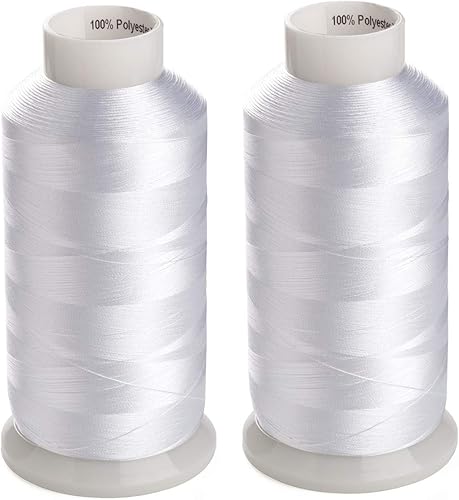
Simthread 2 Huge Spools White Bobbin Fill
Best for a refill spool supply - 9
 Check it
ilauke 90 pcs White Prewound Bobbin Thread
Best for a smaller white starter pack
How We Compared the Best Bobbins for Embroidery Machines
We compared bobbin size, thread weight, count, color choice and daily use across these nine options. Our score weighs specs, features and buyer feedback against what embroidery owners need most.
We checked whether each option is prewound or a refill spool, because that choice changes your daily workflow. Prewound bobbins save time, while king spools suit owners who enjoy winding their own.
We also separated Size A from Size L. A machine that takes one size will not work well with the other, even when the brands sound familiar.
Size is the first filter in our comparison. A Size A bobbin and a Size L bobbin differ in diameter and height.
Using the wrong size can leave the bobbin loose in the case. That looseness can change tension from stitch to stitch.
Thread weight is the second filter. Fine 60-weight and 90-weight threads are common for embroidery because they make a soft underside.
Heavier 40/2 threads suit general sewing better and can feel different in dense designs.
Count and yardage matter for value over time. A 144-count box lasts longer than a 90-count box, but yardage per bobbin also counts.
Shorter yardage means more changes during long runs.
We also looked at side material and storage. Clear plastic sides help you see remaining thread.
Cardboard sides and magnetic cores affect fit and handling in some machines.
Compatibility lists helped, but we treated them as a starting point. Exact model numbers matter more than brand names alone.
That is why the advice below stresses checking your manual.
The Bobbins We Recommend
These picks run from the best all-round white bulk pack to smaller starter sets and refill spools. Each one suits a different machine size or working style.
Simthread 144pcs Size A SA156 Embroidery Prewound: Best for most home embroidery machines
- 144 white prewound bobbins
- Size A Class 15 SA156
- 60-weight filament polyester
- 140 yards per bobbin
A large white bulk pack in the most common home machine size, suited to steady everyday embroidery.
Pros
- Large 144 count
- Common Size A fit
- Fine 60-weight thread
Cons
- White only
- Check exact model fit first
The Simthread pack suits most home embroidery owners who use Size A bobbins and want a simple white supply. It holds 144 prewound bobbins in 60-weight filament polyester, with 140 yards on each bobbin.
That fine thread helps create a soft underside on dense designs. Simthread says the 70D yarn keeps steady tension and reduces friction, which matters when you stitch long names or filled areas.
The Size A Class 15 SA156 fit covers many home machines from brands such as Brother, Babylock, Janome, Juki, Elna and Singer. The item highlight also lists Bernina and Pfaff for embroidery and sewing use.
You should still match the exact model before ordering.
Plastic sides make this pack easy to inspect at a glance. That helps you plan a bobbin change before a design runs out mid-way.
The total yardage also makes the box suitable for steady weekly stitching.
Against the other picks, this wins on balance. It has more yardage per bobbin than DOUBLELIN and a common size that many owners need.
The trade-off is white only, with no color range for matching colored top threads.
DOUBLELIN Class 15 Prewound Embroidery Bobbins: Best for white bulk buying
- 144 white prewound bobbins
- Size A Class 15 SA156
- 60S/2 spun polyester
- About 95 yards per bobbin
A clear-sided white bulk box for owners who want fewer rewinds and a familiar fine bobbin thread.
Pros
- 144 bobbins per box
- Clear plastic sides
- Fine spun polyester
Cons
- White only
- Shorter yardage per bobbin than some rivals
DOUBLELIN suits owners who want a white bulk box for steady home embroidery and light sewing. It holds 144 clear-sided Size A Class 15 bobbins with about 95 yards of 60S/2 spun polyester each.
The clear sides help you see how much thread remains. That small detail saves guesswork during a long design, when a sudden run-out can spoil stitch quality.
The diameter is about 13/16 inch and the height is about 7/16 inch, which fits the top-loading and front or side-loading designs that use this size. DOUBLELIN lists many brands, but only selected models, so check your exact machine.
The thread is also labeled 60S/2, and as number 90 or about 50 weight in some systems. That labeling can confuse buyers, so rely on the Size A Class 15 SA156 code and your manual first.
For lightweight fabrics, the fine spun polyester should feel familiar.
Compared with Simthread, DOUBLELIN gives less thread per bobbin. In return, you get a neat 144-count box and a familiar spun polyester feel.
Pick this if clear sides and bulk white supply matter most.
EBOOT 144 Pieces Prewound Bobbins Sewing Thread: Best for assorted colors
- 144 prewound bobbins
- 24 colors, 6 of each
- Size A Class 15
- 75D/2 filament polyester
A 24-color Size A set for owners who want matching underthread colors without winding each one.
Pros
- 24 colors included
- Six of each color
- Common Size A fit
Cons
- Only six per color
- Not a white-only bulk value
EBOOT suits owners who stitch with colored top threads and want the underside to match. It holds 144 Size A Class 15 bobbins in 24 colors, with six bobbins of each color.
The plastic bobbins measure about 2 x 2 x 1.14 cm. The thread is 75D/2 filament polyester, described as smooth, soft and strong for craft use.
Color matching can help on projects where the underside shows through. It also helps when you switch designs often and do not want to wind a new bobbin for each color.
The set lists compatibility with Brother, Babylock, Janome, Kenmore and Elna models. The description gives long model lists for Brother and Babylock, which shows why exact model checks matter.
A size that fits one Brother model may not fit another.
Against white-only packs, EBOOT trades bulk white value for variety. Six per color may run out on a large design, so pair it with a white bulk pack for everyday work.
It suits home sewing and embroidery where color speed matters more than one bulk white supply.
HimaPro 144 White Prewound Bobbins for Embroidery: Best for Size L machines
- 144 white prewound bobbins
- Size L SA155
- 60 weight
- 140 yards per bobbin
- Cardboard sided
A white Size L bulk pack for machines that use the larger SA155 bobbin size.
Pros
- Size L for larger machines
- 144 count
- 140 yards per bobbin
Cons
- Wrong size for Size A machines
- Cardboard sides need a good case fit
HimaPro suits owners whose machines use Size L SA155 bobbins rather than Size A. It holds 144 white prewound bobbins with 140 yards of 60-weight 75D/2 polyester on each one.
The cardboard sides are made for Size L machines from brands such as Brother, Babylock, Janome, Bernina, Husqvarna and Pfaff, on listed models. That wider fit matters on larger embroidery-only and combination machines.
The description lists specific models across those brands. That detail is useful because Size L use is model specific, not brand wide.
Check your manual for SA155 before you order this pack.
A 144 count gives you enough supply for commercial-style runs without frequent reordering. The fine 60-weight thread also suits dense embroidery where a soft underside is useful.
Compared with Size A picks, this pack is a specialist choice. It is the right answer only when your manual calls for Size L or SA155.
If your machine uses Size A, choose Simthread or DOUBLELIN instead.
Magna-Glide Prewound"L" Bobbins White: Best for magnetic core preference
- 100 white prewound bobbins
- Size L
- 60-weight filament polyester
- Magnetic core
A 100-count white Size L pack on magnetic cores for sewing, quilting and embroidery.
Pros
- Magnetic core design
- 100 bobbins
- Size L fit
Cons
- Smaller count than 144 packs
- Size L only
Magna-Glide suits owners who want Size L prewound bobbins on a magnetic core. The box holds 100 white bobbins with 60-weight filament polyester thread.
Fil-Tech says the thread suits sewing, quilting and embroidery. The magnetic core is the main point of difference from cardboard-sided Size L bobbins.
A magnetic core can affect how the bobbin feels in the case and how thread feeds. That design may suit owners who already use that core type in their machine.
A 100 count is a sensible middle amount. It gives you a long supply without the larger outlay of a 144-count box.
For occasional Size L embroidery, that amount can last for many projects.
Against HimaPro, Magna-Glide offers a smaller count but a different core design. Choose it if you prefer magnetic cores or sew and quilt as well as embroider.
Check that your machine truly uses Size L before ordering.
ThreadNanny 90wt X-Large Machine Embroidery Bobbin Threads: Best for refilling your own bobbins
- 2 cones
- 5,500 yards per cone
- 90-weight core-spun polyester
- White
Two large refill cones for owners who prefer to wind their own bobbins.
Pros
- Very large total yardage
- Low-lint refill option
- Suits frequent winding
Cons
- Requires winding time
- Not prewound for instant use
ThreadNanny suits owners who prefer to wind their own bobbins from large cones. The pack holds two white cones with 5,500 yards of 90-weight core-spun polyester each.
That is 11,000 yards in total. One cone can fill many bobbins, which can save money over time for high-volume stitchers.
ThreadNanny says the thread is clean, smooth and low lint, with consistent tension at high speeds. The fine 90-weight thread creates a soft backing on dense designs.
The slick filament surface is also described as helpful with metallic threads and heavy cotton threads. That can matter when a top thread is prone to snagging.
A smooth bobbin thread may reduce friction in the case.
Compared with prewound packs, this option takes more time. You need a good winder and a steady hand to get even bobbins.
The payoff is low cost per bobbin and full control over fill. It suits Brother, Babylock, Singer, Janome and Husqvarna owners who wind their own.
ilauke 210 pcs Bobbins Sewing Thread: Best for many colors and extras
- 210 prewound bobbins
- 36 colors
- Size A Class 15
- Extra white and black bobbins
The largest color set here, with extra white and black bobbins for everyday sewing and embroidery.
Pros
- 36 colors
- 210 total bobbins
- Extra white and black
Cons
- Heavier thread than 60-weight picks
- Fewer per color
ilauke suits owners who want the widest color range in this group. The pack holds 210 Size A Class 15 bobbins in 36 colors, with five of each color.
It also adds 20 white bobbins and 10 black bobbins. That extra black is useful for dark fabrics and repair work.
The thread is 40/2 Tex 30 polyester, which is heavier than the 60-weight picks. That can suit sewing and general embroidery, but it may change tension on fine designs.
The pack is aimed at home sewing and embroidery, with uses listed for knitted fabrics, silk, shirts, swimwear and sportswear. That breadth shows it is a general sewing set as much as an embroidery set.
Against EBOOT, ilauke gives more colors and more total bobbins. The trade-off is a heavier thread and fewer bobbins per color.
Choose it for varied home sewing and light embroidery across Brother, Babylock, Janome, Singer, Juki, Elna and Kenmore models that use Size A.
Simthread 2 Huge Spools White Bobbin Fill: Best for a refill spool supply
- 2 king spools
- 5,500 yards per spool
- 60-weight polyester filament
- White
Two white king spools of 60-weight bobbin fill for owners who wind their own bobbins.
Pros
- Large spool yardage
- 60-weight bobbin fill
- White for general use
Cons
- Requires winding time
- White only
Simthread suits owners who want white 60-weight bobbin fill on king spools. The set holds two spools with 5,500 yards of polyester filament thread each.
That format is for winding your own bobbins. It can also serve as a light top thread for small fonts or monograms with a suitable needle, according to Simthread.
The 75D/2 filament thread is designed as bottom thread for sewing and embroidery. Two large spools give you a long refill supply for frequent stitchers.
Simthread describes the thread as trilobal polyester with a bright shine. That shine can suit decorative stitching, while the filament structure helps it feed as bobbin fill.
The spools are also listed for badge work and free-standing lace style projects.
Compared with ThreadNanny, this set uses 60-weight thread rather than 90-weight. That may suit owners who want a familiar bobbin fill weight.
The trade-off is the same: winding takes time, and uneven winding can affect stitch quality.
ilauke 90 pcs White Prewound Bobbin Thread: Best for a smaller white starter pack
- 90 white prewound bobbins
- Size A Class 15 SA156
- 40/2 Tex 30 polyester
- Clear storage case
A smaller white Size A pack with a clear storage case for light home use.
Pros
- Smaller starter count
- Clear storage case
- Common Size A fit
Cons
- Heavier thread than 60-weight picks
- White only
ilauke suits new owners who want a smaller white Size A starter supply. The pack holds 90 white prewound bobbins with 40/2 Tex 30 polyester thread.
It also includes a clear plastic storage case. That case helps keep bobbins tidy and dust-free between projects.
The Size A Class 15 SA156 fit covers many Brother, Singer, Babylock, Janome and Kenmore machines. The heavier thread can work for general sewing and embroidery, but fine designs may need a lighter bobbin thread.
The storage case is a practical plus for small workspaces. It keeps bobbins from rolling or mixing with other supplies.
That matters when you store bobbins near fabric, stabilizer or tools.
Compared with the 144-count white packs, this set costs less upfront and stores neatly. It will run out sooner, however, and the thread weight is less typical for fine embroidery.
Choose it for light use or as a backup pack.
How to Choose the Best Bobbins for Embroidery Machines
The best choice depends first on bobbin size, then on thread weight and format. Get the size right and most other choices become simple.
Which bobbin size does your machine use?
Check your manual for Size A, Size L, Class 15, SA156 or SA155. Those codes are not interchangeable.
Many Brother models use Size A, so start with the best bobbins for brother embroidery machine if that is your brand. If you use a different brand, match the code in your own manual.
Look at the bobbin that came with your machine as a second check. Measure it only as a guide, because small differences in height and width matter.
The manual code should win over a visual guess.
Some machines use Class 15J instead of Class 15. Those are not interchangeable by default.
DOUBLELIN warns about that difference, and it applies across many brands.
How do prewound bobbins compare with refill spools?
Prewound bobbins save time and often wind evenly. Refill spools cost less per bobbin and suit high-volume users.
If you hate winding, choose prewound options. If you stitch daily and have a good winder, king spools can make sense.
Prewound bobbins also remove one variable when you test tension. A home-wound bobbin can be too loose or too tight.
Factory winding tends to be more consistent from bobbin to bobbin.
Refill spools give you control over color and thread type. You can wind a colored bobbin only when you need it.
That saves storage space compared with buying many colored prewound bobbins.
The downside of refill spools is time. Winding a full bobbin takes minutes, and winding many bobbins takes longer.
Busy owners often prefer prewound packs for deadline work.
What thread weight should you choose?
Fine 60-weight or 90-weight bobbin thread is common for embroidery. Heavier thread such as 40/2 suits general sewing better.
For dense designs, a fine thread creates a softer underside. For everyday sewing, a heavier thread may handle more wear.
Use the guide on What Weight Thread for Machine Embroidery? to compare top thread choices, then keep bobbin thread fine unless your machine manual says otherwise.
Thread weight labels can vary by system. You may see 60 weight, 60S/2, 75D/2 or Tex numbers for similar fine threads.
Focus on the intended use and your machine manual.
A heavier bobbin thread can pull the top thread through the fabric. That can change how a design looks on the front.
Fine bobbin thread usually keeps the balance closer to the design settings.
When do you need colored bobbins?
Colored bobbins help when the underside shows or when you want a matched look. White works for most light fabrics.
EBOOT and the larger ilauke set suit color work. White bulk packs suit general embroidery and save you from winding.
Colored bobbins are also useful for free-standing lace and cutwork. In those projects, the underside may become part of the final look.
A matched color can hide the bobbin thread better.
For dark fabrics, black or dark colored bobbins can reduce show-through. The ilauke 210-count set includes extra black bobbins for that reason.
For most everyday embroidery on light fabric, white remains the practical default. It suits many top thread colors without drawing attention.
White is also the most used prewound bobbin color in many craft setups.
What Size Bobbin Fits My Embroidery Machine?
Size A Class 15 SA156 fits many home embroidery machines. Size L SA155 fits larger machines from the same brands.
Do not guess by brand alone. Models within one brand can use different sizes, and Class 15 and Class 15J are not always interchangeable.
Brother owners should check the best bobbins for brother embroidery machine guide for model-specific help. Owners with tension trouble may also want a best bobbin case for brother embroidery machine as a spare.
How do you check the exact model?
Find the model number on the front or back of your machine. Then search your manual for the bobbin size section.
Compare that code with the product listing before you buy. Brand lists are helpful, but selected models only warnings matter.
A long brand list does not mean every model fits.
If your manual is missing, check the original bobbin for markings. Some bobbins show SA156 or SA155 on the side.
Use that as a clue, then confirm with the machine maker where possible.
Front loading and top loading designs can both use Size A. The loading style does not change the size code by itself.
Still follow the loading instructions for your exact machine.
Are Prewound Bobbins Worth It?
Prewound bobbins are worth it for most owners who value time and even tension. Factory winding is hard to match with a home winder.
They also reduce lint in the bobbin area when the thread is clean and smooth. That can mean less cleaning between designs.
If you prefer instant use, also look at best prewound bobbins for brother embroidery machine. That guide focuses on Brother fit and prewound convenience.
Prewound bobbins are especially helpful for beginners. You can focus on hooping, stabilizer and design choice.
Winding skill becomes one less thing to learn at the start.
They also help when you need to restart a design quickly. Dropping in a fresh prewound bobbin takes seconds.
That speed can save a project when a bobbin runs out mid-design.
The main cost is waste. You may not use every color in a large set.
White bulk packs reduce that waste because white suits most work.
How Do Needles and Bobbins Work Together?
A correct needle helps fine bobbin thread feed smoothly. A bent or dull needle can cause skipped stitches and breaks.
Use the Needles for Machine Embroidery: A Complete Guide to match needle type and size to your fabric and thread. Change the needle often on dense designs.
If you own an embroidery-only model, check the best embroidery only machine guide for machine-specific bobbin advice. Patches and appliqué also benefit from a clean bobbin area, as shown in how to make patches with embroidery machine.
Needle size affects the hole left in the fabric. A needle that is too large can leave visible marks.
A needle that is too small can break or fray thread.
Bobbin thread and needle should be changed together for best results. A fresh needle can solve problems that look like tension issues.
Clean the bobbin case at the same time for a clear test.
How Should You Store and Handle Prewound Bobbins?
Store bobbins in a closed case away from dust and direct sun. Dust on thread can affect feeding and tension.
Keep white and colored bobbins apart so you can find the right one fast. Label a case only with simple size and color notes.
Handle bobbins with clean, dry hands. A dropped bobbin can pick up lint, so brush it off before use.
Avoid storing bobbins loose in a drawer with fabric scraps. Loose bobbins can unwind and collect lint.
A case with dividers keeps thread ends from tangling.
If you use colored bobbins, store them by color family. That makes it faster to find a match for a top thread.
It also helps you see which colors are running low.
Check bobbins before a large design. Look for damage, loose thread ends or dust.
Replace any bobbin that looks dirty or deformed.
Which Bobbin Should You Buy for the Best Bobbins for Embroidery Machines?
For most Size A home machines, the Simthread 144pcs Size A SA156 white pack is the strongest all-round choice. It balances count, yardage and fine thread weight.
Choose DOUBLELIN if you want clear sides and a neat white bulk box. Choose EBOOT or ilauke 210 pcs for color work.
Choose HimaPro or Magna-Glide only for Size L machines.
Choose ThreadNanny or Simthread king spools if you wind your own bobbins and stitch often. Choose ilauke 90 pcs for a smaller white starter pack with storage.
Match the exact bobbin size to your manual first. Then choose prewound for speed or refill spools for volume.
That order will help you buy the right bobbins for embroidery machines without waste.
Our top 3 picks at a glance
-
1
Best for most home embroidery machines
Simthread 144pcs Size A SA156 Embroidery Prewound
9.7/10 our score
See it on Amazon -
2
Best for white bulk buying
DOUBLELIN Class 15 Prewound Embroidery Bobbins
9.6/10 our score
See it on Amazon -
3
Best for assorted colors
EBOOT 144 Pieces Prewound Bobbins Sewing Thread
9.6/10 our score
See it on Amazon
Frequently asked questions
How do I know which bobbin size my embroidery machine uses?
Check the manual or the bobbin that came with your machine first. Look for Size A, Size L, Class 15 or SA156 or SA155.
A size that looks close can still cause tension problems, so match the exact size and loading style.
Are prewound bobbins better than winding my own?
Prewound bobbins save time and often give even tension. Winding your own suits owners who want a specific thread or color.
Many embroiderers keep both options and choose based on the design and deadline.
What is bobbin thread used for in embroidery?
Bobbin thread forms the underside of each stitch. A fine, even thread helps the top thread meet in the fabric.
Start with the bobbin thread guide linked below if you want the basics before buying.
Can I use sewing bobbins for embroidery?
Sometimes, if the size and thread weight suit your machine. Fine 60-weight or 90-weight bobbin thread is common for embroidery.
Heavier sewing thread can change tension and stitch balance.
Why does my bobbin thread keep breaking?
Check the needle size and type, the threading path and the bobbin case. A bent needle, lint in the case or the wrong bobbin size can all cause trouble.
Clean the case and reseat the bobbin before changing tension.


