What Number Needle Should I Use for Embroidery?
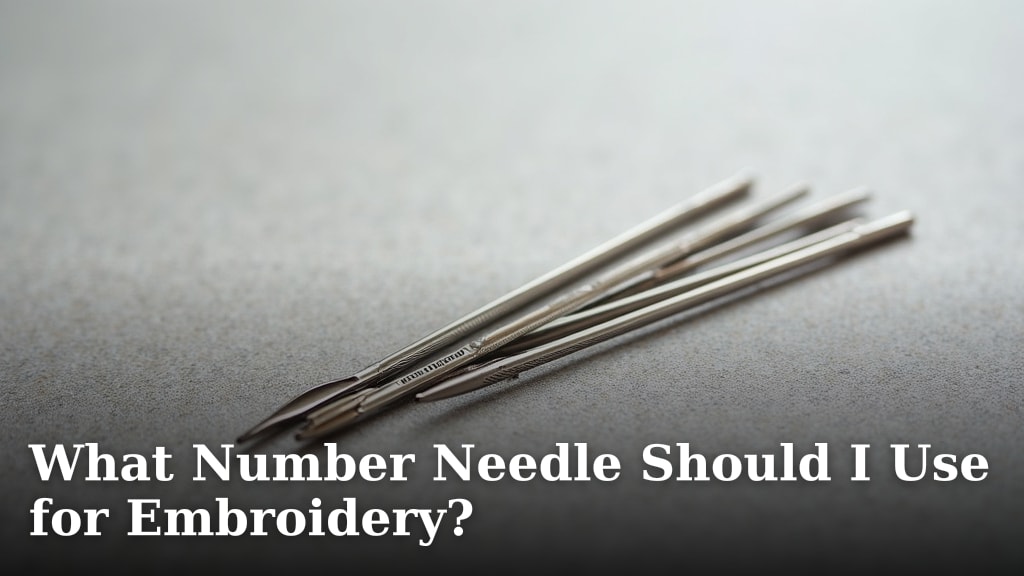
Choosing the right embroidery needle is key for beautiful results. For general embroidery projects, a size 9 or 10 needle is usually your best bet. These needles offer a good balance for most fabrics and threads, preventing skipped stitches and fabric damage. If you’re working with heavier materials, you might need a larger size, while very fine work calls for a smaller size.
Think of your embroidery needle like a paintbrush. The size and type matter a lot for the final look. A needle that’s too big can leave large holes, and one that’s too small might break or struggle with thicker threads. Understanding needle sizes helps you avoid common frustrations and achieve the professional finish you’re aiming for on your projects. We’ve found that matching the needle to your fabric and thread is a game-changer.
- Embroidery needle size depends on fabric and thread.
- Sizes 9 or 10 are great for most general projects.
- Larger needles work for heavy fabrics.
- Smaller needles are for delicate work.
- Proper needle choice prevents fabric damage and skipped stitches.
Let’s dive into the details of embroidery needle sizing so you can pick the perfect one for your next project.
Finding the Right Needle Size for Your Embroidery
Picking the correct embroidery needle size is more important than you might think. It impacts how your stitches look. It also affects how easy your project is to complete. Getting it wrong can lead to frustration and damaged fabric. We’ve found that understanding a few basic principles makes needle selection much simpler.
Understanding Embroidery Needle Sizing: The Basics
Embroidery needles come in different sizes. These numbers usually range from 6 to 12. Larger numbers mean smaller, thinner needles. Smaller numbers mean larger, thicker needles. Think of it like buying screws: a size 12 screw is tiny, while a size 4 is much bigger. The same idea applies to needles.
Why does this matter so much? Well, a needle’s size determines the hole it makes in the fabric. A needle that’s too big can create visible, unsightly holes. This is especially true for delicate fabrics. On the other hand, a needle that’s too small might struggle to push thicker embroidery thread through. This can lead to skipped stitches or even a broken needle.
The Fabric-Thread Equation: Your Key to Success
The most important factor in choosing your needle is the combination of fabric and thread you’re using. We found that matching your needle to these two elements is the golden rule. Let’s break down how they influence your choice.
How Fabric Weight Affects Needle Choice
Heavier, sturdier fabrics can handle thicker needles. Think of denim, canvas, or upholstery fabric. These materials are tough. They won’t easily get damaged by a larger needle (smaller number). A thicker needle can create a clean path for your thread without distorting the weave of the fabric.
On the flip side, lightweight and delicate fabrics need finer needles. Materials like silk, organza, or fine cotton are easily pierced. A thin needle (larger number) is essential here. It makes a small hole that can close up after the thread passes through. This preserves the integrity of your delicate material.
The Role of Your Embroidery Thread
The type and thickness of your embroidery thread also play a big part. Standard embroidery floss is made of 6 strands. You usually separate these strands to use them. For most general projects using 2-3 strands of floss, a size 9 or 10 needle is perfect. These are the workhorses of the embroidery world.
What about thicker threads? If you’re using specialty threads, metallic threads, or even yarn for embroidery, you’ll need a larger eye and possibly a slightly thicker needle. Metallic threads, for instance, can be brittle. A needle with a smooth eye helps prevent fraying. For very fine threads, like silk thread, you’ll want a thinner needle to match. For thicker threads, like metallic or rayon specialty threads, you’ll need a larger eye and possibly a slightly thicker needle.
General Embroidery Needle Recommendations
Based on countless projects and expert advice, we’ve developed some general guidelines. These cover most common embroidery scenarios. Think of these as your starting points. You can always adjust slightly based on your specific needs.
The All-Around Best Choices: Size 9 and 10 Needles
For a wide variety of fabrics and standard embroidery floss, you can’t go wrong with a size 9 or 10 needle. These are the most versatile sizes available. They work well on cottons, linens, and even some lighter-weight blends. You’ll find they create neat stitches without excessive fabric damage.
Many embroiderers keep a stash of size 9 and 10 needles. They reach for them for general hand embroidery, cross-stitch, and basic decorative stitching. They offer a great balance, preventing skipped stitches on most fabrics while still being thin enough for good control.
When to Use Larger Needles (Smaller Numbers)
Needle sizes like 7 or 8 are considered larger. You’ll want these when working with heavy-duty fabrics. Projects involving denim patches, thick upholstery samples, or outdoor canvas are good candidates. A size 7 needle, for example, is quite robust. It can push through tough materials without bending or breaking.
If you’re doing visible mending on jeans, for instance, a larger needle can be very helpful. It creates a substantial stitch that can hold up to wear and tear. Just be mindful of the fabric’s weave. Even sturdy fabrics can fray if the needle creates too large a hole.
When to Use Smaller Needles (Larger Numbers)
When you need precision or are working with delicate materials, reach for smaller needles. Sizes 11, 12, or even 13 are ideal for this. Think about fine silk embroidery or working on very lightweight cottons. These needles make tiny punctures.
Some crafters use these fine needles for intricate details. They can also be useful if you are working with fine, single-strand threads. The smaller eye also means less thread is passing through the fabric, which can be beneficial for very fine work. Many experts recommend these for heirloom-quality stitching.
Needle Types Matter Too!
Beyond just the size number, the *type* of embroidery needle can make a difference. While this post focuses on size, it’s worth noting that different needles have different features.
Sharps vs. Sharps with a Twist
Standard “sharps” needles are your everyday sewing needles. For embroidery, you might encounter “sharps” with a slightly longer, sharper point. This helps pierce through fabric more easily.
Milliners Needles and Beyond
Milliners needles are long and thin with a small eye. They’re often used for things like hat making but can be good for certain embroidery stitches where a long, smooth pass is needed. Different embroidery styles might even call for specific curved needles, though these are less common for general hand embroidery.
A Quick Guide: Needle Size Cheat Sheet
To help you quickly decide, here’s a handy reference. Keep this in mind as you gather your supplies.
| Fabric Type | Thread Type | Recommended Needle Size |
|---|---|---|
| Lightweight Cotton, Linen, Silk | Standard Floss (1-3 strands) | Size 10 or 11 |
| Medium Weight Cotton, Quilting Cotton | Standard Floss (2-3 strands) | Size 9 or 10 |
| Denim, Canvas, Heavy Duck Cloth | Standard Floss (3-6 strands), Thicker Threads | Size 7 or 8 |
| Specialty Threads (Metallic, Silk) | Varies – consider thread thickness | Size 9-11 (check thread manufacturer) |
Your Embroidery Needle Selection Checklist
Before you start your next project, run through this quick checklist to ensure you’ve picked the right needle:
- Fabric Weight: Is your fabric heavy, medium, or delicate?
- Thread Thickness: Are you using standard floss, metallic, or yarn?
- Number of Strands: How many strands of floss will you be using per stitch?
- Desired Stitch Visibility: Do you want a fine stitch or a bolder one?
- Fabric Stability: Will the fabric tolerate a slightly larger needle without damage?
By considering these points, you’re well on your way to making informed choices. Happy stitching!
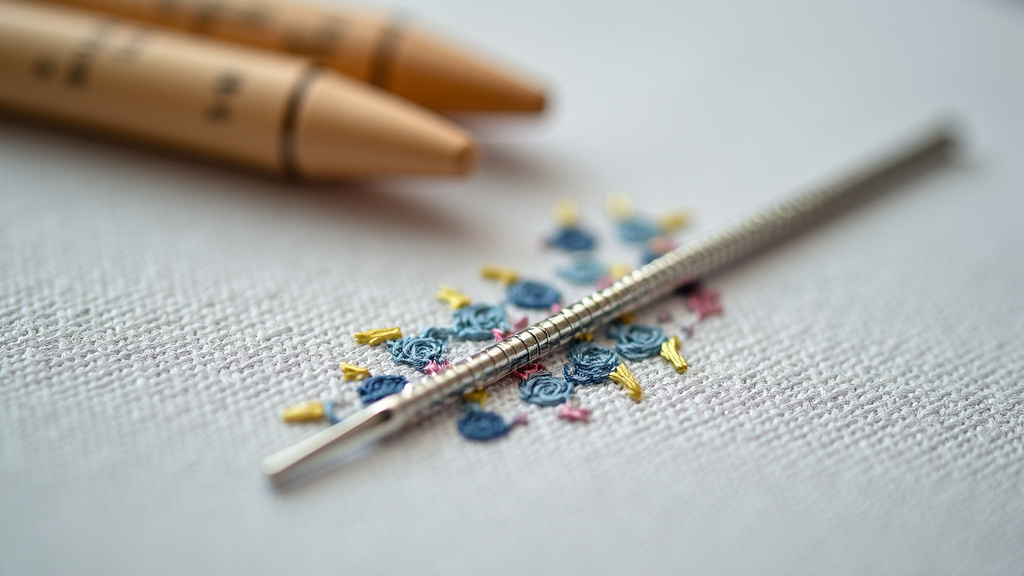
Conclusion
You’ve learned that the right embroidery needle size is a simple yet powerful tool for success. It’s not just about avoiding frustration; it’s about achieving the beautiful, clean stitches you envision. Remember, matching your needle to your fabric weight and thread type is your golden rule. Keep our quick guide and checklist handy, and you’ll feel confident picking the perfect needle for any project. Now, grab your fabric and thread, choose your needle wisely, and get ready to create something wonderful!
Frequently Asked Questions
What happens if I use a needle that’s too large for my fabric?
Using a needle that’s too large can create unwanted, noticeable holes in your fabric. For delicate materials like silk or fine linen, this can cause fraying or permanent damage. A larger needle also makes it harder to control fine stitching details.
Can I use the same needle for all embroidery threads?
Not usually. Thicker threads, like metallic or rayon specialty threads, often require needles with larger eyes to thread easily. Some very fine threads, like silk, might perform better with a thinner needle. Always consider the thread’s thickness and its tendency to fray.
Is a size 9 needle good for beginners?
Yes, a size 9 needle is an excellent choice for beginners. It’s very versatile and works well with a wide range of fabrics and standard embroidery floss. You’ll find it provides a good balance, helping you create neat stitches without frequent issues like skipped stitches or fabric damage.
What’s the difference between a regular sewing needle and an embroidery needle?
Embroidery needles typically have a larger eye than standard sewing needles, making it easier to thread embroidery floss. They also often have a sharper point to penetrate fabric more easily, and some may have a slightly different eye shape to help protect delicate threads.
How do I know if my needle is too small for my thread?
If your thread is constantly snagging, breaking, or if you’re experiencing a lot of skipped stitches, your needle might be too small for your thread. A needle that’s too small can also make it difficult to push the thread through the fabric cleanly, leading to a messy appearance.