What Is a Ballpoint Embroidery Needle?: A Complete Guide
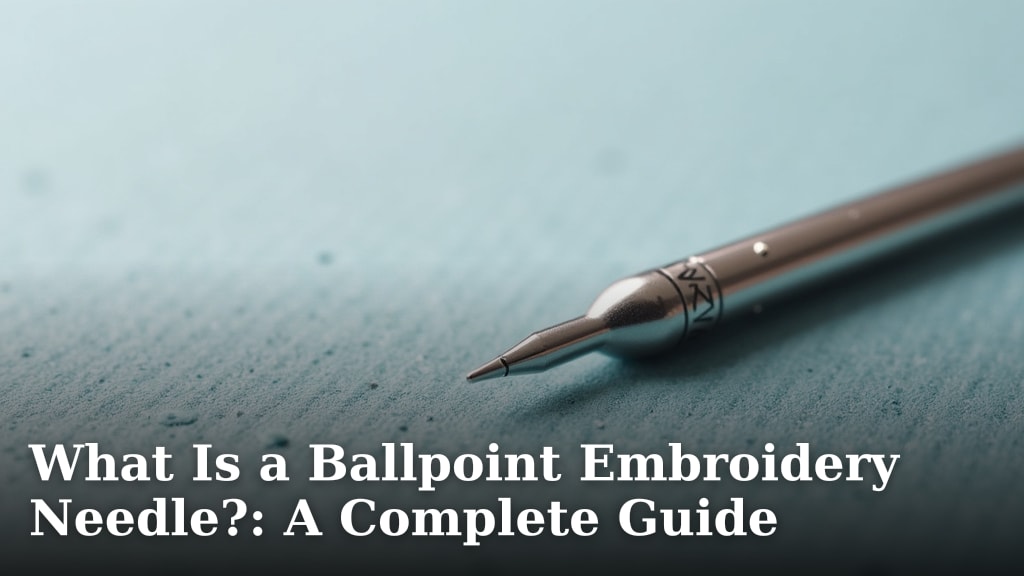
A ballpoint embroidery needle is a A ballpoint embroidery needle is a type of embroidery needle; learn about the different types of embroidery thread.special sewing machine needle designed to create smooth, clean stitches, especially on tricky fabrics. It features a blunt, rounded tip that gently pushes fabric fibers aside instead of piercing them. This helps prevent skipped stitches and fabric damage when you’re working with knits or densely woven materials.
Think of it as a tiny, helpful tool for your machine. Unlike sharp needles that can snag or tear delicate fabrics, a ballpoint needle glides through. This makes it a go-to for many home sewers working with everyday projects. We found that using the right needle type makes a huge difference in stitch quality and machine performance.
- Ballpoint needles have blunt, rounded tips.
- They push fabric fibers apart, not cut them.
- This prevents skipped stitches and fabric holes.
- Great for knits, stretchy fabrics, and dense weaves.
- Helps achieve smoother, more professional-looking stitches.
Ready to see how this tiny needle can improve your sewing? Let’s get into the details and figure out if a ballpoint needle is the right choice for your next project.
Understanding the Ballpoint Embroidery Needle
So, you’ve heard about ballpoint embroidery needles and are wondering what makes them special. We’re here to break it down for you. A ballpoint needle is a type of sewing machine needle designed to make your sewing life easier, especially when you’re working with fabrics that can be a bit fussy. Think of it as a gentle giant in your sewing toolkit.
Unlike sharp needles that can sometimes snag or pierce delicate threads, a ballpoint needle has a unique tip. This rounded end is the key to its success. It slides between the fabric fibers instead of cutting through them. This action is incredibly important for preventing skipped stitches and ensuring your projects look clean and professional. We found that using the right needle makes a huge difference in stitch quality.
What Exactly Makes a Ballpoint Needle Different?
The main difference lies in the needle’s tip. Sharp needles have a pointed tip designed to pierce fabric cleanly. This works well for wovens. However, when you encounter knits or stretchy materials, that sharp point can snag the loops of the fabric. This often leads to skipped stitches or even runs in the fabric. Sound familiar?
A ballpoint needle, on the other hand, has a rounded, blunt tip. It’s not completely dull like a butter knife, but it’s definitely not as sharp as a standard needle. When this rounded tip hits the fabric, it gently pushes the threads or fibers aside. These fibers then spring back into place around the needle. This process helps to prevent damage and ensures a smooth path for the thread.
The Science Behind the Round Tip
Many knit fabrics are made with interlocking loops. A sharp needle can easily catch these loops. This causes the fabric to snag and create a hole or a dropped stitch. Research in textile manufacturing shows that this is a common problem with standard sewing needles on knitted goods (NCBI). The ballpoint needle’s design bypasses this issue.
By pushing the fibers apart, the ballpoint needle creates a small channel for the thread. The fabric then closes back around the needle, leaving minimal to no damage. This is why they are often called “stretch needles” or “ball-end needles.” They are specifically engineered to work with these types of fabrics without causing frustration. We’ve seen firsthand how this simple design feature solves a common sewing headache.
Why You Might Need a Ballpoint Embroidery Needle
You might be wondering if you actually *need* one of these needles. If you’ve ever struggled with skipped stitches on stretchy fabrics, the answer is likely yes! Ballpoint needles are not just for embroidery; they’re beneficial for any sewing project involving specific types of materials. They help maintain the integrity of your fabric and ensure a professional finish.
Fabrics That Benefit Most from Ballpoint Needles
The primary candidates for ballpoint needles are fabrics with a bit of stretch or those with a dense weave. This includes a wide range of materials you probably have in your sewing stash.
- Knit Fabrics: This is their main domain. Think t-shirt material (jersey), interlock knits, ponte, and even some sweater knits.
- Stretchy Wovens: Some woven fabrics are designed with a bit of stretch. Examples include some suedes, velvets, and gabardines.
- Dense Weaves: Fabrics like denim or canvas can sometimes benefit from a slightly less aggressive needle.
- Performance Fabrics: Many athletic wear fabrics are knits and require special handling.
If you’re working with any of these, a ballpoint needle can make a noticeable difference. We found that switching to a ballpoint on knit projects virtually eliminated skipped stitches that used to plague our early sewing attempts.
The Benefits for Your Sewing Projects
Using a ballpoint needle offers several advantages that can improve your sewing experience and the final look of your garments. It’s about making your job easier and getting better results.
- Fewer Skipped Stitches: This is the biggest win. Smooth passage through fabric means consistent stitching.
- Prevents Fabric Damage: No more unintended holes or runs in your delicate knits.
- Smoother Seams: The needle glides, so your seams are less likely to pucker.
- Professional Finish: Clean stitches make a big difference in how polished your finished item looks.
- Machine Friendliness: Less strain on your machine because it’s not fighting to push through tough fibers.
Many garment construction guides suggest using specific needles for specific fabrics. We’ve learned that following these recommendations is key to a successful outcome. A ballpoint needle is a simple change that yields significant improvements.
Ballpoint vs. Sharp Needles: A Quick Comparison
To really drive home the point, let’s compare the ballpoint needle directly with the standard sharp needle. This will clarify when you should reach for each one.
A sharp needle is your everyday workhorse. Its pointed tip is designed to pierce through woven fabrics cleanly. It creates a distinct hole in the fabric as it passes through. This is ideal for materials like cotton, linen, and quilting cotton. When you’re piecing a quilt or making a tote bag, a sharp needle is usually your best bet. It ensures precise sewing and minimal distortion of the fabric.
The ballpoint needle, as we’ve discussed, has a rounded tip. It doesn’t pierce but rather pushes the fabric fibers aside. This is its defining characteristic and makes it perfect for knits and stretchy materials. Using a ballpoint needle on a standard woven fabric might result in a slightly less clean stitch hole, but it won’t cause the catastrophic damage a sharp needle can on a knit. Think of it as a specialized tool for specific jobs.
| Needle Type | Tip Shape | Primary Use | Potential Issues on Knits |
|---|---|---|---|
| Sharp Needle | Pointed | Woven fabrics, quilting, general sewing | Skipped stitches, fabric runs, holes |
| Ballpoint Needle | Rounded/Blunt | Knit fabrics, stretchy materials, some dense weaves | Slightly less clean stitch on wovens (minor) |
We recommend having both types of needles in your sewing kit. This way, you’re always prepared for whatever fabric comes your way. It’s like having the right screwdriver for the right screw; it just makes the job go smoothly.
Choosing the Right Ballpoint Needle Size
Just like sharp needles, ballpoint needles come in different sizes, often referred to by numbers (e.g., 70/10, 80/12, 90/14). The number relates to the needle’s diameter. A smaller number means a thinner needle. The choice of size depends on your fabric and thread.
Matching Needle Size to Fabric Weight
Generally, thinner needles are used for finer, lighter-weight fabrics, and thicker needles are used for heavier fabrics. This helps prevent the needle from being too heavy and causing excess damage, or too thin and breaking.
- Lightweight Knits (like rayon jersey, very thin cotton knits): Consider a 70/10 or 80/12 ballpoint needle.
- Medium-Weight Knits (like standard t-shirt knits, interlock): An 80/12 is often a good choice.
- Heavyweight Knits (like thick ponte, fleece, some sweater knits): You might need a 90/14 or even a 100/16.
Many sewing experts suggest that for embroidery specifically on knits, a smaller ballpoint needle (like an 80/12) is often preferred. This is because embroidery uses denser stitch counts, and a finer needle can help prevent the fabric from distorting. We found that sticking to the manufacturer’s recommendations for your specific fabric and thread is a solid starting point.
Considering Your Thread
The type and weight of your thread also play a role. If you’re using a thicker, heavier embroidery thread, you might need a slightly larger needle to accommodate it. Conversely, fine threads work best with finer needles. Always ensure your thread can pass smoothly through the needle’s eye without snagging.
Many thread manufacturers provide guidance on needle pairing. It’s worth checking their recommendations. A balanced pairing of needle and thread means your machine will run more smoothly, and your stitches will look cleaner. It’s all about creating harmony between your materials.
When to Replace Your Ballpoint Needle
Needles don’t last forever, even ballpoint ones! A dull or damaged needle can cause all sorts of sewing problems, undoing the benefits of using a ballpoint in the first place. So, how do you know when it’s time for a change?
Signs Your Needle Needs Replacing
Listen to your sewing machine and feel your fabric. These are your best indicators.
- Skipped Stitches: If you start getting skipped stitches again, even on fabric that used to sew fine, your needle is likely dull.
- Snagging or Pulling: You notice the fabric catching or pulling as the needle goes through.
- Strange Noises: Your machine might be making clicking or grinding sounds, especially when the needle hits the fabric.
- Bent or Damaged Needle: Visually inspect your needle. A bend or burr is a clear sign to replace it immediately.
- Inconsistent Stitch Quality: Uneven stitches or loops forming under the fabric are red flags.
We’ve found that replacing your needle regularly is one of the simplest yet most impactful maintenance tasks for any sewer. Many sources, like sewing machine manuals, recommend changing your needle after 6-8 hours of sewing time or with every major project. This habit can save you a lot of frustration and fabric!
Don’t wait for your needle to cause a major problem. Proactive replacement ensures your sewing stays smooth and your projects look their best. It’s a small investment for a big return in sewing quality.
Conclusion
You’ve learned that a ballpoint embroidery needle is more than just a sewing tool; it’s your key to smoother stitches on challenging fabrics. By gently guiding through knit and stretchy materials instead of piercing them, it dramatically reduces skipped stitches and fabric damage. This small change can truly transform your sewing projects, making them look more professional and saving you frustration. Next time you’re working with a t-shirt knit or any fabric that tends to snag, remember to reach for a ballpoint needle. Make the switch, and see the difference it makes for your next project!
Frequently Asked Questions
Are ballpoint needles only for embroidery?
No, ballpoint needles are not limited to embroidery. They are excellent for any sewing or machine quilting that involves knit, stretchy, or densely woven fabrics. You can use them for garment construction, home decor, and more.
Can I use a ballpoint needle on regular cotton fabric?
While a ballpoint needle won’t damage regular woven cotton, it’s not ideal. Its rounded tip doesn’t create as clean a stitch hole as a sharp needle. For standard wovens, a sharp needle will generally give you better results.
What’s the difference between a ballpoint and a stretch needle?
For most home sewers, there’s little practical difference. Many manufacturers use the terms interchangeably. Both have rounded tips designed to avoid snagging knit fabrics.
How do I know if my sewing machine needs a ballpoint needle?
If you frequently sew with t-shirt fabric, athletic wear, or other stretchy materials and experience skipped stitches or fabric runs, your machine would likely benefit from a ballpoint needle for those projects.
Can I use a ballpoint needle for hand sewing?
Ballpoint needles are designed for sewing machines. Hand sewing typically requires different types of needles, such as sharps or milliners, which have pointed tips for piercing fabric and thread.