Craft Storage & Furniture: The Complete Buying Guide
A good craft storage cabinet is one you can open, reach and close without moving supplies you use every day: choose drawers for small tools, doors for bulky items, and open shelves for fabric you want to see. Measure your room, list your supplies by size, and pick furniture that fits how you actually work.
On this page (10 sections)
- What types of craft storage furniture should you compare first?
- How big should a craft storage cabinet be for your room?
- Which cabinet style fits drawers, doors and open shelves?
- How do you plan storage for thread, bobbins and small tools?
- What tables and work surfaces do crafters need most?
- How do chairs, stands and lights support long craft sessions?
- How do you store machines, hoops and fabric safely?
- How do you match furniture to a small or shared room?
- What is the best way to buy a craft storage cabinet step by step?
- How should you maintain and organize your craft storage over time?
A good craft storage cabinet is one you can open, reach and close without moving supplies you use every day. Choose drawers for small tools, doors for bulky items, and open shelves for fabric you want to see.
This guide is the complete hub for the craft storage and furniture category. It links to every topic cluster we cover, from cabinets with drawers to sewing tables, fabric bins, thread organizers and chairs, so you can build a plan that fits your room and your habits.
Start by sorting your supplies into three groups. Group one holds daily tools that need fast access.
Group two holds materials you reach for weekly, like fabric and thread. Group three holds seasonal or bulk supplies you can store higher, lower or farther away.
Measure your space before you shop. Note the width, depth and height you can use, plus door swing, drawer pull space and the path you walk when you carry projects.
We compared the options below and the linked roundups by size, access, mobility and care needs. Our score weighs specs, features and buyer feedback against what you are shopping for.
What types of craft storage furniture should you compare first?
There are four main furniture types to compare, and most rooms need two or three of them. A cabinet gives enclosed storage, a table gives work space, a cart gives mobility, and a chair or stand gives comfort during long sessions.
A cabinet with doors hides clutter and keeps dust off supplies. It suits fabric, patterns and bulk items you do not need in view all day.
Our roundup of best craft storage cabinets with doors and shelves covers models that combine both.
A cabinet with drawers sorts small items so you can find them at a glance. Drawers suit scissors, needles, measuring tools, bobbins and thread.
See the best craft storage cabinet with drawers guide for depth and layout details.
A rolling cart moves a project from storage to table to couch. It suits small rooms and crafters who work in more than one spot.
Look at best craft storage cabinets on wheels when mobility matters more than closed storage.
A table or work surface gives you room to cut, pin and assemble. A folding option can double as guest space, while a fixed table holds a machine in place.
You will find both in our best folding sewing table guide.
How do cabinets, carts and tables solve different problems?
A cabinet solves storage and dust, a cart solves movement, and a table solves work space. One piece rarely does all three well, so plan for the gap you notice most.
If supplies pile on every surface, start with a cabinet. If you carry bins between rooms, start with a cart.
If you lack a flat place to cut and pin, start with a table.
Many crafters pair a tall cabinet for storage with a small rolling cart for the current project. The cart holds tools at your side, and the cabinet holds the rest out of the way.
The best craft storage organizer cabinet roundup helps you compare enclosed models by layout. Use it to narrow the field before you check exact dimensions for your room.
How big should a craft storage cabinet be for your room?
Buy the largest cabinet that still leaves clear walkways and door swing. A cabinet that blocks a door or forces you to squeeze past it will not get used.
Measure the wall where the cabinet will sit, then add space for you to stand and open doors or drawers. Leave room for a chair to slide back without hitting the cabinet.
For small rooms, height matters more than width. A tall, narrow cabinet uses vertical wall space and keeps the floor clear.
Our best tall craft storage cabinet guide compares those taller models.
For narrow rooms, shallow depth can be the difference between fit and no fit. A cabinet that is 12 to 15 inches deep holds paper, folders and fabric folded in thirds.
Deeper cabinets suit bins and large hoops but need more floor space.
What measurements should you take before you buy?
Take five measurements and write them down. Measure the wall width, the depth you can spare, the ceiling height, the doorway width, and the space needed to open doors or drawers fully.
Add the cabinet depth to the chair space if your seat will sit in front of it. A sewing chair needs room to roll or slide back, and a table needs room for fabric to drape.
Check shelf height against your tallest supply. Fabric bolts, cutting mats and large hoops need clear vertical space, not just total cabinet height.
Our best craft storage cabinet for small spaces guide focuses on narrow and tall options. Use those dimensions as a starting point for your own measurements.
Which cabinet style fits drawers, doors and open shelves?
Drawers sort, doors hide, and shelves display. The right mix depends on whether you want to see your supplies or get them out of sight.
Drawers work best for small, hard to find items. A shallow top drawer suits scissors and needles, while a deeper drawer below suits thread, bobbins and pattern pieces.
Before you plan thread storage, read What Bobbin Thread Weight Should I Use?: A Complete Guide so you can size drawers for the spools you actually use.
Doors work best for bulky or dusty items. Fabric, felt, batting and paper stay cleaner behind doors.
Doors also help when your craft area shares space with a living room.
Open shelves work best for fabric and bins you want to see. You can pull a bin without opening a door, and you can spot a color or print at a glance.
Pair open shelves with labeled bins for a tidy look.
Our best craft storage cabinets with doors and shelves guide shows how brands split space between the three types. Match the split to your own supplies before you choose.
Wood cabinets feel sturdy and suit traditional rooms, while laminate and metal options can be lighter and easier to wipe clean. The best craft storage cabinet wood guide compares wood models by build and finish.
If you need a work surface inside the cabinet, look at models that fold out. The best craft storage cabinet with fold out table guide covers that option for small rooms.
How do you plan storage for thread, bobbins and small tools?
Thread storage needs order by color and by project, not just by spool count. A system that keeps sequence visible saves time during color changes.
A bobbin organizer keeps bobbins sorted by thread type and weight. Pair it with a drawer layout that groups bobbins by the machine you use most.
If you are new to this, What Is Bobbin Thread for Embroidery?: Here’s How explains why bobbin choice matters for stitch quality.
A thread spool organizer holds spools upright so you can see colors and pull thread without tangling. It suits drawers and tabletop use alike.
Our best thread spool organizer guide compares capacity and layout.
Place active thread near your machine and store backups in a cabinet. That split keeps your work surface clear while your full stash stays accessible.
The Embroidex 20 Spool Thread Stand holds 20 spools in any put up, including King cones, mini king, snap spools and wound spools. It fits all home embroidery machines listed in its title, from Brother and Babylock to Janome, Bernina and Pfaff.
Place it behind your machine so thread feeds in a straight line. Load colors in the order of your design, and you can see which color comes next without checking a chart.
It includes a specialty thread guide, king spool stabilizers, a thread retainer and four horizontal spool pins. The horizontal pins help control spools that tend to unwind sideways.
This stand suits multi color designs where sequence matters. If you switch colors often, it cuts the time you spend hunting for the next spool.
Keep spare spools in a drawer and move only the active 20 to the stand. That habit keeps the stand from becoming a second storage pile.
How should you set up a thread station that saves time?
Set up a thread station in three steps. Place the stand where thread feeds straight into the machine, load spools in design order, and keep a small bin for clippings beside it.
Thread the stand first, then thread the machine. That order keeps tension steady and makes it easier to spot a crossed spool.
Label the stand by project name or color number. When you finish a design, load the next palette in the same slots so your hands learn the pattern.
What tables and work surfaces do crafters need most?
A cutting table needs length, height and a surface that can take a rotary cutter. A sewing table needs stability, a flat top at a comfortable height, and room for fabric to move without snagging.
For cutting, look for a table that is long enough for fabric width plus margins. A surface that is too short forces you to fold fabric and cut in sections, which can lead to uneven edges.
Our best table for cutting fabric guide compares height, length and folding options. Use it when cutting is your main activity.
For machine work, a dedicated table keeps the machine at elbow height and gives room for a large hoop or fabric on the left. Our best sewing machine table guide covers fixed and adjustable models.
If space is tight, a folding table can serve as a cutting surface, a sewing base and a guest table. The best folding sewing table guide shows which fold flat and which hold steady under a machine.
A cabinet with a built in machine lift hides the machine when you are not sewing. Our best sewing machine cabinets guide compares those models by opening size and lift type.
How high should your work surface be?
Set your work surface so your elbows sit near 90 degrees when you sew or cut. A surface that is too high raises your shoulders, while one that is too low forces you to hunch.
Adjustable legs or a sewing chair with height control help you match the table to your body. Test the chair height before you commit to a table height.
Place a cutting mat on the table to protect the surface and to mark measurements. The mat also gives you a visual grid for aligning fabric.
How do chairs, stands and lights support long craft sessions?
Comfort matters when you stitch for hours. A supportive chair, a stable hoop stand and good light reduce strain and help you see small stitches.
A sewing chair should support your lower back, adjust in height and roll or slide without wobbling. Our best chair for sewing machine guide compares seat shape, height range and base type.
A hoop stand holds your work at a steady height and angle, so you do not need to hold the hoop. That frees both hands and keeps fabric taut.
Our best embroidery hoop stand guide covers the main types.
Good light shows thread color and stitch detail. Our best sewing machine light guide compares clip on and built in options by brightness and arm reach.
A heat press adds another work surface need. If you press transfers or vinyl, see our best heat press table guide for height and heat safe tops.
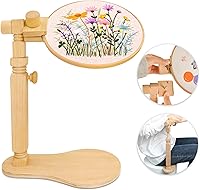
The guofa Embroidery Hoop Stand is made from natural beech wood with an enlarged, widened base. The base helps it sit firmly on a table while it holds your hoop.
It adjusts freely to suit round hoops of various sizes, and the spacing can be changed for different heights. The stand does not include an embroidery hoop, so you use the hoop you already own.
You can use it as a tabletop stand at a desk or as a seat stand on a couch. The maker says the comfortable position helps reduce long term strain from holding work by hand.
For the newer clamp setup, the top clamp is the longer one with an empty hole and no metal nut. Follow that detail during assembly so the hoop grips correctly.
On the new version, check the clamp position before you start stitching. A quick tighten after each adjustment keeps the hoop steady during a session.
The guofa Adjustable Embroidery Hoop Stand is also made from beech wood, with a smooth polished surface. It is lighter than the first stand, at 0.59 kg, which suits moving between table and lap.
The height adjusts from 13.3 to 19.6 inches, and the holder rotates to your preferred angle. The groove design grips the hoop while you work.
It works as a tabletop stand or a seat stand for DIY embroidery, cross stitch kits and needlepoint. Embroidery hoops are not included, and it fits most hoops regardless of size or brand.
Assembly uses clear English instructions and diagrams. The maker says the hands free setup helps prevent cramps and soreness during long sessions.
Choose this stand if you want a wider height range. Choose the first stand if you prefer a wider base and a simpler clamp.
The TINDTOP Beech Wood Embroidery Hoop Stand comes as a set with three bamboo hoops. You get a 3 inch, a 6 inch and an 8 inch hoop in the box.
The height adjusts from 11.8 to 15.7 inches, and a 360 degree spin knob lets you change angle and distance. The base is widened for greater stability.
The stand suits DIY embroidery, cross stitch, needlepoint and punch needle kits. You can use it as a lap stand, a table stand or a floor stand.
Tighten the screw after each adjustment to keep a good grip. The hoop thickness suits material under 0.8 inches.
This set suits beginners who do not yet own multiple hoops. It also suits gift giving, since the hoops are included.
How should you care for wood stands and cabinets?
Wipe wood stands and cabinets with a dry cloth or a cloth with mild soap and water. Dry the surface right away so moisture does not sit in the grain.
Keep wood away from direct heat and long sun exposure. Heat can dry the wood, and sun can fade the finish over time.
Check screws and clamps every few sessions. A quick tighten keeps a stand steady and prevents it from slipping during a stitch.
How do you store machines, hoops and fabric safely?
Machines need a stable surface, dust protection and room for cords. A cabinet or table with a flat top protects the machine when it is not in use.
A carrying case suits crafters who travel to classes or retreats. Our best sewing machine carrying case guide compares padded and hard shell options.
A dust cover protects a machine that stays on a table. Our best sewing machine cover bag guide covers fitted covers by machine size.
Hoops and stands store best flat or upright in a cabinet shelf. Avoid stacking heavy items on top of hoop stands, since pressure can warp wood over time.
Fabric stores best folded in bins or on shelves where you can see the cut ends. Roll fabric for large pieces and fold smaller cuts in bins labeled by color or project.
Our best fabric storage bins guide compares bin sizes and lids. Use bins in a cabinet so fabric stays clean and easy to lift.
A rolling cart helps you move fabric and tools to a cutting table. Our best craft rolling cart guide compares basket depth and wheel type for that job.
Sewing table accessories keep small tools in reach. Our best sewing table accessories guide covers trays, racks and organizers that attach to a table.
How do you match furniture to a small or shared room?
Small rooms need tall, narrow storage and furniture that can fold or roll away. Shared rooms need closed storage that hides supplies when guests arrive.
Start with a tall cabinet against the longest wall. Add a rolling cart that can slide into a gap when you are not working.
Choose a folding table that opens only during sessions.
Keep daily supplies at waist height and seasonal supplies higher or lower. That rule reduces bending and keeps the most used items in the easiest spot.
Use vertical space for thread and tools. A wall rack or a tall drawer unit can hold spools and scissors without taking floor space.
Our best craft storage cabinet for small spaces guide focuses on models that fit narrow walls. Pair one of those with a cart for a flexible setup.
If your room has no spare wall, a cabinet with a fold out table gives you a work surface on demand. See the best craft storage cabinet with fold out table guide for that layout.
What is the best way to buy a craft storage cabinet step by step?
Buy in five steps so you do not overbuy. List your supplies, measure your room, choose a layout, compare three models, then check dimensions one last time.
First, list supplies by size and frequency. Note which items need drawers, which need shelves, and which need a flat work surface.
Second, measure the room and mark the cabinet outline on the floor with tape. Walk the path you will use and check door and drawer clearance.
Third, choose a layout. Pick drawers for small tools, doors for bulky items, and open shelves for fabric you want to see.
Fourth, compare three models from the linked roundups. The best craft storage organizer cabinet roundup is a good starting list for enclosed models.
Fifth, confirm depth, height and weight before you order. A cabinet that cannot pass through your doorway is not a good buy, even if the price is right.
How should you maintain and organize your craft storage over time?
Maintain your system by sorting once a season and putting each item back in the same spot. A tidy cabinet makes it faster to find supplies and easier to see what you have.
Wipe shelves and drawers with a dry cloth every few months. That removes dust and thread scraps that build up near cutting and sewing areas.
Check labels on bins and drawers. Replace labels when projects change so you do not open the wrong bin during a session.
Move inactive projects to a higher shelf or a separate bin. Keep the current project on your cart or table so your cabinet stays focused on storage.
Your craft storage cabinet should make each session start faster, not slower. Pick furniture that fits your room, matches your supplies, and leaves clear space to work.
Choose drawers for tools, doors for fabric, shelves for bins you want to see, and a cart for the project in progress. That mix covers most craft rooms.
Revisit the pillar links above when your stash grows. Start with the best craft storage organizer cabinet roundup, then narrow by drawers, wheels or tall height for your next buy.
Frequently asked questions
What size craft storage cabinet should I buy?
Buy the size that fits your largest supplies and your room, then check drawer depth and door clearance. A cabinet that is 12 inches deep can hold standard paper and fabric folders, while deeper drawers suit bulky embroidery hoops and machines.
Measure the doorway and the spot on the floor before you order.
Is a cabinet better than a rolling cart?
A cabinet is better when you need dust protection and hidden storage, while a rolling cart is better when you want to move supplies between rooms. Many crafters use both, with a cart holding the current project and a cabinet holding the full stash.
Choose based on mobility and how much you want concealed.
What should I store in drawers versus shelves?
Store small tools, needles, scissors and thread in drawers so they stay sorted and visible when open. Store fabric bolts, bins and large hoops on shelves where you can see them and lift them without digging.
Keep daily items at waist height and seasonal items higher or lower.
How do embroidery stands fit into a storage plan?
Embroidery stands hold work in progress at a steady height so you do not need to hold the hoop for hours. Store the stand flat or upright beside your cabinet, then set it up only when you stitch.
Models made from beech wood, like the guofa and TINDTOP options below, suit table, lap or seat use.
How should I organize thread near a machine?
Place a thread stand behind or beside your machine so color changes stay in sequence. A 20 spool stand lets you load a full design palette and feed each spool through a guide without searching drawers.
Keep spare spools in a cabinet drawer and move only the active colors to the stand.