What Needle for Embroidering on Fleece?: The Full Guide
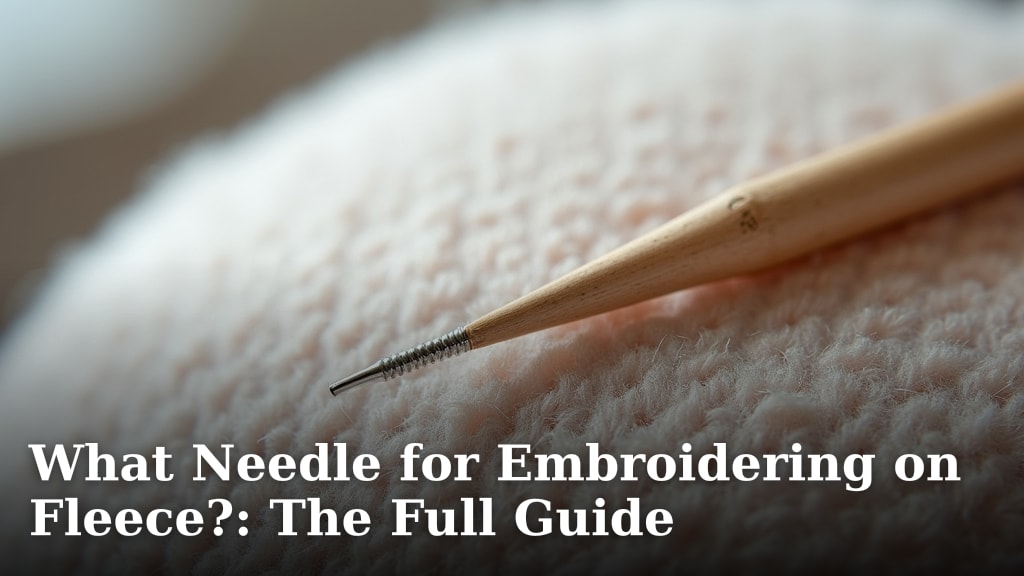
The best needle for embroidering on fleece is typically a universal needle with a size between 80/12 and 90/14. This needle size is robust enough for fleece fibers while also being fine enough to avoid creating excessively large holes. A sharp point is key for piercing the dense fabric cleanly.
Choosing the right needle makes all the difference for your fleece embroidery projects. Using a needle that’s too fine can break or snag. One that’s too thick can damage your fleece. We found that matching your needle to the fabric’s density is a proven method for successful stitching.
- Use an 80/12 or 90/14 universal needle.
- A sharp point is very important.
- Avoid needles that are too thick or too thin.
- Matching the needle to the fabric prevents damage.
- Proper needle choice ensures cleaner stitches.
Ready to get started? Let’s look at the needle types and sizes that work best for fleece and why.
Picking the Right Needle for Your Fleece Embroidery
Choosing the correct needle is really important when you’re embroidering on fleece. It’s like picking the right tool for any job. If you use the wrong needle, you can end up with snagged fabric or broken threads. We found that understanding a few basic needle types can save you a lot of frustration.
For fleece, you generally want a needle that’s a bit more robust. Fleece fibers can be dense and sometimes fuzzy. This means your needle needs to be strong enough to push through without bending or snapping. But it can’t be so thick that it makes huge holes in your nice, soft fabric.
Understanding Needle Types and Their Roles
When you look at embroidery needles, you’ll see a few main types. Each is designed for different fabrics and techniques. Let’s break down the most common ones you might consider for fleece.
Universal Needles: The All-Rounder
Universal needles are often your go-to choice. They have a slightly sharper point than a standard sewing machine needle. This makes them good for piercing through different fabric types. We found that for fleece, a universal needle is usually a safe bet. They strike a good balance between strength and finesse.
Embroidery Needles: Built for the Job
Embroidery needles are specifically made for decorative stitching. They often have a larger eye, which is helpful if you’re using thicker embroidery threads. Many also have a larger “scarf” – a groove on the back of the needle near the eye. This scarf helps prevent skipped stitches, which is pretty handy on fuzzy fabrics like fleece. Many experts say embroidery needles are a great choice for detailed work.
Ballpoint Needles: Gentle Giants
Ballpoint needles have a rounded tip. Their job is to push the fabric fibers aside instead of cutting them. This is fantastic for knit fabrics, as it prevents runs or snags. While fleece isn’t always a knit, some fleece can have a stretchy quality. If your fleece is particularly stretchy or delicate, a ballpoint needle might be worth considering. However, they might not pierce through very dense fleece as cleanly as a sharp point.
Sharp Point vs. Rounded Point for Fleece
For most fleece embroidery, a sharp point is generally preferred. Fleece, especially thicker polar fleece, can be quite dense. A sharp point will create a clean entry into the fabric. This helps your stitches look neat and professional. A rounded point, like on a ballpoint needle, is better for knits because it separates the threads. For dense fleece, a sharp point is usually more effective.
Choosing the Right Needle Size for Fleece
Needle size is marked with two numbers, like 80/12 or 90/14. The smaller number is the European system, and the larger number is the U.S. system. Generally, a higher number means a thicker needle. The right size depends on your fleece and your thread.
Commonly Recommended Sizes (80/12 and 90/14)
We found that needles in the 80/12 to 90/14 range are usually ideal for embroidering on fleece.
- 80/12 needles are a good starting point for medium-weight fleece. They are strong enough to handle the fabric without making excessive holes.
- 90/14 needles are a bit thicker. They work well for denser, thicker fleece materials. They offer extra strength for pushing through tougher fabrics.
Using a needle in this range helps ensure that your stitches are secure and your fabric remains undamaged. Many experienced embroiderers recommend starting here.
When to Go Thicker or Thinner
If you’re working with a very thick, dense fleece, you might consider moving up to a 100/16 needle. This larger size provides more strength. However, be mindful that thicker needles can create larger holes. If you’re using a very lightweight or thin fleece, you might try a slightly smaller needle, perhaps an 75/11. But be careful – too thin a needle can bend or break on denser fleece.
The Importance of Thread Choice and Needle Size
Your embroidery thread also plays a role in needle selection. The thread needs to pass smoothly through the needle’s eye. If your thread is very thick, you’ll need a needle with a larger eye and a larger size. For standard embroidery thread, the 80/12 or 90/14 universal or embroidery needles usually work well. If you’re using a specialty metallic or very fuzzy thread, you might need a larger eye.
Many guidelines suggest matching your thread thickness to your needle size. A common recommendation is to use a needle that’s two sizes larger than what you’d use for standard sewing with the same thread. This gives the thicker embroidery thread enough room to pass through the fabric cleanly.
Special Considerations for Fleece Embroidery
Fleece can be a bit tricky because it’s often fuzzy and can stretch. Your needle choice needs to account for this. Here’s a quick rundown of things to keep in mind.
Preventing Snags and Runs
The biggest worry with fleece is creating snags or runs in the fabric. A needle that is too sharp or too small can catch the fibers. A dull needle can also snag. We found that using a needle with a good, sharp point and the appropriate size for your fleece is key. Also, make sure your machine’s tension is set correctly. Improper tension can pull at the fabric and cause issues.
Stabilizing Your Fleece
To get the best results, it’s almost always recommended to use stabilizer with fleece. This is a material placed behind the fabric to give it extra support. It prevents stretching and keeps your stitches from sinking into the fluffy fibers. Common choices are tear-away or cut-away stabilizers. The type and weight of stabilizer you use might influence your needle choice. If you use a very thick stabilizer, you might need a slightly more robust needle.
Testing Your Setup
Before you stitch your main project, it’s always a good idea to do a test run. Find a scrap piece of the same fleece you’ll be using. Stitch a small sample design on it. This allows you to check your needle, thread, tension, and stabilizer. You can spot any potential problems before they affect your final piece. We found this simple step saves a lot of heartache.
A Quick Checklist for Your Fleece Embroidery Needles
Here’s a handy checklist to help you pick the right needle:
- Choose a universal or embroidery needle for best results on fleece.
- Opt for a sharp point to pierce the fabric cleanly.
- Start with a size 80/12 or 90/14 needle; they work for most fleece.
- Go slightly thicker (90/14 or 100/16) for dense fleece.
- Use a thinner needle (75/11) only for very light fleece, with caution.
- Always do a test stitch on a fabric scrap first.
What to Avoid When Choosing Needles for Fleece
Some needles are just not suited for fleece embroidery. Knowing what to avoid can prevent common stitching problems. For example, very fine needles, like those used for delicate silks, are too fragile for fleece. They can bend or break easily. Similarly, extremely thick needles might create holes that are too large and unsightly for the soft fabric.
We also found that using an old, bent, or dull needle is a recipe for disaster. A damaged needle can snag threads, create skipped stitches, and even damage your embroidery machine. Always start with a fresh, good-quality needle. Many machine embroidery experts recommend replacing your needle after about 8 hours of continuous stitching or whenever you notice stitch quality declining.
| Fleece Type | Recommended Needle Size (US/Metric) | Needle Type Suggestion |
|---|---|---|
| Lightweight/Standard Fleece | 80/12 | Universal or Embroidery |
| Medium-Weight Fleece | 80/12 to 90/14 | Universal or Embroidery |
| Dense/Thick Fleece | 90/14 to 100/16 | Universal or Embroidery (consider stronger shaft) |
| Very Stretchy Fleece | 80/12 | Ballpoint or Universal (test for snags) |
Conclusion
Choosing the right needle for your fleece embroidery projects is key to achieving clean, professional results. We’ve found that sticking to universal or embroidery needles in the 80/12 to 90/14 size range is a reliable starting point for most fleece fabrics. Remember that a sharp point is essential for piercing the dense fibers cleanly. Always perform a test stitch on a scrap piece of your fleece before starting your main project. This simple step helps you confirm your needle, thread, and stabilizer are working together perfectly. With the correct needle, you’ll avoid snags and create beautiful embroidered items you can be proud of.
Frequently Asked Questions
What is the difference between a universal needle and an embroidery needle for fleece?
A universal needle is a good all-rounder with a slightly sharper point than a standard sewing needle, making it suitable for various fabrics, including fleece. An embroidery needle is designed specifically for decorative stitching, often featuring a larger eye for thicker threads and a scarf to help prevent skipped stitches, which can be beneficial on fuzzy fleece.
Can I use a ballpoint needle on fleece?
You can consider a ballpoint needle for very stretchy or delicate fleece. Its rounded tip is designed to push fabric fibers apart rather than cut them, which helps prevent snags in knits. However, for denser fleece, a sharp point is usually more effective at creating clean holes.
How often should I replace my embroidery needle when working with fleece?
It’s best to replace your embroidery needle frequently to maintain stitch quality. Many experts recommend changing your needle after about 8 hours of continuous stitching or as soon as you notice a decline in stitch appearance, such as skipped stitches or thread fraying. A fresh needle prevents damage to both your fabric and your machine.
Does the type of thread affect my needle choice for fleece?
Yes, your embroidery thread choice is important. Thicker or specialty threads, like metallic or textured ones, often require a needle with a larger eye to allow the thread to pass through smoothly. For standard embroidery threads, the recommended universal or embroidery needles in the 80/12 to 90/14 range usually work well.
What should I do if my needle is constantly breaking on fleece?
If your needle is breaking, it’s likely too thin for the density of your fleece, or it might be dull or bent. Try switching to a slightly thicker needle, such as a 90/14 or even a 100/16 for very dense fleece. Ensure you are using a fresh, sharp needle and that your machine’s tension is set correctly, as improper tension can also put stress on the needle.