What Needle for Embroidering on Leather?
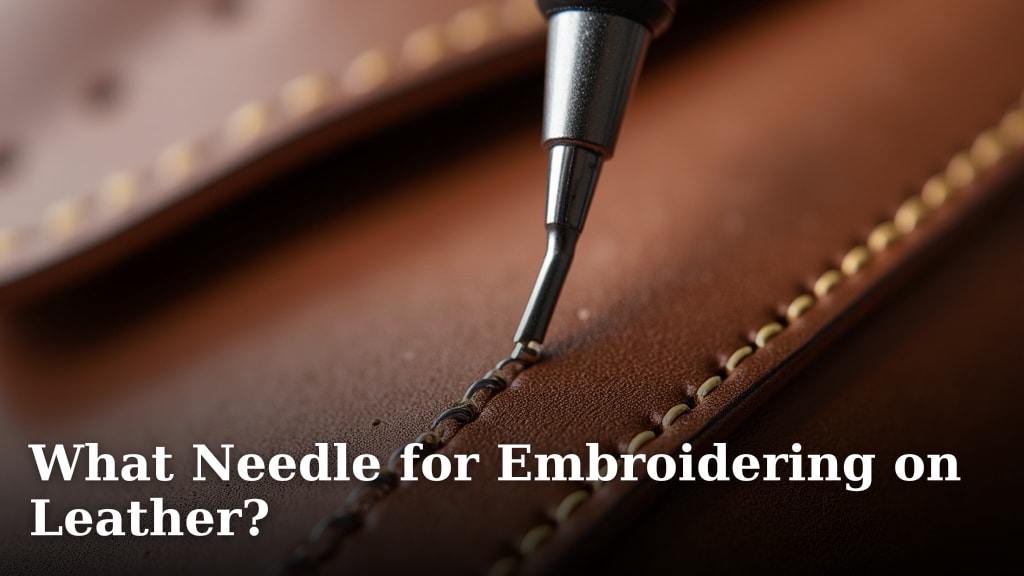
When embroidering on leather, you need a strong, sharp needle designed for heavy materials. The best needles are typically leather needles or heavy-duty denim needles. These needles have a special cutting point that helps them pierce the tough leather without skipping stitches or damaging your machine. Using the wrong needle can lead to broken threads, skipped stitches, and even damage to your leather project.
Choosing the right needle is more than just picking a thick one. You’ll want to consider the type of leather you’re working with, as different leathers require different needle sizes and point types. A needle that’s too fine might break, while one that’s too thick could create holes that are too large and detract from your beautiful embroidery. Finding the perfect needle ensures a smooth and professional finish for your leather goods.
- Leather needles are best for piercing tough materials.
- Heavy-duty denim needles are a good alternative.
- A sharp, cutting point is essential.
- Needle size matters for different leather types.
- Use the right needle to avoid skipped stitches and damage.
Let’s walk through the different needle options and how to pick the best one for your leather embroidery project.
Choosing the Right Needles for Your Leather Embroidery
When you’re ready to stitch on leather, the needle is your trusty sidekick. But not just any needle will do. You need one built for the job. We’ve researched the best options to help you get perfect stitches every time.
Understanding Leather Needles
Leather needles are purpose-built for piercing tough materials like leather. They have a sharp, cutting point that slices through the leather fibers. This prevents skipped stitches and makes stitching much smoother. Think of it like a tiny chisel, carefully making its path. Many manufacturers offer these specialized needles. They are often colored differently to stand out.
The Cutting Point Advantage
What makes a leather needle special is its point. Instead of a standard rounded point, leather needles often have a wedge or chisel-shaped tip. This point actually cuts a small slit in the leather as it goes through. This is key for preventing the needle from pushing the leather aside and causing skipped stitches. Some sources say this cutting action can create slightly larger holes than a regular needle. We’ll discuss how to manage that later.
What Size Needle Do You Need?
Needle size, or gauge, is super important. For leather embroidery, you’ll generally want a larger, stronger needle. Common sizes range from 80/12 up to 100/16 or even larger. The first number (80, 100) is the metric size, and the second number (12, 16) is the Universal Numbering System. Larger numbers mean thicker needles.
A thicker needle can handle the resistance of leather better. It’s less likely to break. It also helps create a stable stitch. A needle that’s too small might bend or snap under pressure. This can damage your sewing machine’s internal parts. Always check your sewing machine manual for recommended needle sizes for heavy materials.
Alternatives to Leather Needles
Don’t have leather needles on hand? No worries! Some other needles can work well for leather, especially for thinner types. These are often called heavy-duty needles. They are designed to punch through thick fabrics like denim or canvas.
Denim or Jeans Needles
Denim needles are a popular choice when leather needles aren’t available. They are strong and have a sharp point, though not always a true cutting point like dedicated leather needles. They can handle multiple layers of thick fabric. Many sewers find they work well for lighter-weight leathers or faux leathers. We found that a size 90/14 or 100/16 denim needle is often a good starting point.
Sharp or Microtex Needles
For very thin or delicate leathers, a sharp needle or a Microtex needle can sometimes be used. These needles have a very fine, sharp point. They are designed for precision stitching on tightly woven fabrics. They create a clean hole. However, they are not as robust as leather or denim needles. They might not hold up for thicker leathers or extensive embroidery. We recommend testing these on a scrap piece first.
Understanding Needle Points: Cutting vs. Ballpoint
The point of your needle makes a big difference. For leather, you want a point that can slice through. This is where cutting points shine.
Cutting Point Types
There are a few variations of cutting points. The most common is the wedge point. It’s shaped like a tiny wedge, which cuts nicely. Another is the diamond point. This is a bit more aggressive and cuts a more defined slit. These are excellent for genuine leather. They help prevent the fibers from tearing. Many sources suggest avoiding ballpoint needles for leather embroidery altogether.
Why Ballpoint Needles Don’t Work Well
Ballpoint needles are designed to push fibers aside. They have a rounded tip. This is great for knits and wovens, as it prevents runs and snags. But for leather, this can cause problems. Instead of making a clean hole, it can stretch or tear the leather. This leads to ugly damage. It can also cause skipped stitches because the needle isn’t piercing cleanly. So, if you see a ballpoint, keep it away from your leather project.
Needle Size Chart for Leather
Choosing the right size needle depends on the type and thickness of your leather. Here’s a general guide. Remember to always test on a scrap piece of your actual material before starting your main project.
| Leather Type | Recommended Needle Type | Recommended Needle Size (Metric/US) | Notes |
|---|---|---|---|
| Very Thin Leather (e.g., lambskin, upholstery leather) | Leather Needle or Sharp/Microtex | 70/10 – 80/12 | Use a finer point to minimize hole size. |
| Medium Weight Leather (e.g., garment leather, tooling leather) | Leather Needle or Heavy-Duty Denim Needle | 80/12 – 90/14 | A good balance of piercing power and hole size. |
| Thick Leather (e.g., saddle leather, belt leather) | Leather Needle | 90/14 – 100/16+ | Requires a robust needle for easy penetration. |
| Faux Leather (Vinyl, PU) | Leather Needle or Heavy-Duty Denim Needle | 70/10 – 80/12 | Can be delicate; test to avoid tearing. |
Factors Beyond Needle Type
While the needle is crucial, other elements influence your embroidery success on leather. You need to ensure everything works together. Think of it like a well-oiled machine, or rather, a well-threaded one!
Thread Selection
The thread you use matters just as much as the needle. Leather embroidery often uses stronger threads. Consider polyester or nylon threads. These are more durable than standard cotton threads. They can withstand the abrasion of passing through leather. If you’re using a heavy-duty needle, you might also use a slightly thicker thread to match. Avoid thin, flimsy threads that could break easily. Many experts recommend using a thread specifically designed for leather or heavy-duty applications.
Machine Settings and Tension
Your sewing machine’s settings need adjustment for leather. You’ll likely need to lower your tension. Leather doesn’t have much give. High tension can cause the leather to pucker or the thread to break. Slow down your sewing speed. This gives the needle more control. It also reduces stress on the needle and thread. We found that reducing the stitch length slightly can also help create more stable stitches on leather.
Stabilizer for Leather
Do you need stabilizer for leather? It’s a bit different than with fabric. For most genuine leathers, no stabilizer is needed. The leather itself provides enough structure. However, for very thin or stretchy leathers, or for faux leathers, a light-weight cutaway stabilizer applied to the back can help prevent distortion. You want to avoid anything that adds too much bulk. Always test your stabilizer on a scrap piece to ensure it doesn’t damage the material.
A Quick Checklist for Success
Ready to stitch? Keep these quick points in mind:
- Always use a leather needle or a heavy-duty denim needle.
- Ensure your needle has a sharp, cutting point.
- Match the needle size to your leather thickness.
- Use a strong, durable thread.
- Adjust your machine’s tension and slow down your speed.
- Test everything on a scrap piece first!
Conclusion
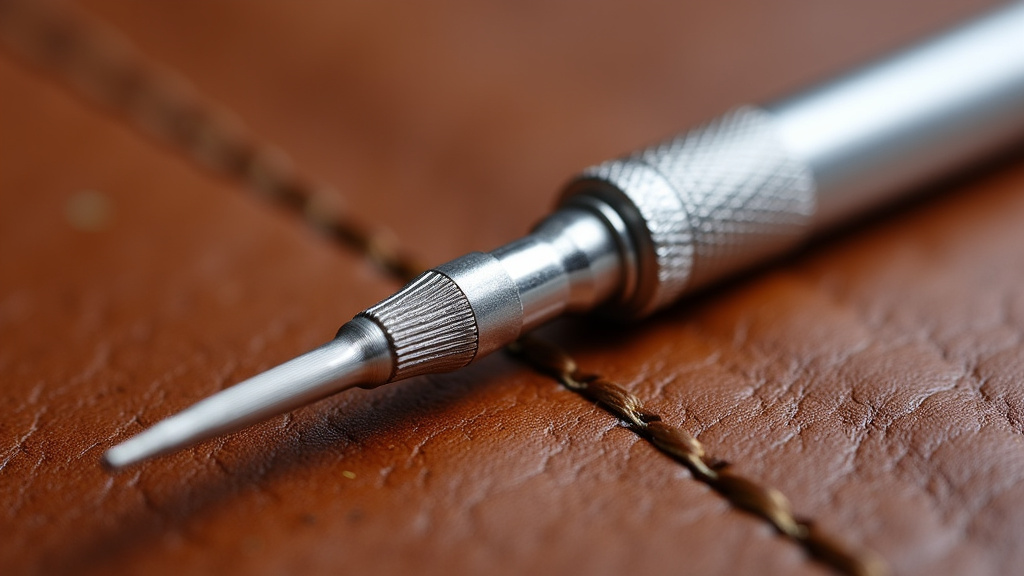
You’ve learned that the right needle is key to successful leather embroidery. Always opt for a leather needle or a sturdy heavy-duty denim needle. These needles feature essential cutting points designed to pierce leather cleanly without causing damage. Remember to match your needle size to the specific type and thickness of your leather for the best results. By choosing the correct needle and making small adjustments to your machine settings, you’re well on your way to creating beautiful, professional-looking leather embroidery projects.
Frequently Asked Questions
Can I use a regular sewing needle on leather?
No, it’s best to avoid regular sewing needles for leather embroidery. They are not designed to pierce tough materials like leather. You risk breaking the needle, damaging your machine, or creating unsightly holes and skipped stitches on your project.
What’s the difference between a leather needle and a denim needle?
Leather needles have a specialized cutting point that slices through leather fibers cleanly. Denim needles are strong and sharp but may have a slightly less aggressive cutting point. Both are robust, but leather needles are specifically engineered for the demands of leather.
How do I know if my needle is too thick for the leather?
If your needle creates excessively large holes that distort or tear the leather, it’s likely too thick. You might also notice increased resistance when sewing. Always test on a scrap piece of your leather first to check the hole size and feel of the stitching.
Do I need a special thread for leather embroidery?
While you can sometimes get away with strong polyester threads, using a thread specifically designed for leather or heavy-duty applications is recommended. These threads are more durable and can withstand the friction of passing through leather, reducing the risk of breakage.
What happens if I use a ballpoint needle on leather?
Using a ballpoint needle on leather is not recommended. Ballpoint needles are designed to push fibers apart, which can stretch or tear leather instead of piercing it cleanly. This often results in skipped stitches and damage to your material.